
Best At-Home Microneedling Stamps Compared by Use

The Serum Applicator Microneedling Stamp 0.25mm suits most at-home face-and-neck routines because it has a defined 0.25 mm tip, controlled serum flow and six weekly treatments. Choose another option if you want a reusable stamp for the scalp or a kit intended for use every two weeks.
At-home stamps use short, fine touchpoints to apply cosmetic products; they are not a substitute for professional microneedling. Needles can break or contaminate skin, so avoid use on irritated or infected skin and keep reusable tools clean.
We earn a commission if you buy through links on this page. As an Amazon Associate I earn from qualifying purchases. Products are compared on manufacturer specifications, not hands-on testing.
- Best overall: Serum Applicator 0.25 mm Stamp – Its 0.25 mm stamp has four-level serum flow and six weekly single-use treatments.
- Best for biweekly routines: ANPOL Micro-Infusion Face & Neck Kit – This face-and-neck kit is designed for a 0.25 mm stamp session every two weeks.
| Product | Best for | Needle length | Use frequency | Design | Shop |
|---|---|---|---|---|---|
| Serum Applicator 0.25 mm Stamp | Face and neck | 0.25 mm | Weekly | Single-use containers | Check Price on Amazon |
| ANPOL Micro-Infusion Face & Neck Kit | Biweekly face care | 0.25 mm | Every 2 weeks | Refillable bottle | Check Price on Amazon |
| Koi Beauty Professional Derma Stamp | Manual stamping | — | — | Reusable manual stamp | Check Price on Amazon |
| ANPOL Micro-Infusion Face Stamp Kit | Face serum routine | 0.25 mm | Every 2 weeks | Serum applicator | Check Price on Amazon |
At-Home Microneedling Stamps
Compare the needle length, application routine and intended use before choosing a stamp.
Serum Applicator 0.25 mm Stamp

Unlike a reusable manual stamp, this kit pairs a 0.25 mm applicator with individual single-use serum containers and four-level output control. Each kit is described as six weekly treatments, and the serum contains peptides and hyaluronic acid. That setup suits beginners who want a measured face-and-neck routine without refilling a serum bottle. Its schedule means it is a poor match for someone seeking a reusable tool or less frequent sessions; select a different design if you prefer a biweekly routine or scalp use.
Bottom line: Pick this for a beginner-friendly weekly face-and-neck routine with controlled serum delivery.
ANPOL Micro-Infusion Face & Neck Kit
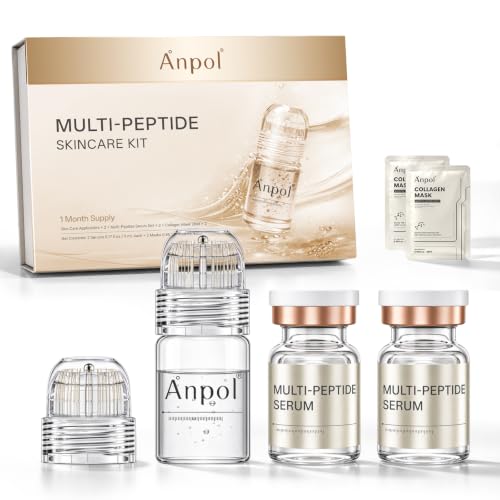
The distinguishing feature here is its refillable bottle and two-week interval, rather than the weekly single-use serum containers in some kits. The 0.25 mm applicator is designed for face and neck, and the kit includes hyaluronic acid and multi-peptide serum plus two collagen masks. The schedule suits someone who prefers a less frequent cosmetic step and already has moisturizing serum to use in the bottle. The serum and masks are part of the kit, but this is not the reusable scalp-oriented option for hair-care routines.
Bottom line: Choose this if a 0.25 mm face-and-neck treatment every two weeks fits your routine.
Koi Beauty Professional Derma Stamp

The Koi Beauty stamp stands out for its wide-grip handle and manual format rather than a serum-delivery kit. Its maker describes individual titanium pins and a portable design for home use on the face, body or scalp. That broad intended-use range suits buyers who want one handheld tool rather than a kit built around face-and-neck serum.
Bottom line: Pick this for a manual stamp with a wide grip and face, body or scalp use.
ANPOL Micro-Infusion Face Stamp Kit

This face-focused ANPOL kit combines a 0.25 mm stamp with multi-peptide serum in a compact five-minute routine, and it shares the two-week cadence of the face-and-neck kit. The size is 0.17 fluid ounce, so it is a simple option for someone who wants a serum applicator in a single kit. It is designed for face and neck, not explicitly for scalp or body care. Buyers wanting a refillable bottle format or a kit with two collagen masks should compare the other ANPOL option.
Bottom line: Pick this for a compact 0.25 mm facial serum routine on a two-week schedule.
How to Choose an At-Home Microneedling Stamp
Choose by needle length, intended skin area and whether you want single-use or reusable parts. A 0.25 mm stamp is a shallow cosmetic format; it is not equivalent to longer professional microneedling needles. Match the tool to the maker’s use: face-and-neck kits are not automatically appropriate for scalp or body use. Single-use applicators reduce the need to clean a needle head between sessions, while reusable stamps require careful cleaning and storage. If a product does not give a needle length or session interval, verify those before use rather than guessing. Avoid stamping over active acne, eczema, cold sores, cuts or sunburn, since broken or inflamed skin can be injured or contaminated.
Stamp Needle Length and Skin Safety
Short cosmetic stamps and deeper clinical devices are different tools; a 0.25 mm tip should not be treated as a way to perform medical microneedling at home. A stamp makes contact by pressing its head to the skin, while rollers move needles across it and can drag at an angle. Use light pressure and never force a tool to produce bleeding. Keep a personal reusable stamp to one user, clean it according to its maker’s directions, and discard it if pins bend, rust or become damaged. Do not share a stamp, since blood or skin residue can transfer infection. People with bleeding disorders, immune suppression or a history of raised scars should seek medical advice before using any needle-based skin tool.
Face, Neck and Scalp Stamp Uses
Choose the tool by treatment area, not by the word “microneedling” alone. Face-and-neck serum kits in this group use 0.25 mm tips and specify cosmetic serum routines, while the Follicly tool is aimed at scalp, beard and skin care and the Koi manual stamp also names body use. A broader intended area does not establish that every needle length is safe for every site. Face and neck skin can be thinner and more sensitive than the scalp, so avoid transferring a routine between areas without clear guidance.
| Need | Design to look for | Key distinction |
|---|---|---|
| Measured face routine | 0.25 mm serum kit | Weekly or biweekly cadence |
| Scalp or beard care | Reusable stamp intended for hair areas | Needle length still matters |
| Multiple body areas | Manual stamp with broad intended use | Verify area-specific guidance |
Cleaning and Session Spacing
Session spacing is device-specific: one kit specifies weekly use and another specifies every two weeks, so do not combine or accelerate schedules. More frequent stamping can increase irritation without making a routine more effective. Wash hands before handling a tool, work on clean skin, and do not apply a reused head to another person. For a reusable device, cleaning matters because microscopic residue can remain between needles; use only its cleaning method and let it dry fully before storage. Avoid strong exfoliating acids, retinoids or fragranced products immediately after stamping because freshly disrupted skin may sting or react. Stop if persistent burning, swelling or signs of infection develop and seek appropriate medical care.
Frequently Asked Questions
Can I use a 0.25 mm stamp every day?
No; the face-and-neck kits here specify weekly or every-two-week sessions, not daily use. Follow the cadence for the particular tool and allow skin to recover between sessions.
Should a microneedling stamp cause bleeding?
No; a shallow cosmetic stamp should not be forced until skin bleeds. Use gentle contact, and stop if pain or bleeding occurs.
Can I share a derma stamp with someone else?
No; keep needle-based skin tools to one person, even if the head appears clean. Shared needles can transfer skin residue or blood.
How should I clean a reusable microneedling stamp?
Use the cleaning method supplied for that specific reusable tool and let it dry fully before storage. Do not reuse a damaged head with bent or rusty pins.
Can I stamp over acne or irritated skin?
Avoid active acne, eczema, cuts, cold sores and sunburn because stamping can aggravate damaged skin or transfer contamination. Wait until the area has settled.
Can I apply retinol after using a stamp?
Avoid retinoids and strong exfoliating acids immediately after stamping because freshly disrupted skin may become more irritated. Resume only when skin is calm and the product’s guidance allows it.