
Best Libre 3 Sensor Covers: 5 Options Compared

Not Just a Patch Air for Libre 3 suits most Libre 3 users because its breathable, flexible overpatch is made for Libre 3 and Libre 3 Plus. Choose Amolyfe Libre 3 Plus Hard-Cap Covers instead if a hard cap for added protection from bumps matters more than a thin, flexible cover.
Sensor covers are adhesive patches placed over a continuous glucose monitor to help hold it in place. Match the cover to your exact sensor, and keep in mind that adhesive wear claims do not extend the sensor’s own wear period.
We earn a commission if you buy through links on this page. As an Amazon Associate I earn from qualifying purchases. Products are compared on manufacturer specifications, not hands-on testing.
- Best overall: Not Just a Patch Air for Libre 3 – Designed for Libre 3 and Libre 3 Plus with breathable, stretchable micropore material.
- Best for bump protection: Amolyfe Libre 3 Plus Hard-Cap Covers – Combines an adhesive patch with a hard cap.
- Best for a large pack: Kuruyo Libre 3 Plus Transparent Covers – Comes as a 100-piece set of transparent covers.
- Best for multiple Libre models: Ceeport Freestyle Adhesive Patches – Its fit includes Libre 1, 2, 3 and Plus.
| Product | Best for | Pack count | Design | Wear claim | Shop |
|---|---|---|---|---|---|
| Not Just a Patch Air for Libre 3 | Breathable flexibility | 20 patches | Breathable micropore, non-stick center | 15+ days | Check Price on Amazon |
| Amolyfe Libre 3 Plus Hard-Cap Covers | Bump protection | 20 patches plus 1 cap | Adhesive patch with hard cap | Full sensor lifespan | Check Price on Amazon |
| Kuruyo Libre 3 Plus Transparent Covers | Large clear pack | 100 patches | Transparent, no-glue center | 15 days | Check Price on Amazon |
| HECHUAN Libre 3 Transparent Covers | Transparent patch supply | 50 patches | Transparent, no-glue center | 14 days | Check Price on Amazon |
| Ceeport Freestyle Adhesive Patches | Multi-model compatibility | 30 patches | Cotton, no-glue center | — | Check Price on Amazon |
Best Libre 3 Sensor Covers
Compare the cover style, pack size and fit claims to find an option that matches your sensor and routine.
Not Just a Patch Air for Libre 3

Not Just a Patch Air for Libre 3 stands out for its breathable, stretchable micropore material and non-stick center. The 20-pack is designed for Libre 3 and Libre 3 Plus, with an edge-to-edge adhesive and a thin, flexible feel. The maker says the patches are designed to hold for 15 or more days, including through workouts, sweat and swimming. This is a strong fit for people who want a pliable cover rather than a rigid guard. Its beige color may be less discreet than a transparent patch for buyers who want the cover to blend with different clothing or skin tones.
Bottom line: Choose this if breathable flexibility is your priority.
Amolyfe Libre 3 Plus Hard-Cap Covers
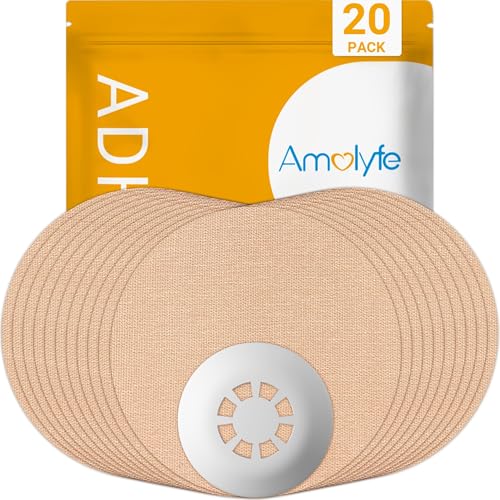
Amolyfe Libre 3 Plus Hard-Cap Covers is the only option here with a hard cap, giving it a different role from flexible overpatches alone. The 20-pack is tan, and the maker says its adhesive patches are latex-free, hypoallergenic and waterproof. The cap-and-patch setup is aimed at active users concerned about bumps and snags, while the adhesive is designed to last for the sensor’s full lifespan. Choose it when physical coverage matters more than a low-profile feel. The hard shell adds structure, so it may be less suitable for someone who prefers a thin, pliable patch.
Bottom line: Pick this when a hard cap is more important than a flexible feel.
Kuruyo Libre 3 Plus Transparent Covers

Kuruyo Libre 3 Plus Transparent Covers offers the largest pack count, with 100 transparent covers and a no-glue center. The maker says the covers are waterproof and sweatproof, with adhesion intended to last 15 days and peel away without residue. The clear finish suits buyers who want a less visible cover and a large supply on hand. Its wear time is longer than the 14-day sensor period for Libre 3, so do not treat patch duration as permission to wear a sensor beyond its own limit. The high count is less useful if you are still deciding whether this cover style suits your skin.
Bottom line: Choose this for a large supply of transparent covers.
HECHUAN Libre 3 Transparent Covers

HECHUAN Libre 3 Transparent Covers pairs a transparent finish with a no-glue center, in a 50-piece pack. The center design is intended to let the patch be changed without pulling directly on the sensor, while the maker says the material is comfortable and durable and does not affect sensor readings. This is a practical option for buyers who want a clear cover and a middle-sized supply rather than the 100-piece pack. The features do not give a material type or a precise wear duration, so buyers prioritizing those attributes should compare the claims of other options.
Bottom line: Pick this for a clear cover with a no-glue center.
Ceeport Freestyle Adhesive Patches

Ceeport Freestyle Adhesive Patches is the only option here whose compatibility spans Libre 1, 2, 3 and Plus, as well as Enlite-Medtronic Guardian sensors. The tan 30-pack uses pre-cut natural cotton patches with no glue in the center. The maker says the patches are waterproof, sweatproof, latex-free and hypoallergenic, and describes them as suitable for activity and bathing. This broader model range can suit a household with different sensor generations.
Bottom line: Choose this if compatibility across several sensor models matters.
How to choose a Libre 3 sensor cover
Choose by sensor fit first, then by the protection and feel you want. Libre 3 sensors have a 14-day wear period, while Libre 3 Plus sensors have a 15-day wear period; a cover’s wear claim does not change either limit. A flexible overpatch suits buyers who want a light layer, while a hard cap adds a physical barrier against bumps. Transparent covers are less visually prominent, while tan or beige covers may show less against some skin tones or clothing. Check the package fit against the exact sensor model before applying a cover, especially when a product name mentions multiple Libre generations or a second sensor brand.
How long should a Libre 3 cover stay on
A cover should come off when it loosens, irritates your skin or interferes with sensor care, even if its advertised wear time is longer. Libre 3 is designed for up to 14 days of sensor wear, and Libre 3 Plus for up to 15 days; patch claims of 15 days or more refer to the patch, not extra sensor life. Sweat, swimming, friction from clothing and skin oils can affect how long an adhesive stays secure. Apply adhesive to clean, fully dry skin and avoid lotions at the application area, since residue can weaken adhesion. If an edge lifts, do not assume the cover will hold for the full claimed period.
Skin prep and safe cover placement
Clean, dry skin gives an adhesive cover a better surface than skin with lotion, oil or moisture. Let skin dry completely after washing before applying an overpatch, and avoid placing adhesive over irritated or broken skin. The Libre 3 sensor is worn on the back of the upper arm, so make sure the cover does not tug uncomfortably when you move or dress. Adhesive sensitivity can develop even with products labeled hypoallergenic; remove a cover if burning, itching or a rash develops. A no-glue center can reduce direct adhesive contact over the sensor, but it does not eliminate the need to check for skin irritation around the patch edges.
Common mistakes with CGM overpatches
The main mistake is treating a cover’s wear claim as the sensor’s wear limit. A patch advertised for 15 days or longer cannot extend a Libre 3 sensor beyond its 14-day period or a Libre 3 Plus sensor beyond 15 days. Another mistake is choosing by color or pack count without confirming model fit; similarly named covers may target different devices. Press the adhesive down smoothly without pulling the sensor, and avoid trapping folds that can catch on sleeves. If you regularly snag the sensor on clothing or equipment, a hard-cap design addresses a different risk than a thin adhesive patch. Stop using any cover that causes a skin reaction.
Frequently Asked Questions
Can a cover extend Libre 3 sensor wear time?
No. A Libre 3 sensor is designed for up to 14 days, and a cover’s advertised duration does not extend that sensor limit. Libre 3 Plus has a 15-day wear period.
How should I prepare skin for a sensor overpatch?
Apply an overpatch to clean, fully dry skin without lotion or oil at the site. Moisture and skin products can weaken adhesive contact, and irritated or broken skin should not be covered.
Can I use the same cover on Libre 3 Plus?
Only if the cover’s fit specifically includes Libre 3 Plus. Check the sensor compatibility because Libre 3 and Libre 3 Plus have different wear periods: 14 and 15 days, respectively.
What should I do if an overpatch irritates my skin?
Remove the cover if it causes burning, itching or a rash, even when the adhesive is labeled hypoallergenic. Do not apply a replacement over irritated or broken skin.
Does a hard cap replace an adhesive patch?
A hard-cap cover combines a rigid cap with an adhesive patch rather than replacing adhesive altogether. It may suit users concerned about bumps, while a flexible patch better suits people who want a low-profile cover.