
Best Back Braces for Degenerative Disc Disease

For most people seeking lumbar stabilization, Breg Epic LP LSO 637/650 is the strongest starting point because its anatomically shaped LSO panel and adjustable belt are designed for a quick fit. An LSO is a lumbosacral orthosis that supports the lower back and sacrum.
Choose FEATOL 5-Stay Lumbar Belt instead if you want a flexible belt with stays for daily activities; seek guidance from a clinician before choosing a brace for a diagnosed spinal condition or after surgery.
We earn a commission if you buy through links on this page. As an Amazon Associate I earn from qualifying purchases. Products are compared on manufacturer specifications, not hands-on testing.
- Best overall: Breg Epic LP LSO 637/650 – An anatomically shaped posterior panel and adjustable belt provide a low-profile LSO support option.
- Best for broad waist fit: Brace Align LSO – The brace fits 22–55-inch waists, with an extender option up to 65 inches.
- Best for flexible support: FEATOL 5-Stay Lumbar Belt – Three memory-aluminum stays and two support plates reinforce an adjustable lumbar belt.
| Product | Best for | Waist fit | Support structure | Weight | Shop |
|---|---|---|---|---|---|
| Breg Epic LP LSO 637/650 | Low-profile LSO | 24–50 in | Shaped posterior panel | — | Check Price on Amazon |
| Brace Align LSO | Broad waist range | 22–55 in; extender to 65 in | Moldable panels; pulley system | 1.25 lb | Check Price on Amazon |
| Brace Align VertebrAlign LSO | Panel adjustability | 23–50 in; extension to 66 in | Removable rigid panels; pulley tabs | 2.2 lb | Check Price on Amazon |
| FEATOL 5-Stay Lumbar Belt | Flexible daily support | Size-specific; L: 34.3–38 in | 3 aluminum stays; 2 plates | 1.16 lb | Check Price on Amazon |
| TESETON 6-Bone Back Brace | Six-bone support | M: 28–31 in | 6 reinforced bones; 2 straps | 0.68 lb | Check Price on Amazon |
Back Braces for Degenerative Disc Disease
Compare the support structure and waist measurements to find a brace style and fit that suit your needs.
Breg Epic LP LSO 637/650

Unlike flexible belts, this low-profile LSO has an anatomically shaped posterior panel that forms to the lumbar spine. Its lightweight construction and ergonomic pull handles are intended to make belt adjustment easier, while the product offers a 24–50-inch size range. The maker also offers a video fitting session through Brace Direct, which may help buyers who want assistance adjusting the brace.
This is the clearest fit for someone seeking an LSO-style brace rather than a soft lumbar belt. Measure at the navel and confirm your fit with a clinician, especially if you are choosing support for a diagnosed condition or post-operative use.
Bottom line: Choose this if you want a low-profile LSO with an adjustable belt.
Brace Align LSO
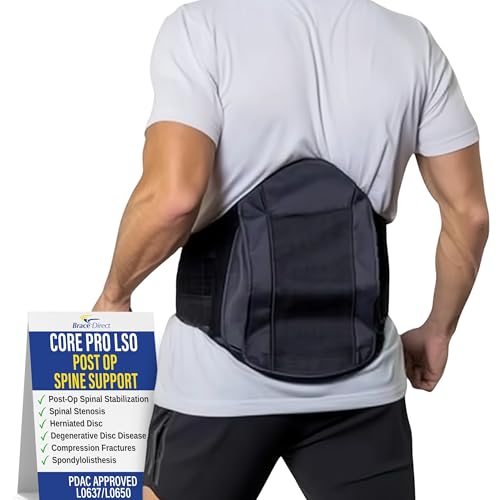
The broadest waist range among these LSO options distinguishes this brace: it fits 22–55-inch waists, with an included extender panel for sizes up to 65 inches. Moldable posterior, lateral and anterior panels can be shaped or trimmed for a tailored fit, and the maker says its 6:1 pulley system multiplies tightening force.
This option suits buyers who need a broad size range and customizable panels. The panels may require careful fitting, so consult a qualified professional if you are unsure how to shape them or need post-operative support.
Bottom line: Choose this if the waist range or adjustable panels match your needs.
Brace Align VertebrAlign LSO

Removable rigid panels set this LSO apart: the maker says they allow firm or flexible control, and one-handed pull tabs tighten the brace. The waist range is 23–50 inches, with a Plus Extension model available for waists up to 66 inches. Its weight is 2.2 pounds.
This brace suits buyers who want to adjust panel rigidity and compression. Because its fit depends on waist measurement and panel setup, measure at the navel and ask a clinician to help confirm fit when using it for a diagnosed spinal condition or after surgery.
Bottom line: Choose this if removable panels and one-handed tightening are priorities.
FEATOL 5-Stay Lumbar Belt

This flexible lumbar belt uses three memory-aluminum stays and two support plates, rather than the shaped or removable panels of the LSO models. The maker describes it as adjustable, with soft elastic materials and a snug fit. The Large size covers a 34.3–38-inch waist; other sizes are listed across a range from 25.6 to 65 inches.
It may suit someone seeking a belt for work or daily activities, rather than a rigid LSO. Sizing ranges meet at some boundaries, so measure at the navel and confirm which size is recommended for your exact measurement.
Bottom line: Choose this if a flexible belt with stays fits your activity and waist.
TESETON 6-Bone Back Brace
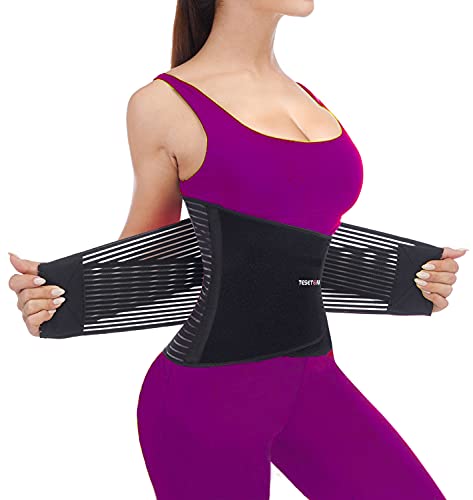
Six reinforced bones and two elastic straps distinguish this lumbar support belt from the five-stay FEATOL belt and the LSO braces. The maker says the bones provide vertical support and the straps add compression. The Medium size is for a 28–31-inch waist, and the weight is about 0.68 pound.
This option may suit someone whose waist fits Medium and who prefers a belt with multiple stays. Unlike the LSO choices, its product name identifies a size-specific belt, so check that the waist measurement falls within the range before choosing it.
Bottom line: Choose this if a 28–31-inch waist and six-bone belt suit your needs.
How to choose a back brace for degenerative disc disease
Start with the support style your clinician recommends, then check the waist fit and how the brace tightens. A lumbar belt uses flexible fabric and stays for compression; an LSO has a panel designed to support the lumbar and sacral area. Neither design changes the underlying disc condition, and a brace is not a substitute for an individualized care plan.
Use a measurable rule: if your navel measurement falls outside a product’s waist range, choose a different size or model rather than relying on extra tightening. For the FEATOL Large, for example, the range is 34.3–38 inches. Ask a clinician to guide selection after surgery or if you have been prescribed spinal stabilization.
How to measure waist fit for a lumbar brace
Measure around your waist at the navel, since that is the sizing point specified by several braces here. Keep the tape level and snug without pulling it tight; compare the result with the exact size range rather than using pants size. Brace sizes can overlap at their boundaries, so confirm the maker’s sizing guidance if your measurement lands on a shared endpoint.
Brace coverage is not interchangeable: the Breg and VertebrAlign options cover 24–50 and 23–50 inches, respectively, while the Brace Align LSO covers 22–55 inches and offers an extender up to 65 inches. Choose by the measured waist and required support style, not by assuming that a universal label means a custom fit.
LSO braces and flexible lumbar belts compared
LSO braces use structured panels for lower-back and sacral support, while flexible lumbar belts rely on fabric, stays and straps. The difference matters when a clinician has recommended a particular level or style of stabilization. Product terminology alone does not establish that a brace is appropriate for your diagnosis.
Use this guide to match the structure to the feature you want; confirm medical suitability with a clinician when the brace is for a diagnosed condition or post-operative recovery.
| Brace type | Construction in these options | Consider when |
|---|---|---|
| LSO | Shaped or adjustable support panels | You need the structured style recommended by your clinician |
| Flexible lumbar belt | Fabric, stays and adjustable straps | You want a belt-style option for daily activities |
Safe use and common brace-fitting mistakes
A brace should fit securely without restricting breathing, pinching skin or causing numbness. Loosen or remove it and seek professional advice if it causes new pain, tingling, skin injury or breathing difficulty. Do not assume that tighter compression provides better support.
Common fitting mistakes include measuring at the hips instead of the navel, choosing a size outside its range and bending or trimming panels without guidance. These braces include adjustable or moldable elements, but individual fitting needs differ. If a clinician prescribed an LSO after a procedure, ask that clinician how long and when to wear it; a product’s adjustment features do not determine a safe wear schedule.
Frequently Asked Questions
Can a back brace fix degenerative disc disease?
A back brace provides external support; it does not reverse disc degeneration. Ask a clinician whether a brace fits your care plan and how it should be used.
Where should I measure for a lumbar brace?
Measure waist circumference at the navel, the sizing point specified by several options here. Compare the measurement with the maker’s range, and confirm guidance if it sits at a size boundary.
Is an LSO different from a lumbar belt?
Yes. An LSO is a lumbosacral orthosis with structured support panels, while a lumbar belt typically uses flexible fabric and stays. Choose the style recommended for your situation rather than assuming they provide equivalent support.
How tight should a lower-back brace feel?
A brace should feel secure without restricting breathing or causing numbness, pinching or new pain. Loosen or remove it and seek professional advice if those problems occur.
Can I wear a brace after back surgery?
Post-operative brace use depends on the procedure and your clinician’s instructions. Ask the surgical team which brace style to use and when to wear it; adjustable panels alone do not establish a safe schedule.