
Best Bath Tub Refinishing Kit: 4 Kits Compared

Ekopel Tub Cast Roll On is the best bath tub refinishing kit for most people because it identifies compatibility with porcelain, fiberglass and cast iron and includes primer and a glossy top coat. Choose another kit if you need a water-based formula, quantified coverage or a two-part epoxy system.
Bathtub refinishing kits coat an existing surface rather than replace the tub, so the right pick depends on tub material, coating system and surface preparation.
We earn a commission if you buy through links on this page. As an Amazon Associate I earn from qualifying purchases. Products are compared on manufacturer specifications, not hands-on testing.
- Best overall: Ekopel Tub Cast Roll On – Its primer-and-top-coat system is specified for porcelain, fiberglass and cast iron.
- Best for lower-odor water-based paint: DWIL Acrylic Tub and Tile Kit – The acrylic kit is water-based and gives a 25–30-square-foot coverage range.
- Best for two-part epoxy: Two-Coat Epoxy Tub and Tile Kit – The kit uses a two-coat, two-part epoxy system for tubs, tile, sinks and showers.
- Best for water cleanup: 17.6-oz Tub and Tile Paint Kit – The water-based formula allows rinsing spills with water and covers 25–30 square feet.
| Product | Best for | Coating system | Surface fit | Coverage | Shop |
|---|---|---|---|---|---|
| Ekopel Tub Cast Roll On | Multiple tub materials | Primer + top coat | Porcelain, fiberglass, cast iron | One standard bathtub | Check Price on Amazon |
| DWIL Acrylic Tub and Tile Kit | Small painted areas | Water-based acrylic | Tub and tile | 25–30 sq. ft. | Check Price on Amazon |
| Two-Coat Epoxy Tub and Tile Kit | Epoxy coating system | Two-part epoxy, 2 coats | Tubs, tile, sinks, showers | — | Check Price on Amazon |
| 17.6-oz Tub and Tile Paint Kit | Easy spill cleanup | Water-based paint + hardener | Bathtub, sink | 25–30 sq. ft. | Check Price on Amazon |
Bath tub refinishing kits compared
Match the coating system to the tub material, the area to be covered and the amount of preparation you can do.
Ekopel Tub Cast Roll On

Ekopel Tub Cast Roll On stands apart with a dedicated primer and glossy top coat for porcelain, fiberglass and cast iron tubs. The maker says the correctly applied system cures to a hard, bright white finish. Its standard kit is sized for one standard bathtub, so it suits a single-tub project where the material matches one of those three surfaces.
Preparation is a substantial part of this choice: remove caulk and silicone, clean, sand or degloss, and wipe the surface before coating. The kit is not the simplest route for someone unwilling to do meticulous prep.
Bottom line: Pick this when your tub is porcelain, fiberglass or cast iron and you can prepare it thoroughly.
DWIL Acrylic Tub and Tile Kit

DWIL Acrylic Tub and Tile Kit is the water-based acrylic option, with tools included and a coverage range of 25–30 square feet. The maker describes its formula as low odor and designed to resist flaking and wear. That makes it a fit when you want paint for a tub or tile area and need coverage expressed as a surface area.
The package is 16.5 fluid ounces, and its coverage range means you should measure the area before starting rather than assume one kit will coat any tub. This is an acrylic paint kit, not the primer-and-top-coat or two-part epoxy approach offered by other picks.
Bottom line: Choose this for a water-based acrylic kit when your measured area fits its coverage range.
Two-Coat Epoxy Tub and Tile Kit

Two-Coat Epoxy Tub and Tile Kit uses a two-part epoxy system applied in two coats, separating it from the acrylic paint and primer-plus-top-coat kits. The maker says the cured coating is hard, glossy and non-porous, and describes it as resistant to peeling, chipping, scuffing and everyday wear. The application range includes tubs, tile, sinks and showers.
This is the choice for someone specifically seeking a two-part epoxy coating, not a water-based acrylic formula.
Bottom line: Pick this when a two-part epoxy system matters more than stated area coverage.
17.6-oz Tub and Tile Paint Kit
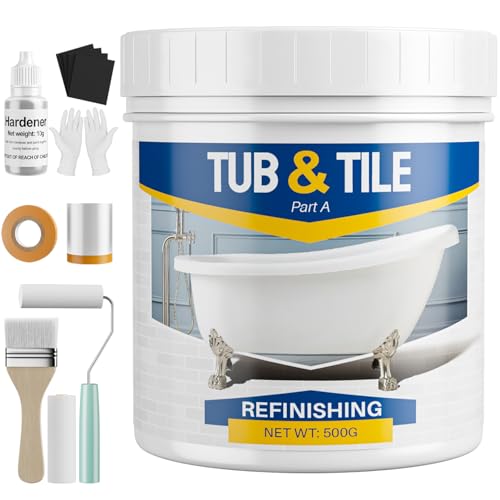
17.6-oz Tub and Tile Paint Kit combines a 17.6-ounce paint kit with hardener and tools, and its coverage is 25–30 square feet. The maker says the water-based formula can be rinsed away with water after accidental spills. That cleanup approach distinguishes it from the other kits and can matter during a DIY project where drips are a concern.
The fit focuses on bathtubs and sinks, so it is a narrower match than a kit explicitly described for several tub materials. Measure the surface first: coverage is limited to the range, and this kit is semi-gloss rather than a gloss top-coat system.
Bottom line: Choose this when water cleanup and coverage within 25–30 square feet suit the project.
How to choose a bath tub refinishing kit
Start with tub material and the coating system, then check coverage against the surface area. Standard alcove tubs are commonly about 60 inches long by 30 inches wide, but depth and shape change the surface to coat; measure the basin, sides and any included tile rather than treating footprint as paint area. A kit rated for 25–30 square feet has an area limit, while a kit sized for one standard bathtub uses a different measure.
Also compare preparation requirements. Refinishing coatings adhere to a prepared surface, not grime, soap film, silicone or loose finish. If your tub has deep chips or cracks, repair them before coating; paint is a surface finish, not a structural repair. Choose by the actual substrate named for the kit, not just its color or sheen.
Preparing the tub before refinishing
Thorough preparation is central to a durable coating: remove old caulk and silicone, clean away residue, sand or degloss as required, and remove dust before applying primer or paint. Even a thin film of soap or silicone can interfere with adhesion, so do not shortcut cleaning to save time. Mask adjacent surfaces and keep water off the prepared tub until the coating process is complete.
Bathroom coatings involve chemicals, and low odor does not mean risk-free. Ventilate the work area, follow the kit’s protective-equipment directions, and keep children and pets out during application and curing. Do not use the tub until the coating has cured according to its product instructions; cure time differs by formula and conditions, so verify it before planning bathroom use.
Coverage and tub size
Measure the area the coating will cover, including the tub walls and any tile included in the project. A typical 60-by-30-inch alcove footprint alone is not the total coated surface; interior basin depth and surround dimensions add area. Use the 25–30-square-foot range only for a project that fits that area, and do not infer that a kit labeled for one standard tub also covers tile surrounds.
For a large surround or more than one fixture, calculate each surface separately and add the areas before choosing a kit. Leave room for application overlap and surface texture rather than planning at the exact edge of a coverage claim. A kit without an area needs confirmation of coverage before ordering if your project size is a deciding factor.
Refinishing coating types compared
Water-based acrylic paint and two-part epoxy are different coating approaches; a primer-plus-top-coat system is another setup. Acrylic kits may emphasize cleanup and lower odor, while two-part systems require mixing their components and using them as directed. Neither coating type makes poor preparation acceptable, and surface compatibility still comes first.
The table separates these options by the deciding project need. Use substrate compatibility as the first filter, then narrow the choice by coating method and area. Avoid choosing on the word “paint” alone: check whether the kit is meant for the tub material and whether its coverage matches the basin and surround you plan to coat.
| Project need | Coating approach | What to verify |
|---|---|---|
| Water-based application | Acrylic or water-based paint | Surface fit and square-foot coverage |
| Two-part coating | Epoxy | Mixing and cure instructions |
| Multiple named tub materials | Primer and top coat | Porcelain, fiberglass or cast iron match |
Common bathtub refinishing mistakes
Skipping silicone removal is a common adhesion mistake because new coating does not bond reliably over caulk residue. Another mistake is estimating coverage from the tub’s length alone; coat area includes the sloped basin and vertical sides. Measure the actual surfaces and make sure the kit is intended for the underlying material before beginning.
Do not rush the return to service. Keep the tub dry and unused until the maker’s cure interval has passed, and maintain ventilation while coating and curing. Avoid abrasive cleaners and harsh scrubbing on a refinished surface unless the coating maker permits them; rough cleaning can wear a coating sooner than gentle care.
Frequently Asked Questions
How much area does one tub refinishing kit cover?
Coverage varies by kit: two options here give a range of 25–30 square feet, while another is sized for one standard bathtub. Measure the basin and sides, and count any tile surround separately.
Can a refinishing kit go over silicone caulk?
No; silicone residue should be removed before coating because it can interfere with adhesion. Re-caulk only after the coating is fully cured and ready for normal use.
How long should a refinished tub cure?
Cure time is formula-specific, so use the interval for the exact coating system before running water or bathing. Keep the room ventilated and the surface dry throughout the curing period.
Can I use a tub coating on a fiberglass tub?
Some kits name fiberglass as a compatible surface, while others use broader descriptions. Confirm the tub material matches the product’s surface fit before starting.
Do I need to repair chips before refinishing?
Yes, repair chips and cracks before applying a coating because refinishing paint is a surface layer, not a structural repair. Sand and clean repaired areas as required before coating.