
Best Brace for Torn Bicep Tendon: 4 Options Compared

For an upper-arm tendon injury, GenetGo Adjustable Bicep & Tricep Sleeve is the most adjustable option here, while ITHW Bicep Compression Sleeve adds side springs to help keep its sleeve in place. These products are compression supports, not a way to repair a tendon tear.
A suspected tendon tear needs clinical assessment before relying on a brace.
We earn a commission if you buy through links on this page. As an Amazon Associate I earn from qualifying purchases. Products are compared on manufacturer specifications, not hands-on testing.
- Best overall: GenetGo Adjustable Bicep & Tricep Sleeve – Its adjustable upper-arm support fits either arm and is offered in two sizes.
- Best for sleeve retention: ITHW Bicep Compression Sleeve – Two soft side springs help the sleeve fit closely and resist slipping.
- Best for soft fabric: FEATOL Bicep Tendonitis Compression Sleeve – Its inner sleeve uses Lycra fabric and is described as flexible and lightweight.
| Product | Best for | Fit or adjustability | Weight | Shop |
|---|---|---|---|---|
| GenetGo Adjustable Bicep & Tricep Sleeve | Adjustable support | Adjustable; two sizes | 0.13 lb | Check Price on Amazon |
| ITHW Bicep Compression Sleeve | Sleeve retention | Large; side springs | 0.25 lb | Check Price on Amazon |
| FEATOL Bicep Tendonitis Compression Sleeve | Soft inner fabric | Large | 0.27 lb | Check Price on Amazon |
| Adjustable Bicep Compression Sleeve, Large | Three-size range | Adjustable; three sizes | 0.18 lb | Check Price on Amazon |
Bicep tendon braces
These supports cover the upper arm except for the elbow brace, which is intended for elbow-joint support.
GenetGo Adjustable Bicep & Tricep Sleeve

Adjustability sets this upper-arm sleeve apart: it fits either the left or right arm and comes in two size options. The 4-inch width designation helps distinguish this model, and the maker describes it as a lightweight support for workouts and day or night wear. It is intended to stabilize upper-arm muscles and tendons and help reduce swelling and soreness. This may suit someone who wants a wrap-style fit rather than a pull-on sleeve. The available fit choice is limited to two sizes, so confirm the fit before ordering if your arm falls between sizes.
Bottom line: Choose this if you want adjustable upper-arm support for either arm.
ITHW Bicep Compression Sleeve

Two soft springs along the sides distinguish this compression sleeve, helping it sit close to the arm and resist slipping. It is a large, gray-black upper-arm sleeve made from 3D knitted material, which the maker describes as breathable and comfortable for extended wear. The maker also says it is intended for biceps or triceps strains and post-surgery rehabilitation. The side springs address sleeve placement rather than tendon repair, so this option is best for a wearer whose main concern is keeping a sleeve in position. Its fit is identified as large, not adjustable.
Bottom line: Pick this if a close-fitting sleeve with side supports is your priority.
FEATOL Bicep Tendonitis Compression Sleeve

A soft Lycra inner sleeve is the standout feature of this large, black upper-arm support. FEATOL describes the flexible fabric as lightweight and suitable for all-day wear; the maker also claims pain relief for biceps or triceps strain and overuse. The sleeve may suit someone looking for a simple compression layer without an adjustment system. The size is large, so this is a narrower choice if you need a different fit. Compression can support the arm, but it does not establish whether a tendon is torn or treat a tear.
Bottom line: Choose this for a simple large sleeve with a soft inner layer.
Adjustable Bicep Compression Sleeve, Large
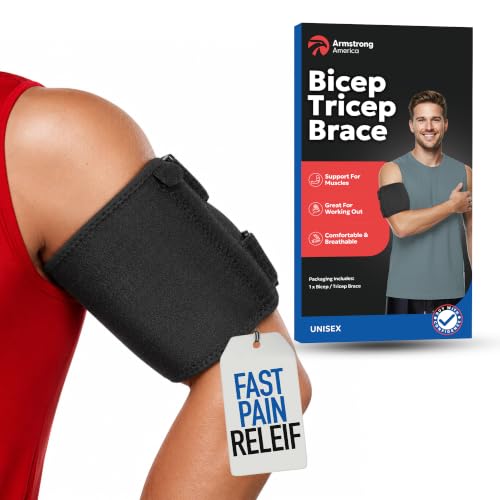
Three size options and an adjustable support distinguish this upper-arm sleeve from the single-size sleeves here. It fits either the left or right biceps or triceps, and the maker describes it for daytime or nighttime wear and exercise. The black large version is intended to provide compression for upper-arm stiffness and strain. This may suit buyers who want a size choice plus an adjustable wrap. The fit still depends on choosing the appropriate size; check the size guidance before ordering, particularly if your upper arm is near a size boundary.
Bottom line: Pick this if you want an adjustable sleeve with three size choices.
How to choose a brace for a torn bicep tendon
For an upper-arm injury, choose a sleeve or wrap that covers the painful area and stays in place through elbow movement. A biceps tendon tear can occur near the shoulder or near the elbow, and the correct diagnosis and treatment depend on its location; a generic compression sleeve is not a substitute for evaluation. Most braces in this group are upper-arm compression supports, while an elbow brace targets the joint. Use the support area as the first filter, then compare fit style: adjustable wraps accommodate more variation than a fixed-size sleeve, while sleeves with side supports may resist slipping. If pain follows a sudden pop, bruising, or notable weakness, get medical assessment rather than relying on compression alone.
Upper-arm sleeve fit and sizing
A brace that slides, bunches, or causes tingling is not a good fit; compression should feel snug without restricting circulation. Measure the upper arm at the location the maker’s sizing guide specifies, since a measurement near the biceps midpoint may not match a measurement near the shoulder. A left/right-compatible wrap can reduce orientation concerns, but it still needs the correct circumference. For adjustable models, close the wrap securely without pulling it so tight that the hand becomes cold, numb, or discolored. Check the skin after removing a brace, especially during early wear. If swelling or symptoms worsen, loosen or remove it and seek professional guidance.
Compression sleeves versus elbow braces
Upper-arm sleeves cover the biceps or triceps region; elbow braces concentrate support around the elbow joint, so they are not interchangeable. A shoulder-side biceps tendon injury and an elbow-side tendon injury may both cause upper-arm symptoms, but a brace should not be selected by the word “tendonitis” alone. This comparison can help separate the support types:
| Support type | Coverage | Consider when |
|---|---|---|
| Upper-arm compression sleeve | Biceps or triceps area | Support is wanted over the upper arm |
| Adjustable upper-arm wrap | Upper arm, variable fit | A fixed sleeve fit is difficult |
| Elbow brace | Elbow joint | Support is needed at the elbow |
With pain centered above the elbow, favor upper-arm coverage; with symptoms centered at the joint, first clarify the diagnosis and support need.
When a brace is not enough
A brace provides external compression, not tendon reattachment or a diagnosis. A complete biceps tendon tear can cause a pop, bruising, weakness, or a change in the muscle’s contour, and prompt evaluation matters because treatment options depend on tear location, severity, and activity needs. Do not use a compression sleeve to push through heavy lifting when strength has suddenly dropped. Until assessed, avoid activities that sharply increase pain and remove the support if it causes numbness, discoloration, or increasing swelling. After a clinician identifies the injury, ask what level of activity and compression is appropriate, since rehabilitation timing differs by injury and treatment.
Frequently Asked Questions
Can a brace heal a torn bicep tendon?
No, a compression brace cannot reattach a torn tendon. A clinician needs to assess the tear, since treatment depends on whether it is near the shoulder or elbow and how severe it is.
Where should a bicep brace sit on the arm?
An upper-arm sleeve should cover the biceps or triceps area indicated by its fit guide, rather than bunching at the elbow crease. Recheck placement after bending and straightening the elbow.
Should I wear a bicep brace while sleeping?
Only wear a brace overnight if its fit is comfortable and a clinician has not advised otherwise. Remove it if you notice numbness, coldness, skin discoloration, or worsening pain.
What symptoms can indicate a biceps tendon tear?
A sudden pop followed by bruising, weakness, or a changed muscle contour can occur with a biceps tendon tear. Those symptoms warrant prompt medical evaluation rather than choosing a brace by symptoms alone.
Can I lift weights with a bicep tendon brace?
A brace does not make heavy lifting safe after a suspected tendon tear. Stop lifting if strength drops suddenly or movement causes sharp pain, and get a clinical assessment before returning to strenuous exercise.