
Best Brand Sticky Rice: 4 Picks for Every Dish

Three Rings Sanpatong Thai Sticky Rice suits most people who want a classic Thai sticky rice, with an 80-ounce bag for repeated cooking. Choose Soeos Sweet Sticky Rice, 2 lb for a smaller pantry quantity, Asian Best Black Sweet Rice, 5 lb for black sweet rice, or East and Else Thai Sticky Rice, 15 oz for a 15-ounce Thai bag.
Sticky rice, also called glutinous rice, is a short-grain rice that becomes cohesive when cooked; the name does not mean it contains gluten.
We earn a commission if you buy through links on this page. As an Amazon Associate I earn from qualifying purchases. Products are compared on manufacturer specifications, not hands-on testing.
- Best overall: Three Rings Sanpatong Thai Sticky Rice – The 5-pound Thai sweet rice bag is intended for traditional Thai and Southeast Asian dishes.
- Best for smaller batches: Soeos Sweet Sticky Rice, 2 lb – The 2-pound bag offers a smaller quantity for desserts, mochi and rice cakes.
- Best for black rice dishes: Asian Best Black Sweet Rice, 5 lb – Black sweet rice brings purplish-black color and is suited to pudding and sweet rice cakes.
- Best for a small Thai bag: East and Else Thai Sticky Rice, 15 oz – The resealable 15-ounce bag is Thai sticky rice intended for mango sticky rice and desserts.
| Product | Best for | Rice type | Package size | Color | Shop |
|---|---|---|---|---|---|
| Three Rings Sanpatong Thai Sticky Rice | Thai cooking | Thai sweet rice | 80 oz | White | Check Price on Amazon |
| Soeos Sweet Sticky Rice, 2 lb | Small households | Sweet glutinous rice | 32 oz | White | Check Price on Amazon |
| Asian Best Black Sweet Rice, 5 lb | Black rice desserts | Black sweet rice | 80 oz | Purplish-black | Check Price on Amazon |
| East and Else Thai Sticky Rice, 15 oz | Trial-sized cooking | Thai glutinous rice | 15 oz | White | Check Price on Amazon |
Sticky Rice Brands
Compare rice type and bag size against the dishes you plan to make most often.
Three Rings Sanpatong Thai Sticky Rice

Three Rings Sanpatong Thai Sticky Rice is the largest white Thai sweet-rice bag among these picks, making it a practical choice for households that prepare sticky rice regularly. The 5-pound resealable bag is described as suitable for Thai and Southeast Asian dishes, including desserts, rice cakes and dumplings. The maker identifies it as all-natural, gluten-free and non-GMO. This is dry grain rather than a ready-to-eat meal, so allow for the soaking and steaming routine used for traditional sticky rice. Its large quantity may be more than an occasional cook needs.
Bottom line: Choose this for frequent Thai sticky rice cooking and a larger pantry supply.
Soeos Sweet Sticky Rice, 2 lb
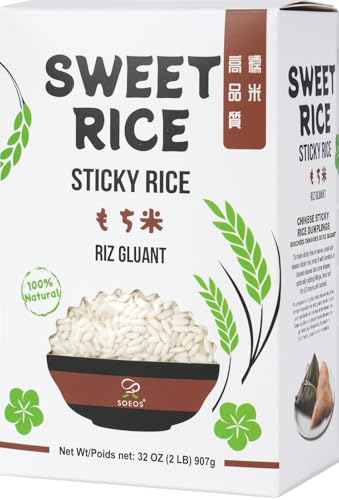
Soeos Sweet Sticky Rice, 2 lb offers a 2-pound quantity, smaller than the 5-pound bags here while still providing dry glutinous rice for repeated recipes. Its described uses include mochi, Thai mango sticky rice, rice cakes and dumplings, so it suits cooks who want one grain for sweet and savory preparations. The maker calls it natural, gluten-free and preservative-free. The package is not a quick-cook cup; plan on preparing the grain for the texture your recipe requires. Although the features mention quick cooking, they give no preparation time, so do not rely on a specific minute count.
Bottom line: Pick this for a more manageable bag of versatile sweet rice.
Asian Best Black Sweet Rice, 5 lb

Asian Best Black Sweet Rice, 5 lb is the distinct choice for recipes that call for black sweet rice rather than white glutinous rice. Its purplish-black grains are intended for black rice pudding and sweet rice cakes, and the 5-pound resealable bag matches the larger package size of Three Rings Sanpatong Thai Sticky Rice. The maker identifies this rice as Non-GMO Project Verified. Because its color and flavor differ from white Thai sweet rice, it is not the straightforward pick for a recipe that depends on white grains or a pale appearance. Choose it when the dark color is part of the dish you want to make.
Bottom line: Choose this when black sweet rice is the intended ingredient.
East and Else Thai Sticky Rice, 15 oz

East and Else Thai Sticky Rice, 15 oz comes in the smallest bag here, at 15 ounces, for cooks who want Thai sticky rice without committing to a multi-pound package. It is sourced from Thailand and described as white glutinous rice for mango sticky rice, desserts and other Asian food. The maker says the grains are selected for even cooking and a soft, chewy texture. That makes the recipe fit clear, but the small package is less suited to frequent batch cooking than the larger bags. It is dry rice, so traditional recipes still need preparation rather than a simple reheat.
Bottom line: Pick this for an occasional Thai dessert or a smaller pantry quantity.
How to Choose Sticky Rice for a Recipe
Start with the grain color and dish, because white sweet rice and black sweet rice are not interchangeable in appearance. White glutinous rice is common in Thai mango sticky rice, while black sweet rice is used for dark puddings and sweet rice cakes. For a recipe that names Thai sticky rice, choose a white Thai grain rather than a microwaveable bowl of cooked rice. Next consider package size: 15 ounces suits occasional cooking, while 5 pounds makes more sense for regular batches. A useful rule is to choose a package under 2 pounds if you expect to cook sticky rice only once or twice before restocking; frequent cooks can use a larger resealable bag.
How Traditional Sticky Rice Is Cooked
Traditional Thai sticky rice is usually soaked before steaming, not simmered like ordinary long-grain rice. A common home method is to rinse the grains, soak them for at least 4 hours or overnight, then steam them in a basket or steamer until tender and cohesive. Soaking time and steaming time vary with grain age, quantity and equipment, so use a recipe matched to the rice and check tenderness. A bamboo basket is traditional, but a lined steamer also works. Do not crowd the steamer: a thinner layer allows steam to reach the grains evenly. For a ready-cooked rice cup, follow its package heating directions instead of this dry-grain method.
Sticky Rice Types Compared
White Thai sweet rice is the usual starting point for classic Thai sticky rice dishes; black sweet rice is a visibly different grain suited to dark desserts. Cooked instant rice is a separate convenience format and does not require the same soak-and-steam process. Use the table to match the grain to the dish before selecting a bag.
| Type | Typical use | Choose when |
|---|---|---|
| White Thai sticky rice | Mango sticky rice, savory Thai dishes | The recipe calls for Thai sweet rice |
| Black sweet rice | Black rice pudding, sweet rice cakes | Dark color and flavor suit the dish |
| Cooked rice cup | Fast individual meal | Convenience matters more than dry-grain preparation |
Storage and Food Safety for Cooked Rice
Refrigerate cooked rice within 2 hours, or within 1 hour when the room is hotter than 90°F, to limit bacterial growth. Store leftovers in a shallow, covered container and use them within 3 to 4 days; cool rice promptly rather than leaving a pot on the counter. Reheat leftovers to 165°F throughout. Dry uncooked rice should stay sealed in a cool, dry pantry, and resealable packaging helps limit moisture exposure. Keep raw grain and cooked leftovers separate, and discard rice with an off smell or visible mold rather than tasting it.
Frequently Asked Questions
Does glutinous rice contain gluten?
Glutinous rice is naturally gluten-free; “glutinous” refers to its sticky texture, not wheat gluten. For a strict gluten-free diet, check packaging and avoid cross-contact during preparation.
How long should sticky rice soak before steaming?
Soak dry Thai sticky rice for at least 4 hours, with an overnight soak often used for convenience. Grain age and size of the batch can change how long steaming takes, so check that the center is tender.
Can I cook sticky rice in a regular rice cooker?
Some rice cookers have a sweet-rice or glutinous-rice setting, but traditional Thai sticky rice is commonly steamed after soaking. A regular cook cycle can produce a wetter result, so use a cooker recipe designed for sticky rice.
How long can cooked sticky rice stay refrigerated?
Refrigerated cooked rice is generally best used within 3 to 4 days. Chill it within 2 hours of cooking, and reheat leftovers to 165°F throughout.
Is black sweet rice the same as white Thai sticky rice?
No, black sweet rice is a different colored variety used for dishes such as black rice pudding and sweet rice cakes. Choose white Thai sticky rice when the recipe depends on white grains or a pale finished appearance.