
Hydrocolloid Bandages for Blisters: 4 Options Compared

For hydrocolloid bandages for blisters, Arme 50-Piece Four-Shape Blister Bandages is the named foot-focused option, with four shapes and 50 pieces for targeting different pressure zones. Choose a different option if you want a specific wear claim or a smaller heel cushion.
We earn a commission if you buy through links on this page. As an Amazon Associate I earn from qualifying purchases. Products are compared on manufacturer specifications, not hands-on testing.
- Best overall: Arme 50-Piece Four-Shape Blister Bandages – Four pad shapes and 50 pieces target several foot stress zones.
- Best for multi-day wear: BAND-AID Pro Heal Blister Bandages, 6 Count – The brand says this waterproof bandage stays in place for up to 5 days.
- Best for heel cushioning: Amazon Basics Extreme Heel Cushions, 10 Count – Its 1.65-by-2.67-inch cushion is specifically shaped for heel protection.
| Product | Best for | Pack count | Pad sizes | Wear claim | Shop |
|---|---|---|---|---|---|
| Arme 50-Piece Four-Shape Blister Bandages | Multiple foot zones | 50 pieces | 2.36 × 0.79, 2.76 × 1.14, 2.17 × 1.45 | — | Check Price on Amazon |
| BAND-AID Pro Heal Blister Bandages, 6 Count | Multi-day protection | 6 bandages | — | Up to 5 days | Check Price on Amazon |
| Amazon Basics Extreme Heel Cushions, 10 Count | Heel cushioning | 10 bandages | 1.65 × 2.67 in | Multi-day use | Check Price on Amazon |
| 30-Piece Variety Hydrocolloid Blister Bandages | Footwear friction | 30 pieces | Variety | — | Check Price on Amazon |
Hydrocolloid Bandages for Blisters
Compare these options by pad shape, coverage, and the wear features that matter for your blister location.
Arme 50-Piece Four-Shape Blister Bandages

Arme 50-Piece Four-Shape Blister Bandages stands apart with four shapes intended for different foot zones, rather than one repeated pad shape. The 50-piece set includes elongated, circular, oval, and crescent pads for areas such as the forefoot, big toe, heel, and ball of the foot. The maker says its hydrocolloid material molds to skin curves and absorbs fluid. This set suits someone who wants several pad outlines for footwear-related rubbing. Its many sizes may be less convenient if you only need a compact pack for one small spot.
Bottom line: Choose this set when you want several pad shapes for different foot areas.
BAND-AID Pro Heal Blister Bandages, 6 Count

BAND-AID Pro Heal Blister Bandages, 6 Count is the only option here with a specific claim of up to 5 days of waterproof wear. The hydrocolloid bandage absorbs fluid, and the maker says a white bubble may form beneath the seal as healing begins. Its six-count pack suits a buyer who values a longer wear claim for a blister or minor wound. It is not a multi-shape foot kit, so someone planning to cover several differently positioned friction zones may prefer a set with varied outlines.
Bottom line: Choose this when the multi-day waterproof wear claim matters most.
Amazon Basics Extreme Heel Cushions, 10 Count

Amazon Basics Extreme Heel Cushions, 10 Count differs by giving a single large, heel-oriented cushion size: 1.65 by 2.67 inches. The maker describes the adhesive hydrocolloid gel pads as flexible and intended to cushion and protect heel blisters from rubbing and friction during activities. Ten pads make this a focused option for heel coverage rather than a range of shapes for toes or forefoot spots. The intended use is heel protection, so buyers needing a pad for another foot location should choose a shape designed for that area.
Bottom line: Choose this for a heel blister that benefits from a larger cushion.
30-Piece Variety Hydrocolloid Blister Bandages
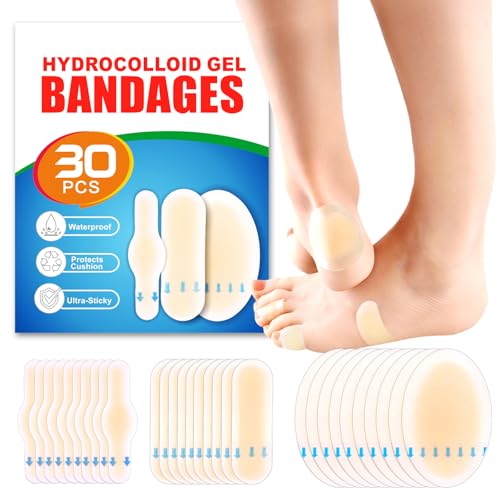
30-Piece Variety Hydrocolloid Blister Bandages is presented as a variety pack for feet, heels, and toes, with emphasis on cushioning rubbing spots from new shoes, boots, heels, or athletic shoes. The maker describes the hydrocolloid gel bandages as thin, lightweight, and waterproof. The 30-piece pack suits someone seeking a general footwear-friction option without a multi-day wear duration. Unlike the 50-piece set, the individual shapes and measurements are not given, so it may be harder to match a particular pad outline to a narrow pressure point.
Bottom line: Choose this for general foot and footwear-related blister coverage.
How hydrocolloid blister bandages work
Hydrocolloid dressings absorb wound fluid and form a moist gel layer against the skin; the visible white or gel-like swelling can be normal as fluid collects. These dressings are generally used on clean, minor wounds, not deep punctures, heavily bleeding wounds, or infected skin. Clean and dry the surrounding skin before application, then press the edges down without stretching the pad. A sealed dressing can loosen with friction, sweat, or movement, so inspect the edges after activity. Do not puncture a fluid-filled blister simply to make a dressing fit; an intact blister roof helps protect the area.
Choose a pad shape for the blister location
Match the pad outline to the rubbing zone: a narrow strip can span an edge, while a broad oval or heel cushion can cover a larger contact area. Leave a margin of intact skin around the sore spot so the adhesive can seal rather than sit directly on the blister edge. If the pressure point is smaller than the pad, avoid folds or overlapping adhesive that can catch on socks. For shoe friction, also address the source: a shoe that slips at the heel or crowds the toe box can keep irritating the same spot even under a dressing. Arme 50-Piece Four-Shape Blister Bandages offers four specified outlines; Amazon Basics Extreme Heel Cushions, 10 Count is a single heel-focused size.
| Need | Useful choice | Reason |
|---|---|---|
| Several foot zones | Four-shape pack | Different outlines target different areas |
| Heel coverage | Large heel pad | Broad stated heel cushion size |
| General first aid | Assorted hydrocolloid pack | Also intended for minor cuts and scrapes |
When to change a blister dressing
Wear duration depends on the seal, wound fluid, and the product’s instructions; replace a dressing if it leaks, peels off, becomes soiled, or the surrounding skin becomes irritated. Some hydrocolloid products claim wear for several days, but that is not a reason to leave a compromised seal in place. Wash hands before and after changing a dressing, and remove it gently rather than pulling sharply across fragile skin. Seek medical advice for spreading redness, warmth, increasing pain, pus, fever, or a blister associated with diabetes or poor circulation. Those situations need more than friction cushioning.
Prevent repeat blisters from shoes
Blisters commonly develop where repeated shear makes skin layers slide against each other; a bandage cushions the site but does not correct shoe fit. Check for heel lift, toe crowding, and seams pressing on the same spot, especially before a long walk. A sock that stays in place and keeps moisture away can reduce rubbing; change damp socks during extended activity. Break in unfamiliar footwear on short outings before wearing it for hours. Stop or adjust footwear when a hot spot starts, since early pressure relief is more useful than waiting for a blister to form.
Frequently Asked Questions
Can hydrocolloid bandages go on an open blister?
Hydrocolloid dressings are generally used on clean, minor wounds, including a blister that has opened. Keep the surrounding skin clean and seek medical advice if there is pus, spreading redness, or worsening pain.
Should I pop a blister before covering it?
Do not routinely pop a blister; an intact skin roof provides a protective barrier. If a blister is large, very painful, or shows signs of infection, get medical advice rather than cutting or puncturing it yourself.
Can I use hydrocolloid bandages on infected blisters?
A suspected infected blister needs medical assessment rather than simply being sealed under a dressing. Spreading redness, warmth, pus, increasing pain, or fever are warning signs, especially for people with diabetes or poor circulation.