
Best Broken Pipe Removal Tool: 4 Extractors Compared

9-Piece Pipe Extractor Set suits most people because its nine-piece set covers pipe sizes from 1/8 inch to 1 inch, with three longer bits for tight spaces. Choose a single internal extractor instead if your repair is limited to a common 1/2-, 3/4-, or 1-inch fitting and you want a tool made for those sizes.
A broken pipe extractor grips the inside of a pipe fragment so you can turn it out without grabbing its exterior.
We earn a commission if you buy through links on this page. As an Amazon Associate I earn from qualifying purchases. Products are compared on manufacturer specifications, not hands-on testing.
- Best overall: 9-Piece Pipe Extractor Set – Nine pieces cover pipe sizes from 1/8 inch to 1 inch, including three longer bits for tight spaces.
- Best for three common sizes: Universal 3-Jaw Pipe Extractor – Its three-jaw extractor fits 1/2-, 3/4-, and 1-inch fittings and uses a reverse-bite grip.
- Best for faucet repairs: Holimax CR-V Pipe Extractor – The tool is made for rusted or damaged faucet bolts and angle valves in three common sizes.
| Product | Best for | Pipe sizes | Pieces | Material | Shop |
|---|---|---|---|---|---|
| 9-Piece Pipe Extractor Set | Broad size coverage | 1/8–1 in | 9 | Steel | Check Price on Amazon |
| Universal 3-Jaw Pipe Extractor | Common fitting sizes | 1/2, 3/4, 1 in | 1 | Carbon steel | Check Price on Amazon |
| Holimax CR-V Pipe Extractor | Valve and faucet work | 1/2, 3/4, 1 in | 1 | Hardened CR-V steel | Check Price on Amazon |
| Broken Pipe Thread Extractor | Common plumbing sizes | 1/2, 3/4, 1 in | 1 | — | Check Price on Amazon |
Broken pipe removal tools compared
Match the extractor’s working range and style to the broken fitting before choosing a tool.
9-Piece Pipe Extractor Set

9-Piece Pipe Extractor Set covers the widest pipe-size range here, from 1/8 inch to 1 inch, and adds three longer bits for tight places. The set includes six extractors for common National Standard Pipe sizes and is described as compatible with Schedule 40 and Schedule 80 pipes. Its case keeps the pieces together. This is the most adaptable pick when the broken fitting size is uncertain or repairs span several sizes. The limitation is that the sizes are separate pieces, so you must identify the fitting and select the matching extractor rather than use one adjustable tool.
Bottom line: Choose this set when your repair work spans multiple pipe sizes.
Universal 3-Jaw Pipe Extractor
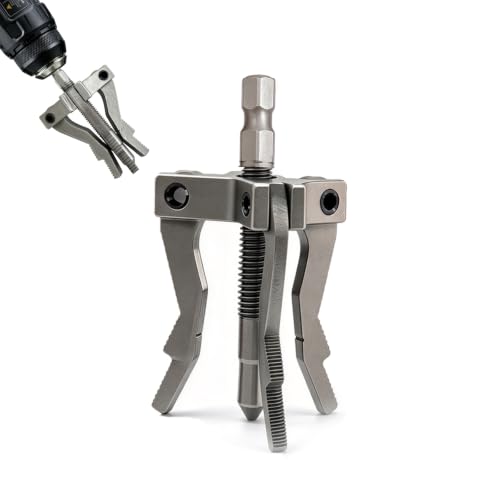
Universal 3-Jaw Pipe Extractor uses expanding serrated jaws rather than a set of separate size-specific extractors. The tool fits 1/2-, 3/4-, and 1-inch plumbing fittings, and its reverse-bite grip is intended to reduce slipping as the jaws engage the broken piece. Carbon-steel construction and heat treatment are specified. This design suits a household repair centered on one of those three common fitting sizes. Its narrower range matters for smaller fragments: the sizes begin at 1/2 inch, so it is not the choice for a 1/8- or 1/4-inch pipe repair.
Bottom line: Pick this for a three-jaw grip on a 1/2-, 3/4-, or 1-inch fitting.
Holimax CR-V Pipe Extractor

Holimax CR-V Pipe Extractor is specifically aimed at removing rusted or damaged faucet bolts and angle valves, setting it apart from the broader multi-piece pipe set. It fits 1/2-, 3/4-, and 1-inch fittings and uses hardened CR-V steel with a corrosion-resistant coating. An ergonomic handle is also part of its design. This is a focused option for valve or faucet repairs in those sizes. The limitation is the same narrow size span: buyers dealing with small pipe fragments or a range of different diameters should favor a set with more size options.
Bottom line: Choose this when the broken part is a faucet bolt or angle valve.
Broken Pipe Thread Extractor
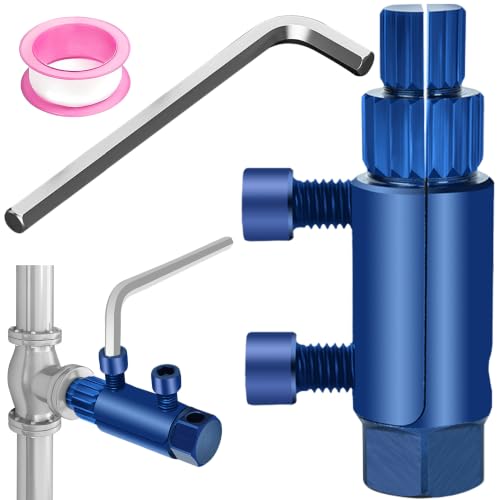
Broken Pipe Thread Extractor is described as a thread extractor for 1/2-, 3/4-, and 1-inch pipes, and its uses also include rusted or stuck fasteners. That mixed scope makes it less specialized than a valve-focused extractor or a multi-piece pipe set. It may suit someone who wants one tool for a common pipe size and occasional fastener removal. The material and construction are not clear enough to compare with the carbon steel and CR-V options. Confirm that the tool’s working size and engagement style suit the broken fitting before ordering.
Bottom line: Consider this for a common-size repair that may also involve stuck fasteners.
How to choose a broken pipe extractor
Choose by the broken pipe’s nominal size first, then by how the tool grips. Internal extractors generally bite into the fragment from inside; a multi-piece set offers a dedicated size for each range, while a jaw-style tool may cover several sizes. Pipe size is nominal, not the tool’s outside diameter: for example, 1/2-inch NPS pipe has a 0.840-inch outside diameter. Confirm the fitting size rather than measuring the extractor opening. If you routinely handle sizes below 1/2 inch or above 1 inch, a set with coverage matching that work is more useful than a three-size tool. Keep the surrounding fitting intact; excessive force can damage the fitting or connected pipe.
How pipe size and extractor fit work
Nominal pipe size identifies a standardized pipe family, not the exact outside diameter; NPS pipe from 1/8 inch through 12 inches uses different actual diameters. Threaded plumbing is commonly tapered NPT, while many faucet connections use other thread forms, so a pipe extractor is not a universal fastener tool. Select the tool by the broken piece’s inside opening and the fitting it came from. A useful rule: if the fragment is smaller than the extractor’s smallest size, do not force that extractor into it. A tight fit that engages the fragment without binding against the surrounding fitting is the goal.
Removing a broken pipe without damaging the fitting
Shut off the water supply and relieve pressure before working on a broken water line; open a nearby faucet to drain residual water. Clear debris from the fragment, seat the extractor as directed by its design, and turn counterclockwise to back out a standard right-hand pipe thread. Keep the tool aligned with the pipe axis so the bite stays even. Avoid sudden force: a brass or plastic fitting can crack if the extractor wedges against its wall. Stop if the fragment does not move or the fitting begins to deform, and reassess the size and engagement rather than escalating force.
Pipe extractor types and their best fit
Dedicated multi-piece sets cover more sizes, while single tools trade breadth for fewer parts and a more focused grip. The useful distinction is whether your work involves many pipe diameters or recurring repairs at one common size. Internal jaw extractors use gripping surfaces that expand against a fragment; individual extractors may use a different bite geometry. Never assume every model is drill-powered or suitable for impact driving, since tool designs differ. The table maps the choices to their coverage and purpose.
| Repair need | Choice | Stated coverage |
|---|---|---|
| Several pipe sizes | 9-Piece Pipe Extractor Set | 1/8–1 inch |
| Three common fitting sizes | Universal 3-Jaw Pipe Extractor | 1/2, 3/4, 1 inch |
| Faucet bolts or angle valves | Holimax CR-V Pipe Extractor | 1/2, 3/4, 1 inch |
Frequently Asked Questions
Do broken pipe extractors turn counterclockwise?
Most standard threaded pipe fittings use right-hand threads, which loosen counterclockwise when viewed from the open end. Keep the extractor aligned while turning so it does not slip or damage the surrounding fitting.
How do I know what pipe size extractor to use?
Use the pipe’s nominal size, which is not its outside diameter; 1/2-inch NPS pipe measures 0.840 inch across the outside. Check the fitting or pipe marking, then select an extractor whose range includes that nominal size.
Can a pipe extractor damage the fitting around it?
Yes, especially if the extractor is oversized, misaligned, or forced against the fitting wall. Shut off water first and stop if the fitting starts to deform rather than increasing leverage.
Can I use a broken pipe extractor on PVC?
Some internal extractors are intended for PVC as well as metal, but compatibility depends on the specific tool and fit. PVC can crack under concentrated force, so use a correctly sized extractor and avoid impact or sudden torque.