
Best Broom for Dog Hair: 3 Options Compared

The FURemover is the best broom for dog hair if fur is embedded in carpet, because its rubber bristles are designed to lift hair with short strokes. Choose a dual-bristle or conventional broom instead if you mainly sweep loose debris from hard floors.
Rubber brooms gather hair through contact with the floor, while ordinary bristles sweep it; a combination approach can suit homes with both carpet and hard flooring.
We earn a commission if you buy through links on this page. As an Amazon Associate I earn from qualifying purchases. Products are compared on manufacturer specifications, not hands-on testing.
- Best overall: FURemover 58-Inch Rubber Broom – Its 12.5-inch rubber head and short-stroke technique are aimed at lifting embedded fur from carpets and rugs.
- Best for hard floors: O-Cedar Pet Pro Broom – Dual bristles combine firm sweeping with softer bristles intended to capture fine dust and dirt.
- Best for spills: MR.SIGA 3-in-1 Rubber Broom – The rubber broom adds a squeegee edge and a microfiber cloth attachment for other floor-cleaning jobs.
| Product | Best for | Head or handle size | Bristle or head type | Extra feature | Shop |
|---|---|---|---|---|---|
| FURemover 58-Inch Rubber Broom | Carpet and rugs | 12.5-inch head; 58-inch handle | Electrostatic rubber bristles | Built-in squeegee edge | Check Price on Amazon |
| O-Cedar Pet Pro Broom | Dual-bristle sweeping | 15-inch broom; dustpan 14 inches wide | Firm and soft dual bristles | Step-on dustpan combs | Check Price on Amazon |
| MR.SIGA 3-in-1 Rubber Broom | Multi-task cleanup | 12.6-inch head; 61-inch adjustable handle | Rubber brush head | Squeegee and microfiber cloth | Check Price on Amazon |
Brooms for Dog Hair
Match the broom head to where pet hair collects, then consider handle reach and cleanup features.
FURemover 58-Inch Rubber Broom

The FURemover is the clearest fit for dog hair embedded in carpet: its 12.5-inch rubber head is designed to gather hair without scattering it. The adjustable 58-inch handle extends reach across floors, while the built-in squeegee edge adds a way to move liquid on suitable surfaces. The maker recommends short, sharp strokes while pulling the broom toward you to lift hair from carpet and rugs. This model suits homes with carpeting or mixed floors; buyers who mainly want an ordinary broom for loose crumbs may prefer a traditional bristle head.
Bottom line: Choose this for embedded fur on carpets and rugs.
O-Cedar Pet Pro Broom

The O-Cedar Pet Pro pairs two bristle types with a step-on dustpan, unlike the rubber-headed options. Firm black bristles handle larger debris, while softer gray bristles are intended to capture dust and dirt; the dustpan combs help remove hair from the broom without hand-pulling. The angled head is useful for reaching corners. It is a practical match for pet hair and everyday debris on hard floors, especially when broom cleanup is a nuisance. The product claims one-sweep removal percentages, but those are maker claims rather than a guarantee for every floor or hair type.
Bottom line: Pick this for dual-bristle hard-floor sweeping and comb-assisted cleanup.
MR.SIGA 3-in-1 Rubber Broom
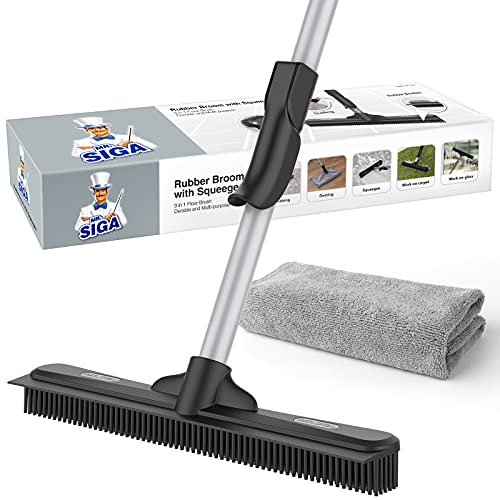
The MR.SIGA stands out by combining a rubber pet-hair brush with a squeegee and microfiber cloth attachment. Its 61-inch adjustable handle and 12.6-inch head give it a similar reach and width to other rubber broom options, while the extra attachments cover dusting and liquid spills as well as hair removal. The rubber head is intended for carpets and hard floors, so this suits homes that want one tool for several floor tasks. Those seeking only an uncomplicated carpet tool may not need the added attachments.
Bottom line: Choose this if you want one handle for hair, spills, and dusting.
How to choose a broom for dog hair
Choose the head by where the fur collects: rubber is designed to pull hair together on carpet, while bristles sweep loose hair and crumbs across hard floors. Rubber tools often work best with short strokes that draw toward you, not long pushes that can spread tufts. For a home with both surfaces, prioritize the room with embedded fur or select a model that also covers your other cleaning tasks. A useful decision rule is to choose a rubber head when carpet is a regular hair-collection surface; choose conventional bristles when most cleanup is loose debris on hard floors. Head width also matters: wider heads cover more floor per pass, but can be less nimble around furniture and corners.
Rubber brooms versus bristle brooms
Rubber and conventional bristle brooms collect hair differently, so the floor surface should decide between them. A rubber head is designed to gather fur through contact and can help lift hair from carpet; bristles move loose debris toward a dustpan. Dual-bristle heads combine firmer bristles for larger debris with softer ones for finer dust. The comparison below is a quick way to match the tool type to the task.
| Head type | Best fit | Trade-off |
|---|---|---|
| Rubber | Embedded fur on carpet and rugs | May be more tool than needed for crumbs alone |
| Dual bristle | Loose hair and mixed debris on hard floors | Hair must be cleared from the broom head |
| Conventional bristle | General indoor or outdoor sweeping | Not specifically designed to lift embedded carpet fur |
For corners, an angled broom head can reach where a broad straight head cannot; head width and angle are separate considerations.
Using a rubber broom on carpet
Use short, sharp strokes and pull the rubber broom toward you to gather pet hair from carpet and rugs. The short pull gives the rubber bristles repeated contact with the fibers, which is the technique specified for the FURemover. Work in small sections rather than trying to sweep a whole room in one long pass, and collect the gathered fur before moving on so it does not drift back into the pile. Rubber brooms can also be used on hard surfaces, but a regular bristle broom may be more convenient for loose grit and crumbs. For spills, use a model with a squeegee edge only on surfaces appropriate for that tool.
Handle reach, dustpans, and storage
Handle length affects posture and reach: the options range from a 38.18-inch minimum adjustable handle to 61 inches. If a broom feels too short while standing upright, favor a longer or adjustable handle rather than leaning forward through repeated passes. Dustpan features change cleanup too: combs or teeth help remove trapped hair from bristles, while a rubber lip is intended to sit flush against the floor and limit debris left at the edge. Clip-on storage keeps a broom and pan together, but the stored pair needs a stable spot where it will not tip into a walking path. Keep sweeping tools and collected fur away from children and pets during cleanup.
Frequently Asked Questions
Do rubber brooms work on dog hair in carpets?
Rubber brooms are designed to gather hair from carpet and rugs. Use short, sharp strokes while pulling toward you to lift embedded fur rather than pushing long passes across the pile.
Should I choose rubber or bristles for dog hair?
Choose rubber when fur is embedded in carpet, and bristles when you mainly sweep loose hair and crumbs from hard floors. A dual-bristle design combines firm and soft bristles for different debris sizes.
How do I remove dog hair from a broom?
A dustpan with integrated combs or teeth can pull hair from broom bristles during cleanup. For a rubber head, collect the gathered hair from the floor after each section so it does not scatter again.
Can a rubber pet broom clean liquid spills?
Some rubber brooms include a squeegee edge for moving liquid, including the FURemover and MR.SIGA options here. Use the edge on a floor surface suitable for squeegee cleaning and keep the tool’s hair-gathering use separate from spill cleanup.
What broom handle length should I choose?
Pick a handle that lets you sweep while standing upright without repeatedly bending; the options here span 38.18 to 61 inches. Adjustable handles help accommodate different user heights and reach needs.