
Tripod for Coyote Hunting: 5 Models Compared by Fit

For a tripod for coyote hunting, Warrior Tripods The Commander is the most directly targeted choice because it is designed for predator hunting and reaches 71 inches. Choose BOG Deadshot Tripod instead if you want a specified 25-to-64-inch range and a universal yoke; the right head also depends on how your firearm attaches.
We earn a commission if you buy through links on this page. As an Amazon Associate I earn from qualifying purchases. Products are compared on manufacturer specifications, not hands-on testing.
- Best overall: Warrior Tripods The Commander – Specifically designed for coyote and hog hunting, with 71-inch height and quick two-section legs.
- Best for universal yoke support: BOG Deadshot Tripod – Its USR yoke supports rifle, shotgun, and crossbow forends and adjusts from 25 to 64 inches.
- Best for compact carry: DeathGrip Bantam Tripod – Weighs 3.1 pounds and its clamp head pans 360 degrees and tilts up to 120 degrees.
| Product | Best for | Maximum height | Support/head | Material | Shop |
|---|---|---|---|---|---|
| Warrior Tripods The Commander | Predator hunting | 71 in | Adapter plate | Carbon fiber | Check Price on Amazon |
| BOG Deadshot Tripod | Yoke rest support | 25–64 in | Universal yoke | Aluminum | Check Price on Amazon |
| DeathGrip Bantam Tripod | Lightweight carry | 20–42 in | Clamping head | Aluminum | Check Price on Amazon |
| 74-Inch V-Yoke Hunting Tripod | Ground-spike grip | 74 in | V yoke | Aluminum | Check Price on Amazon |
| Manbily WZ-324PA03 | Adapter flexibility | 62.2 in | Ball head, Arca/Picatinny | Carbon fiber | Check Price on Amazon |
Tripods for Coyote Hunting
Compare how each design supports a firearm, adjusts to terrain, and fits the way you carry and set up in the field.
Warrior Tripods The Commander
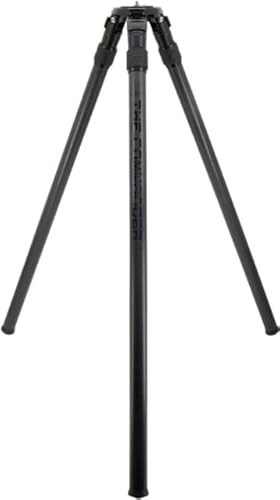
Built specifically for coyote and hog hunting, this model differs from general-purpose rests through its two-section legs, which slide over the top for rapid deployment. Its carbon-fiber legs measure 41.5 mm, and the tripod reaches 71 inches. The included carry bag and adapter plate make it a fit for hunters who want a dedicated shooting platform and a quick setup sequence. The features do not give a weight or a firearm attachment compatibility list, so confirm that the adapter works with your setup before choosing it.
Bottom line: Pick this if predator-hunting purpose and fast deployment matter most.
BOG Deadshot Tripod

The BOG Deadshot is distinctive for its universal shooting-rest yoke, which supports the forend of rifles, shotguns, and crossbows rather than clamping a firearm. Its adjustable legs cover 25 to 64 inches, accommodating sitting through standing positions, and twist-locks allow quick leg changes on rough terrain. Aluminum construction and a foam grip and leg-retention strap suit hunters who carry their support between setups. The 64-inch maximum is lower than the taller hunting tripods here, so it may not suit a standing shot that requires greater height.
Bottom line: Choose this for a flexible yoke and a defined seated-to-standing range.
DeathGrip Bantam Tripod

The DeathGrip Bantam stands apart as the lightest quantified option here at 3.1 pounds, with a clamp head that holds a firearm by its forend. The head pans 360 degrees and tilts up to 120 degrees, while the legs adjust from 20 to 42 inches for kneeling-to-standing positions. Its compact dimensions and independent leg adjustment suit hunters carrying into a blind or balancing on uneven ground. Its 42-inch maximum makes it less suited to a full standing position than taller supports, and clamp compatibility should be checked against the firearm’s forend.
Bottom line: Choose this when low carry weight and a clamping head take priority.
74-Inch V-Yoke Hunting Tripod

This 74-inch model is distinguished by six ground spikes and two camo straps, features intended for anchoring and securing the setup in field terrain. Its V-yoke rest and adjustable height support rifle or crossbow use, and its 74-inch reach is the tallest specified among these options. It suits hunters who want a simple yoke rather than a firearm clamp or ball head. The features give no weight or adjustment range, so buyers who need a particular seated height or a lightweight carry should verify those fit points before settling on it.
Bottom line: Pick this for maximum stated height and included terrain-gripping spikes.
Manbily WZ-324PA03
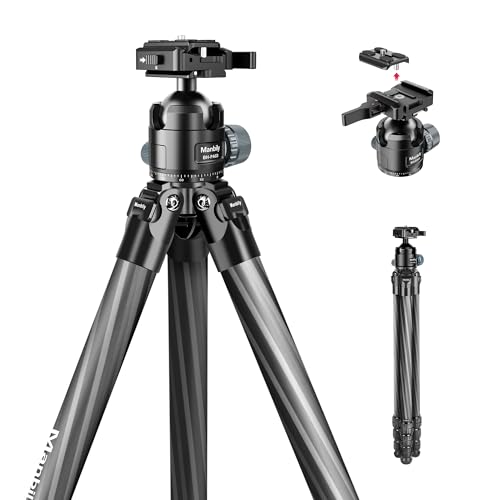
The Manbily differs from the yoke and clamp rests with a 44-mm ball head and a 2-in-1 Arca-Swiss/Picatinny adapter. Its 62.2-inch height and 32-mm maximum leg diameter pair with an eight-layer carbon-fiber build; the head rotates 360 degrees and tilts up to 45 degrees. A 44-pound maximum load capacity may help when matching heavier equipment, but it describes the tripod’s capacity, not a guarantee of firearm fit. Choose it if your mounting system matches its adapters; the ball-head setup is less direct than a dedicated firearm clamp or yoke.
Bottom line: Choose this if its Arca-Swiss or Picatinny mounting options match your setup.
How to choose a coyote-hunting tripod
Choose the head and height range around your shooting position before comparing materials. A yoke supports the forend from below, while a clamp grips it; a ball head needs a compatible plate or adapter. For standing use, prioritize a maximum height near your eye-level shooting position, while a blind or seated setup may need a shorter minimum height. Leg sections and locking mechanisms also affect setup speed: the Commander uses two-section sliding legs, while the BOG uses twist-locks. On uneven ground, independently adjustable legs can help level the platform; spikes are useful only where the ground accepts them. Confirm the firearm’s attachment point and the tripod’s intended load before using a mounted setup.
Height and position for field shooting
Match the tripod’s range to the positions you actually use, since a maximum alone does not show how low a rest can sit. Sitting, kneeling, and standing require different support heights, and terrain can change the needed extension. As a practical rule, if you expect to shoot standing, choose a model whose maximum reaches your comfortable supported position; the 42-inch Bantam is aimed at kneeling-to-standing adjustment but has less reach than the 71- and 74-inch models. A taller tripod can extend above brush, but added height does not automatically make a rest stable. Set all three feet firmly, keep the legs spread, and avoid extending a leg farther than needed.
Use this comparison to narrow the support style to the way your firearm attaches.
| Support style | How it holds the setup | Best fit |
|---|---|---|
| V yoke | Supports forend from below | Firearms needing a simple cradle |
| Clamp | Grips the forend with padded inserts | Users wanting the firearm held at the head |
| Ball head and adapter | Connects through a compatible plate or rail | Setups matching Arca-Swiss or Picatinny |
Tripod stability and safe setup
Stability comes from firm foot placement, a low enough center of gravity, and a correctly secured firearm, not just from a tall maximum height. Carbon fiber and aluminum are both used in these models, but material alone does not establish a load rating or resistance to movement. Spread and level the legs on uneven ground before placing a firearm in a rest, then keep the muzzle pointed in a safe direction and treat every firearm as loaded. Do not exceed a load capacity, and do not assume a weight rating confirms that a clamp or adapter fits a particular firearm. Check the exact attachment interface and secure it before use.
Common fit mistakes with shooting tripods
The most common mismatch is buying by maximum height while overlooking the head, minimum height, or firearm interface. A V yoke does not clamp a forend, and an adapter plate does not guarantee compatibility with every rail or quick-release system. A tall tripod also may be awkward to carry into a blind, while a compact support may not reach a comfortable standing position. For fast field changes, consider how leg locks operate and whether the head pans or tilts; the DeathGrip head specifies both movement ranges, while the Commander highlights rapid-deployment leg design. Before heading out, verify that the tripod reaches your intended position, attaches securely, and stands firmly on the ground where you will use it.
Frequently Asked Questions
What height tripod works for standing coyote shots?
A tripod needs to reach your comfortable supported standing position, which differs by shooter and terrain. Among these options, the specified maximums range from 42 to 74 inches, so use those figures to eliminate models that cannot reach your posture.
Is a yoke or clamp better for a hunting rifle?
A yoke cradles a forend from below, while a clamp grips the forend with padded inserts. Choose based on whether you want the firearm simply supported or held at the head, and verify the fit for your forend.
Can a shooting tripod stand on uneven ground?
Independent leg adjustment helps place the feet at different lengths on uneven ground, and ground spikes can grip soil. Set and test the tripod’s footing before resting a firearm on it; loose gravel or hard surfaces may not hold spikes.
How much tripod load capacity do I need?
The tripod’s load capacity should exceed the combined weight of the supported firearm and attached equipment. One option here specifies 44 pounds, but a load rating alone does not confirm that its head or adapter fits your setup.
Do carbon fiber tripods work for hunting?
Carbon fiber is used in two of these hunting-oriented tripods, including a 41.5-mm-leg predator model. Compare the head, height, and stated capacity as well, because material alone does not establish attachment compatibility or stability.