
Best Brush for Cleaning Vinyl Siding: 4 Options Compared

The best brush for cleaning vinyl siding for most homeowners is Vinyl Siding Brush, 4-Inch Profile, because its shape is designed around 4-inch siding and reaches under panel laps. Choose Extend-A-Reach 18-Foot Brush Set instead when you need a long pole and several attachments; 52-Inch Dip Car Wash Brush suits general washing but is a car wash brush rather than a siding-specific head.
We earn a commission if you buy through links on this page. As an Amazon Associate I earn from qualifying purchases. Products are compared on manufacturer specifications, not hands-on testing.
- Best overall: Vinyl Siding Brush, 4-Inch Profile – Its shaped nylon head is designed for 4-inch vinyl siding and reaches under laps.
- Best for tall homes: Extend-A-Reach 18-Foot Brush Set – The set includes an 18-foot telescoping pole and three brush attachments.
- Best for gentle washing: Unger 10-Inch Bi-Level Soft Wash Brush – Its 10-inch soft, bi-level head is intended for delicate surfaces including siding.
| Product | Best for | Brush width | Pole included | Bristles | Shop |
|---|---|---|---|---|---|
| Vinyl Siding Brush, 4-Inch Profile | Siding-specific scrubbing | 4.5 in | No | Nylon | Check Price on Amazon |
| Extend-A-Reach 18-Foot Brush Set | Longer ground reach | — | Yes, 18 ft | Three brush types | Check Price on Amazon |
| 52-Inch Dip Car Wash Brush | General surface washing | — | Yes, 32.5–48.5 in | Soft PVC | Check Price on Amazon |
| Unger 10-Inch Bi-Level Soft Wash Brush | Gentle surface washing | 10 in | No; pole compatible | Soft | Check Price on Amazon |
Brushes for Cleaning Vinyl Siding
Compare head shape, bristle type and reach before choosing a brush for your siding and cleaning setup.
Vinyl Siding Brush, 4-Inch Profile
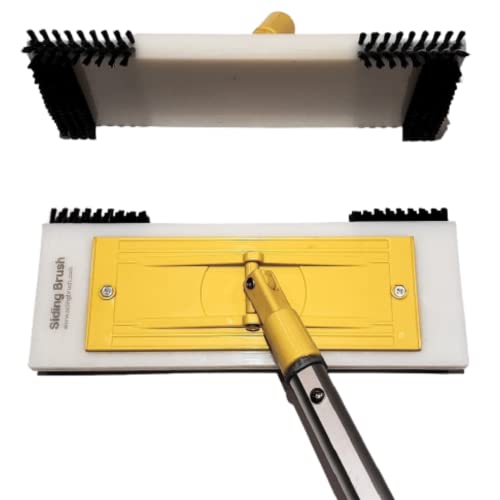
Unlike general-purpose wash brushes, this head is shaped for 4-inch standard vinyl siding and is designed to reach beneath siding laps. It has nylon bristles and measures 11.5 inches long by 4.5 inches wide. The maker says it removes mold, mildew and algae without harsh chemicals or power washing. It attaches to a standard extension pole, which is not included, so the brush alone does not provide extra reach. Choose it when matching the head to common panel exposure matters more than getting a pole and multiple tools in one set.
Bottom line: Pick this when a siding-profile head matters more than an included pole.
Extend-A-Reach 18-Foot Brush Set

This set differs from the single-head brushes by including an 18-foot telescoping aluminum pole, three brush attachments and a window squeegee. The maker describes the kit as reaching up to 24 feet, while the pole itself is specified as 18 feet; actual working reach depends on the user’s height and angle. The brush attachments are intended for multiple surfaces, including siding. It is a broader cleaning kit rather than a head shaped specifically for vinyl panel laps, so choose another option if panel-profile access is your priority.
Bottom line: Choose this for pole reach and several cleaning attachments in one kit.
52-Inch Dip Car Wash Brush

This brush is a general car wash tool with a long handle, rather than a siding-profile brush or an extension-pole kit. Its soft PVC bristles and rubber bumper are intended to avoid scratching during washing, and the three-section stainless-steel handle adjusts from 32.5 to 48.5 inches. The maker says it is suitable for house siding as well as vehicles and other surfaces.
Bottom line: Pick this for reachable siding areas when a general wash brush will do.
Unger 10-Inch Bi-Level Soft Wash Brush

Unlike the contoured head for 4-inch siding, this 10-inch bi-level brush is designed to approach dirt from multiple angles and to work on delicate surfaces. Its soft, non-scratch bristles are intended for siding, glass, plastic, cars and boats. The brush is compatible with waterflow poles, but a pole is not included, so check that your pole connection matches before ordering. Its wider head can cover more surface per pass, but it does not have the under-lap profile of a siding-specific brush.
Bottom line: Choose this for gentle washing across siding and other delicate surfaces.
How to choose a vinyl siding brush
Start with bristle softness and head shape: vinyl siding can be scrubbed with a soft-bristle brush, while a stiff or abrasive brush can mark the surface. A siding-profile head can reach into laps; a wider, general-purpose head may cover more area but may not fit panel edges as closely. Match the reach to the work: a hand brush works at ground level, while an extension pole can help avoid climbing for higher sections. With less than 4 inches of clearance around a narrow trim or corner, use a smaller head or hand brush rather than forcing a wide head into the space. Avoid pressure-washing at close range, which can drive water behind panels.
Brush types for vinyl siding
A contoured siding brush is meant to follow panel exposure and reach beneath lap edges, while a soft wash brush favors gentler contact across broad surfaces. Multi-attachment pole kits trade a single specialized head for more tools and reach. The table distinguishes the main buying trade-offs; pole height and head dimensions are not interchangeable measures of usable reach.
| Brush type | Useful when | Trade-off |
|---|---|---|
| Contoured siding head | Panel laps need attention | May require a separate pole |
| Soft wash head | Gentle broad-area cleaning | May not follow panel laps |
| Multi-attachment pole kit | Reach and several tasks matter | Head may be less siding-specific |
For most routine dirt, begin with a soft brush and water; use a mild detergent only if the siding maker allows it. Work in manageable sections and rinse thoroughly so loosened soil and cleaner do not dry on the surface.
Cleaning vinyl siding without damage
Use light pressure and move the brush along the siding rather than scrubbing hard across a panel edge. Many vinyl siding care guides recommend washing from the bottom upward to limit streaking, then rinsing from the top down so residue runs off. Keep water away from open seams, vents and electrical fixtures; never direct a concentrated stream upward beneath panel laps. A garden hose and soft brush are usually more controllable than a pressure washer. If you use a pole, keep both feet on stable ground and do not overreach; reposition yourself instead. Test the brush and cleaning solution in a small inconspicuous area first, especially where the siding is aged, chalky or previously painted.
When to use an extension pole
An extension pole helps clean upper siding from the ground, but pole length is not the same as safe working height: body height, brush angle and control all affect reach. A brush that can be attached to a standard pole needs a compatible connection, while a kit with its own pole avoids some compatibility uncertainty. Long poles can flex and become harder to control, so extend only as much as needed and use gentle strokes. For work that cannot be reached while standing securely on the ground, do not lean a pole from a ladder; use appropriate access equipment or hire a qualified professional. Keep clear of overhead power lines while handling any long pole.
Frequently Asked Questions
Can a stiff brush scratch vinyl siding?
Yes, stiff or abrasive bristles can mar vinyl siding, especially when combined with heavy pressure. Choose a soft-bristle head and test it in an inconspicuous area first.
Should I brush vinyl siding from top to bottom?
Scrub a small area from the bottom upward, then rinse from the top downward to reduce streaking. Work in sections so cleaner does not dry on the surface.
Can I use a pressure washer on vinyl siding?
A pressure washer can force water behind siding when aimed at seams or panel laps. A hose and soft brush give more control; never aim a concentrated spray upward beneath a lap.
What size brush fits standard vinyl siding?
Siding exposure commonly refers to the visible face height of each panel, and 4-inch exposure is a common size. A brush designed around 4-inch siding may follow those panels more closely, but check your siding’s exposure before choosing a contoured head.
Is an extension pole safer than a ladder for siding?
A pole can let you clean reachable upper sections while standing on stable ground, but it does not make every height safe to reach. Do not overextend or use a long pole near overhead power lines.