
Best Cervical Traction Devices Compared by Type and Fit

The ComforTrac home cervical traction kit suits most people seeking an adjustable tabletop-style unit, with three incline settings: 10, 15, and 20 degrees. Choose a collar or over-door hammock instead if you need a wearable or suspended setup, but match its fit and use requirements before trying traction.
Cervical traction gently applies a pulling force to the neck; it is not appropriate for every neck condition, so get clinician guidance before use, especially after injury or with worsening symptoms.
We earn a commission if you buy through links on this page. As an Amazon Associate I earn from qualifying purchases. Products are compared on manufacturer specifications, not hands-on testing.
- Best overall: ComforTrac Deluxe Home Traction Kit 2.0 – Its incline adjusts among 10, 15, and 20 degrees without extra parts.
- Best for adjustable collar fit: Siwei Inflatable Neck Traction Collar – The inflatable collar fits neck circumferences from 12 to 17 inches.
- Best for over-door setup: comness Over-Door Cervical Traction Hammock – The hammock-style device installs over a door with a 0.55–0.61-foot door range.
| Product | Best for | Style | Adjustment or force | Fit | Shop |
|---|---|---|---|---|---|
| ComforTrac Deluxe Home Traction Kit 2.0 | Adjustable home setup | Home traction unit | 10°, 15°, or 20° incline | — | Check Price on Amazon |
| iSTIM WeTrac Cervical Traction Device | Force adjustment | Knob-adjusted home unit | Up to 50 lb | One size | Check Price on Amazon |
| Siwei Inflatable Neck Traction Collar | Inflatable collar fit | Inflatable collar | Air-volume adjustment | 12–17 in neck | Check Price on Amazon |
| Air Collar Neck Traction Device, 2nd Gen | Electric-pump collar | Air collar with electric pump | Up to 20 lb | 13.7–16.8 in neck | Check Price on Amazon |
| comness Over-Door Cervical Traction Hammock | Door-mounted traction | Over-door hammock | Height adjusted by pull | 0.55–0.61 ft door range | Check Price on Amazon |
Cervical Traction Devices by Style
Compare the setup and fit requirements first, then consider which adjustment method suits your space and comfort preferences.
ComforTrac Deluxe Home Traction Kit 2.0
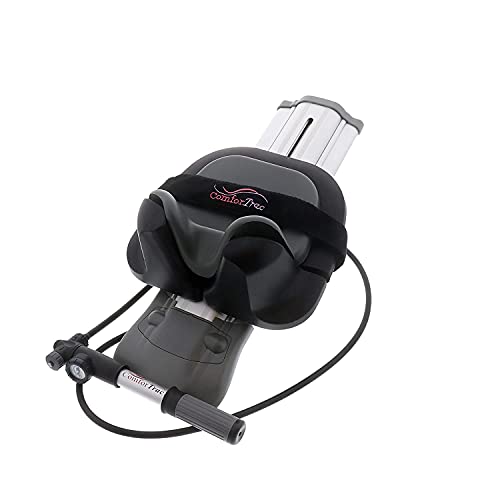
The ComforTrac stands apart for its adjustable incline, with settings at 10, 15, and 20 degrees that do not require extra parts. It has a contouring memory-foam headrest and includes a carrying case, making it a home unit that can also be transported. Choose it if you want to change the angle rather than inflate a collar or suspend a sling over a door. The specifications do not give a neck-fit range or a force setting, so buyers who need either measure should confirm suitability before choosing this unit.
Bottom line: Choose this if incline adjustment is your priority.
iSTIM WeTrac Cervical Traction Device

The iSTIM WeTrac is distinguished by knob-controlled intensity up to 50 pounds, rather than an incline setting or inflatable fit. It is a home-use traction device with a travel bag and cable design; choose it if force adjustment is the deciding feature. Cervical traction should not be treated as a universal fix: ask a clinician about appropriate force and use, particularly if symptoms worsen.
Bottom line: Pick this if force adjustment matters more than measured collar sizing.
Siwei Inflatable Neck Traction Collar

The Siwei collar is the only inflatable option here with a circumference range: 12 to 17 inches around the neck. Air volume controls support, while two hook-and-loop straps adjust tightness; the fabric is flocked and breathable. This wearable format suits someone who wants a collar rather than a tabletop unit or door-mounted sling. Measure neck circumference before selecting it, since a neck outside the range is a poor fit.
Bottom line: Choose this if your neck measures 12–17 inches and you prefer an inflatable collar.
Air Collar Neck Traction Device, 2nd Gen

The Air Collar pairs an electric pump with adjustable side knobs and a rear air bladder, unlike the manual inflatable collar or the non-collar units. Its fit is a neck circumference of 13.7 to 16.8 inches, and the features give a maximum pressure of 20 pounds. This setup may suit buyers whose measured neck falls inside that narrower range and who want pump-assisted inflation. The fit limit is decisive: measure first, and do not choose it if your neck is outside the circumference.
Bottom line: Pick this if your neck fits its range and you want pump-assisted adjustment.
comness Over-Door Cervical Traction Hammock

The comness device uses an over-door pulling system, making it the only suspended hammock style in this group. A single pull adjusts height, and its door stop is specified for doors 0.55 to 0.61 feet thick. It may suit someone with a compatible door who wants to avoid a tabletop frame or wearable collar. Door thickness is a hard compatibility check; measure the door before setup.
Bottom line: Choose this if your door falls within its thickness range.
How to Choose a Cervical Traction Device
Choose first by how the device applies traction: home unit, inflatable collar, electric-pump collar, or over-door hammock. These formats differ in setup and adjustment, not just portability. A tabletop unit with angle settings changes the position of support; collars use inflation or controls, while a hammock hangs from a door and adjusts by pull. Match the format to a safe, stable setup you can use without straining. For fit, use the neck circumference where available: a 12–17-inch range is not interchangeable with 13.7–16.8 inches. If your measurement falls outside a collar’s range, do not force a fit. Ask a clinician whether traction is suitable before using a device, especially with pain after injury, numbness, weakness, or worsening symptoms.
Neck Size and Door Fit
Measure around the neck at the collar’s contact area and compare that number with the device’s range. The inflatable Siwei collar specifies 12–17 inches; the Air Collar specifies 13.7–16.8 inches, so the latter excludes more smaller and larger necks. For an over-door hammock, measure door thickness: the comness stop is specified for 0.55–0.61 feet, about 6.6–7.3 inches. A door outside that span may not hold the stop as intended. Do not use neck circumference as a substitute for clinical suitability; a device can fit physically and still be inappropriate for a particular condition. Measure before choosing and avoid improvising padding or door hardware to make an incompatible setup work.
The key fit checks differ by style:
| Style | Measure or setting | Decision rule |
|---|---|---|
| Inflatable collar | Neck circumference | Use only within its range |
| Over-door hammock | Door thickness | Confirm 0.55–0.61 ft compatibility |
| Adjustable home unit | Incline choice | Compare its 10°, 15°, and 20° settings |
Traction Adjustment and Safe Use
More force is not automatically better: traction applies a pulling load to the neck, and the suitable force and duration depend on the person and reason for use. One device gives a maximum of 50 pounds and another a maximum of 20 pounds, but those ceilings are not recommended starting targets. Do not treat a maximum as a personal prescription. Stop and seek medical advice if traction causes increasing pain, tingling, numbness, dizziness, or weakness. People with recent neck injury, known instability, or significant neurologic symptoms should get clinical guidance before trying a home device. Keep the setup stable, remain in control of any adjustment, and do not sleep while wearing or using a traction device.
Common Cervical Traction Mistakes
A common mistake is choosing by comfort material or portability before checking fit and setup. A collar outside its circumference range can press unevenly, while a door stop on an incompatible door can be unstable. Another mistake is increasing traction quickly because a stronger pull seems more effective; the maximum force printed for a device is a limit, not a treatment goal. Do not use traction to push through new pain or neurological symptoms. Keep sessions limited to a clinician-recommended duration rather than assuming that a suggested short session applies to everyone. Inspect straps, cables, seams, and door contact points before each use, and stop if a component slips, frays, or fails to hold its position.
Frequently Asked Questions
How do I measure my neck for a traction collar?
Measure the circumference around the part of the neck the collar will contact, keeping the tape snug without compressing the skin. Compare the result with the collar’s range; the two inflatable models here specify 12–17 inches and 13.7–16.8 inches.
Can I use cervical traction every day?
Daily use should be guided by a clinician because appropriate duration and frequency depend on the condition and device. Do not extend use because a short session feels helpful, and stop if symptoms increase.
What symptoms mean I should stop using traction?
Stop if traction brings on worsening neck pain, numbness, tingling, weakness, or dizziness. New or severe symptoms, particularly after an injury, warrant prompt medical advice rather than another session.
Is a 50-pound traction setting right for home use?
A 50-pound maximum is not a recommended starting force or personal prescription. Ask a clinician what force, if any, is appropriate for your neck and condition before using a home traction device.
How thick can a door be for an over-door neck hammock?
The comness device specifies a door thickness of 0.55–0.61 feet, approximately 6.6–7.3 inches. Measure the door before setup and do not improvise if it falls outside that range.