
Best Cheek Rest for Rifle: 4 Options Compared

The AIRSSON rifle cheek rest suits most people because its two removable pads offer 1.1- and 1.57-inch heights, while the other options prioritize leather construction, cartridge storage, or fixed attachment.
Choose a different style if you want a bolted-on adjustable riser rather than a strap-on shell carrier; cheek rests raise the stock’s contact point to help align your eye with an optic.
We earn a commission if you buy through links on this page. As an Amazon Associate I earn from qualifying purchases. Products are compared on manufacturer specifications, not hands-on testing.
- Best overall: AIRSSON Adjustable Nylon Cheek Rest – Two removable pads provide 1.1- and 1.57-inch cheek heights, with two 8-shell carriers.
- Best for adjustable height: Adjustable Kydex Cheek Riser – Kydex construction offers up to 1.75 inches of vertical adjustment.
- Best for low-profile fit: Tourbon Lace-Up Leather Riser – A 0.5-inch cushion adds a modest cheek rise and eight cartridge loops.
| Product | Best for | Riser height | Shell capacity | Material | Shop |
|---|---|---|---|---|---|
| AIRSSON Adjustable Nylon Cheek Rest | Flexible height | 1.1 or 1.57 in | 16 shells | Nylon | Check Price on Amazon |
| Adjustable Kydex Cheek Riser | Height adjustment | Up to 1.75 in | — | Kydex | Check Price on Amazon |
| Tourbon PU Leather Shell-Holder Rest | Padded shell storage | 1.25 in | 8 shells | PU leather | Check Price on Amazon |
| Tourbon Lace-Up Leather Riser | Low-profile rise | 0.5 in | 8 shells | Leather | Check Price on Amazon |
Rifle Cheek Rests Compared
Compare adjustment range, shell storage, and construction to match a cheek rest to your stock and optic height.
AIRSSON Adjustable Nylon Cheek Rest
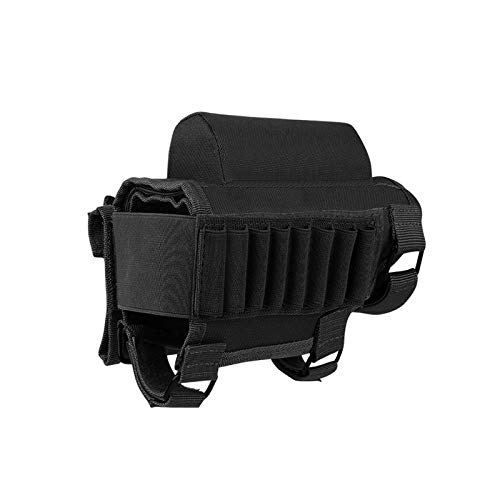
Two removable pad heights distinguish this nylon cheek rest from the fixed cushions and lace-up cover. AIRSSON includes two side pouches with removable carriers, each holding eight shells, plus three buckle straps and hook-and-loop sides for positioning. The ambidextrous layout suits shooters who want a choice of cheek height and accessible ammunition storage on the stock. The tradeoff is its pouch-and-strap format, which adds bulk around the buttstock; confirm the stock shape and attachment fit before choosing it.
Bottom line: Choose this if interchangeable cheek height and two shell carriers matter more than a low-profile setup.
Adjustable Kydex Cheek Riser

The adjustable Kydex riser offers the largest vertical range among these choices, up to 1.75 inches, and does not add shell storage. The maker describes it as compatible with most rifle and shotgun stocks and suitable for either handedness. Its solid riser format is a fit for shooters seeking a repeatable contact point for mounted optics rather than cartridge loops or a leather stock cover. The specifications do not explain its attachment method, so buyers who need a particular mounting system should confirm that before ordering.
Bottom line: Choose this for adjustable elevation when shell storage is not needed.
Tourbon PU Leather Shell-Holder Rest

PU leather construction and a 1.25-inch cushion set this shell-holder apart from the nylon pouch and low-profile leather cover. Its eight-round holder keeps cartridges alongside a pad secured by an elastic strap with snap buttons; a neoprene lining grips the stock. This is a straightforward option when a fixed padded height and shell access are the priority. Its right-hand version and single stated pad height leave less flexibility than an adjustable riser, so check handedness and required cheek elevation against your setup.
Bottom line: Choose this for a cushioned cheek rest with an eight-round holder and snap retention.
Tourbon Lace-Up Leather Riser

A half-inch cushion makes this leather cover the lowest-rise option with a height, while its lace-up fit differs from the snap-strap and buckle styles. Tourbon says the stock cover protects against scratches and dirt; side loops hold eight rounds, with compatibility spanning several rifle cartridges and .410 shells. The low rise suits a setup needing only a small change in cheek contact and integrated storage. Its fixed 0.5-inch cushion cannot address a larger optic-to-stock height mismatch, so compare the needed rise before selecting it.
Bottom line: Choose this when a modest cheek lift, leather stock cover, and eight shell loops suit your setup.
How to choose a rifle cheek rest
Match cheek-rest height to the eye position your optic requires, not to a general preference for a taller pad. A cheek riser raises the stock’s comb so the head can stay in a repeatable position while looking through a scope; too much rise can push the eye above the sight line. Start with a comfortable natural cheek weld, then select only enough added height to center the eye behind the optic. Fixed cushions suit small corrections, while adjustable designs provide room to tune. If your needed rise is greater than 0.5 inch, avoid treating a low-profile cushion as equivalent to an adjustable riser.
Attachment and stock fit
Attachment style determines how a cheek rest stays aligned during handling, so compare it with the shape and material of the stock. Strap-on and lace-up covers wrap around the buttstock, while some risers use a separate mounting method that must suit the stock. A narrow or sharply tapered stock can shift a wraparound pad; check its width and strap path before fitting. Keep the pad clear of moving controls and confirm it does not interfere with shouldering or safe operation. For any firearm, keep the muzzle pointed in a safe direction and verify the firearm is unloaded before installing or adjusting a stock accessory.
Rifle cheek rest styles and tradeoffs
Rifle cheek rests generally fall into padded covers, shell-holder covers, and adjustable risers. Covers add a protective layer and may carry ammunition, while a riser concentrates on changing comb height. Shell capacity is useful only when the holder’s loops are sized for the cartridges you use; cartridge names are not interchangeable proof of fit. The table compares the practical tradeoff among the styles in this group.
| Style | Useful when | Tradeoff |
|---|---|---|
| Adjustable riser | Optic alignment needs tuning | Attachment fit may need checking |
| Shell-holder cover | Stock protection and cartridges matter | Added bulk on the buttstock |
| Low-profile cushion | Only a small rise is needed | Limited height correction |
Setting cheek height safely
Set cheek height with an unloaded firearm and a stable, natural head position. The eye should reach the optic without stretching the neck or lifting the cheek away from the stock; a poor fit can make repeatable sight alignment harder. Make one height change at a time, then shoulder the firearm consistently and recheck the sight picture. A 1.75-inch adjustable range gives more tuning room than a fixed half-inch cushion, but the correct setting depends on stock geometry and optic placement. After adjustment, ensure straps, laces, or hardware stay clear of the trigger, action, and any safety controls.
Frequently Asked Questions
How high should a rifle cheek rest be?
Set the rest high enough for your eye to center behind the optic while your cheek stays naturally on the stock. If a fixed 0.5-inch pad still leaves your eye low, choose a rest with more elevation adjustment.
Can a cheek rest improve scope alignment?
A cheek rest raises the stock contact point so the eye can align with a mounted optic more consistently. It cannot correct an optic mounted too far forward or a stock that does not fit your body.
Do rifle cheek rests fit every stock?
No, wraparound rests can shift on narrow or tapered stocks, and risers may use a stock-specific attachment method. Check stock width, strap placement, and clearance around controls before installation.
How many shells should a stock holder carry?
Many cheek-rest holders carry about 8 rounds, while some pouch styles provide two separate 8-round carriers. Verify that the holder loops match your cartridge diameter and keep ammunition secure.
Should I use a cheek rest on a shotgun?
Some risers are marketed for both rifles and shotguns, but fit depends on the stock shape and optic setup. Confirm attachment compatibility and preserve a comfortable, unobstructed hold before use.