
Best Compression Wrap for Hamstring Injury: 3 Options

For most people seeking a hamstring compression wrap, supregear Thigh Wrap Support, L is the strongest match because its adjustable thigh wrap targets the hamstring and quadriceps. Choose a sleeve such as BODYPROX Thigh Compression Sleeves, Medium if you prefer pull-on coverage; choose Zuscot Adjustable Hamstring & Thigh Wrap for a longer, multipurpose bandage.
Compression wraps apply external pressure around the thigh, but they do not diagnose or repair a muscle strain. Stop using one if the leg becomes numb, cold, discolored or more painful.
We earn a commission if you buy through links on this page. As an Amazon Associate I earn from qualifying purchases. Products are compared on manufacturer specifications, not hands-on testing.
- Best overall: supregear Thigh Wrap Support, L – An adjustable thigh wrap provides targeted hamstring and quadriceps compression.
- Best for multipurpose wrapping: Zuscot Adjustable Hamstring & Thigh Wrap – The adjustable bandage is designed for the thigh as well as other body areas.
- Best for pull-on coverage: BODYPROX Thigh Compression Sleeves, Medium – The pair of thigh sleeves gives targeted coverage without wrapping straps.
| Product | Best for | Support style | Size or length | Width | Shop |
|---|---|---|---|---|---|
| supregear Thigh Wrap Support, L | Adjustable thigh fit | Adjustable wrap | L; 26.4 in long | 7.1 in | Check Price on Amazon |
| Zuscot Adjustable Hamstring & Thigh Wrap | Multi-area wrapping | Adjustable bandage | 79 in long | 2.95 in | Check Price on Amazon |
| BODYPROX Thigh Compression Sleeves, Medium | Pull-on coverage | Pull-on sleeve | Medium | — | Check Price on Amazon |
Hamstring Compression Wraps
Compare adjustable wraps and a pull-on sleeve by how they fit and cover the thigh.
supregear Thigh Wrap Support, L

For a conventional adjustable hamstring wrap, this model combines a 26.4-inch length with a 7.1-inch width. The maker says its textured neoprene interior is anti-slip and its outer fabric is mercerized; the neoprene is latex-free. That broad, strap-based format suits someone who wants to position compression around the thigh rather than pull on a tube. The size is L, so check that it fits your thigh and intended placement before choosing it. The maker also describes it for sports and activity, but it is support gear, not a substitute for care of a significant injury.
Bottom line: Pick this if you want an adjustable wrap with a length and width.
Zuscot Adjustable Hamstring & Thigh Wrap
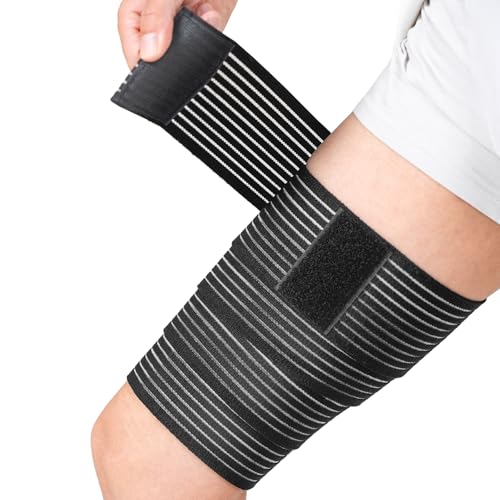
Unlike a thigh-specific brace, this is a narrow adjustable bandage intended for multiple body areas. It is 2.95 inches wide, and the maker gives its length as both 180 cm and 79 inches; those measurements do not agree, so confirm the usable length before ordering. The maker says it can wrap thighs, calves, knees and arms, which may suit someone seeking one bandage for different placements. That versatility comes with a tradeoff: a long strip takes more care to position evenly than a pull-on sleeve, and the maker does not provide a thigh-size fit range.
Bottom line: Choose this if you want a bandage that can wrap more than the thigh.
BODYPROX Thigh Compression Sleeves, Medium

For a pull-on alternative to a wrap, this pair of BODYPROX sleeves covers the thigh without adjustable straps. The product is a medium-size pair in black, and its focus includes hamstrings and quadriceps. The maker says the sleeves provide targeted compression and support during exercise. A sleeve is most suitable when a tube-style fit is preferred; unlike an adjustable bandage, its compression and placement cannot be tightened strap by strap. The size is only Medium, so verify that it suits your thigh circumference before relying on it for a close fit.
Bottom line: Pick these if you prefer a pull-on sleeve over an adjustable bandage.
How to choose a hamstring compression wrap
Choose by coverage and adjustability first: a strap wrap can be repositioned, while a sleeve pulls over the thigh as one piece. A 7-inch-wide wrap covers more area per pass than a narrow 3-inch bandage, but fit and placement matter more than width alone. Measure the thigh at the spot you plan to cover and compare that measurement with the maker’s size guidance; do not assume a clothing size predicts brace fit. A wrap should feel supportive, not painful or restrictive. A practical decision rule is to remove it immediately if the foot becomes cold, pale or blue, or if tingling or numbness develops. Compression is a comfort and support choice, not treatment for a serious tear.
Wraps and sleeves for hamstring support
Adjustable wraps and pull-on sleeves differ mainly in how they fit: straps allow placement and tension adjustment, while a sleeve gives continuous tubular coverage. Narrow bandages require overlapping passes to cover a broad area; keep the pressure even rather than creating tight ridges at the edges. A sleeve avoids winding material around the thigh, but its fixed size makes correct circumference important. Neither design should cause numbness, tingling, color change or increasing pain. Use this comparison to match the format to the way you want to apply support.
| Format | Fit approach | Useful when |
|---|---|---|
| Adjustable thigh wrap | Straps position pressure | You want repositionable coverage |
| Narrow bandage | Overlapping passes | You want a multipurpose wrap |
| Pull-on sleeve | Fixed tube size | You prefer strap-free coverage |
How to fit a thigh wrap safely
Place a thigh wrap over the area needing support and secure it evenly without pulling so tightly that circulation or sensation changes. A bandage 3 inches wide typically needs overlapping turns to cover a larger section of thigh; avoid folds that concentrate pressure. Check the foot and toes after applying support: they should remain their usual color and temperature, without tingling or numbness. Remove the wrap if symptoms appear, and do not sleep in a tight wrap unless a clinician has advised it. For a sleeve, select by thigh measurement rather than assuming that a generic size will fit; a sleeve that slides or bunches cannot provide consistent coverage.
When hamstring pain needs medical attention
Severe pain, a sudden pop, extensive bruising or difficulty walking warrants prompt medical assessment rather than relying on compression alone. Hamstring strains range from mild overstretching to a tendon injury, and the right activity restriction depends on severity. For a new mild strain, protect the leg from painful activity and use a wrapped cold pack for short intervals; do not place ice directly on skin. Avoid stretching or returning to sprinting while walking still hurts. Seek urgent care for severe pain, marked swelling, inability to bear weight or rapidly worsening symptoms. A clinician can assess whether imaging or a structured rehabilitation plan is needed.
Frequently Asked Questions
How tight should a hamstring wrap feel?
A hamstring wrap should feel supportive without causing pain, tingling or numbness. Remove it if the foot becomes cold, pale or blue, since those changes can signal excessive pressure.
Can I wear a compression wrap overnight?
Avoid sleeping in a tight wrap unless a clinician has advised it. Pressure can go unnoticed while asleep, so remove the wrap if it causes numbness, tingling, pain or a color change.
Should I use heat or ice on a new hamstring strain?
For a new painful strain, a wrapped cold pack used for short intervals is a common first step; never put ice directly on skin. Severe pain, major bruising or trouble walking calls for medical assessment rather than home care alone.
When can I run again after a hamstring strain?
Return to running only when walking and daily movement are pain-free and strength and motion are recovering. Sprinting too early can aggravate a strain; a clinician or physical therapist can guide progression after a significant injury.
Can a compression wrap heal a hamstring tear?
A wrap can provide external support, but it does not repair torn muscle or tendon. A sudden pop, extensive bruising or inability to walk should be assessed promptly by a medical professional.