
Best Copper Wire for Electroculture: 4 Sizes Compared

12-Gauge Solid Bare Copper Wire is the best copper wire for electroculture for most gardeners because its 12-gauge, dead-soft wire is sized for winding around a stake, dowel, or branch. Choose a different gauge if you need heavier wire for a large structure or several thinner sizes for varied craft work.
Electroculture is a gardening approach that uses wire or shaped conductors near plants; the wire itself does not establish that a garden will produce more. Pick based on the structure you plan to make and how easily you need to bend it.
We earn a commission if you buy through links on this page. As an Amazon Associate I earn from qualifying purchases. Products are compared on manufacturer specifications, not hands-on testing.
- Best overall: 12-Gauge Solid Bare Copper Wire – 12-gauge dead-soft wire is identified for winding around a garden stake or similar support.
- Best for heavy structures: 10-Gauge Solid Bare Copper Wire – 10-gauge wire provides a thicker 2.5 mm diameter for sturdier shapes.
- Best for varied projects: Six-Gauge Copper Wire Assortment – Six gauges in one kit cover a range of wire thicknesses.
| Product | Best for | Gauge | Diameter | Length | Shop |
|---|---|---|---|---|---|
| 12-Gauge Solid Bare Copper Wire | Stake wrapping | 12 AWG | 2.05 mm | — | Check Price on Amazon |
| 14-Gauge Solid Bare Copper Wire | Longer runs | 14 AWG | 1.5 mm | 98 ft | Check Price on Amazon |
| 10-Gauge Solid Bare Copper Wire | Thicker forms | 10 AWG | 2.5 mm | 34 ft | Check Price on Amazon |
| Six-Gauge Copper Wire Assortment | Mixed gauges | 18–28 AWG | 0.6–1.0 mm listed | 213 ft total | Check Price on Amazon |
Copper Wire for Electroculture
Compare wire thickness and spool format to match the size and shape of the structure you plan to make.
12-Gauge Solid Bare Copper Wire

At 12 gauge, this wire offers a middle ground between thin wrapping wire and heavier structural wire. The 1-pound spool contains solid bare copper, and the dead-soft temper is suited to shaping around a stick, dowel, tree branch, or bamboo stake. The manufacturer markets it for electroculture gardening as well as crafts and jewelry.
Choose this spool when one general-purpose thickness matters more than having several gauges. Its size is 2.05 mm; check the diameter against your planned bends if the coil needs to fit a narrow support closely.
Bottom line: Pick this for wrapping one common stake size with a single, pliable gauge.
14-Gauge Solid Bare Copper Wire
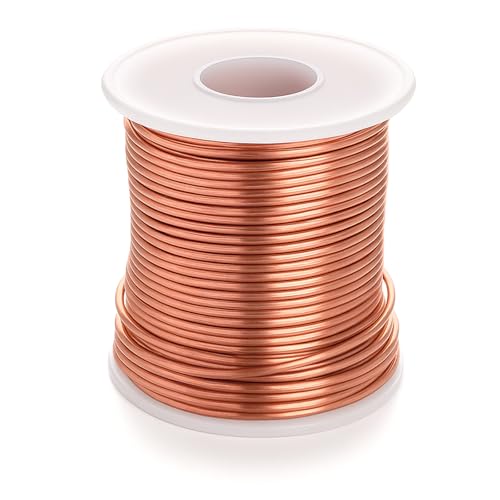
This 14-gauge spool emphasizes a longer continuous run: approximately 98 feet of solid bare copper on a 1-pound spool. Its 1.5 mm diameter is thinner than the 12- and 10-gauge options here, making it a reasonable choice when a project calls for more length and easier shaping rather than a thick profile. The maker describes the wire as 99.9% pure and dead soft.
The slimmer wire may be less suitable than a heavier gauge for a broad, rigid form that must hold its shape. Select it for repeated wraps or several smaller constructions where length is useful.
Bottom line: Choose this when a longer spool and thinner, flexible wire fit the plan.
10-Gauge Solid Bare Copper Wire

The 10-gauge wire is the thickest single-gauge option in this group, with a 2.5 mm diameter and 34 feet on a 1-pound spool. That larger diameter can suit a form where a heavier visual profile or less delicate wire is wanted. The maker says the solid bare copper is 99.9% pure and dead soft, and includes a polishing cloth and certificate of analysis.
Thicker wire takes more effort to make tight curves than thinner wire, even when soft, so it is not the natural choice for fine, closely spaced wraps. Its shorter length also suits fewer or larger pieces rather than many long runs.
Bottom line: Pick this for larger shapes where the 2.5 mm wire profile is useful.
Six-Gauge Copper Wire Assortment

This assortment is distinct because it supplies six gauges—18, 20, 22, 24, 26, and 28 AWG—in separate rolls, with about 213 feet total. The maker identifies the solid bare copper as 99.9% pure and dead soft. Having several thicknesses is useful when a garden project includes both a main shape and finer wraps or when you are still deciding which gauge is manageable.
These are smaller gauges than the other single-spool choices, so they are not the best fit when a thick, sturdy wire profile is the priority. The 0.6–1.0 mm range covers only the 18- and 22-gauge sizes; the other gauges are given by gauge number.
Bottom line: Choose this assortment when you need multiple thinner gauges for varied work.
How to Choose Copper Wire for Electroculture
Choose wire by the structure’s needed thickness and the amount of bending, not by assuming copper alone changes plant growth. A common antenna-style project uses a stake or rod with wire wrapped into a coil; a simple coil can be made by winding wire around a form and leaving a tail for attachment. Wire gauge is inverse: a lower AWG number means thicker wire, so 10 AWG is heavier than 14 AWG. Dead-soft copper bends readily, but that flexibility means a freestanding shape may need a support. Use a thinner gauge for close, small wraps and a thicker gauge when the finished form should retain a broader shape. Electroculture’s claimed gardening benefits are not established by choosing one wire gauge over another.
Wire Gauge and Diameter for Garden Coils
Gauge affects both the wire’s diameter and how it feels during shaping. For reference, standard AWG diameters are about 0.081 inches for 12 AWG, 0.064 inches for 14 AWG, and 0.102 inches for 10 AWG; the product specifications round these to millimeters. A 1 mm wire is about 0.039 inches, while 2.5 mm is about 0.098 inches. With a support under roughly 1 inch wide, a 10-gauge coil can look bulky; choose a thinner wire if the coil needs tighter, more numerous turns. The table compares the main form and length choices, but spool length per gauge in a multi-size kit is not provided.
| Project need | Wire choice | Why it fits |
|---|---|---|
| General stake wrap | 12 AWG | Middle thickness, dead soft |
| Long run or repeated wraps | 14 AWG | 98-foot spool, 1.5 mm |
| Thicker profile | 10 AWG | 2.5 mm diameter |
| Several fine gauges | 18–28 AWG kit | Six-gauge assortment |
Solid Bare Copper Versus Wire for Electrical Loads
Solid bare copper is a single uninsulated conductor, not an insulated building or extension cable. Bare wire can touch soil, water, or another conductor, so it should not be connected to household power or treated as a substitute for wiring rated for an electrical load. Copper naturally darkens as it reacts with air and moisture; a surface patina does not change a product’s gauge. Keep wire ends trimmed or bent inward to reduce snag and puncture hazards while handling or gardening. If a planned installation involves powered equipment, choose wire and insulation rated for that electrical use rather than relying on bare craft wire.
Shaping and Placing an Electroculture Coil
Make the coil around a smooth dowel or stake with turns spaced evenly; a form helps keep the helix consistent and reduces kinks. Dead-soft wire is easy to shape, but repeated sharp bending can work-harden copper and eventually cause a break, so use broad curves instead of folding it back and forth. Wear eye protection when cutting wire because a cut end can spring or flick toward the face, and use pliers to control the end. Keep stakes clear of buried utility lines and irrigation tubing before driving them into soil. A coil’s size should match its support: leave enough clearance for the wire not to scrape bark or pinch a plant stem as it grows.
Frequently Asked Questions
Does copper wire make plants grow faster?
Copper wire alone is not a reliable way to increase plant growth or yield. Garden growth is strongly affected by light, water, soil nutrients, and temperature, so choose the wire for the structure rather than as a growth guarantee.
What gauge copper wire is easiest to bend?
Higher AWG numbers are thinner, so 18–28 AWG wire generally bends more easily than 10–14 AWG wire. Dead-soft temper also makes shaping easier, though very thin wire is less suited to a broad, rigid form.
Can bare copper wire be buried in soil?
Bare copper can contact soil, but soil moisture and dissolved minerals can accelerate surface corrosion. Keep sharp cut ends controlled and avoid any connection to household power.
How many turns should an electroculture coil have?
There is no established turn count that guarantees a gardening effect. Use even, spaced turns that fit the support, and avoid tight bends that kink or weaken soft copper.
How do I keep copper wire from kinking?
Wrap dead-soft wire around a smooth dowel or stake instead of making sharp folds by hand. After a kink forms, repeated straightening and rebending can fatigue the copper and make it more likely to break.