
RBM Panda Air Tent: Fit and Size Compared

For a 2–4-person canvas air tent, the RBM Panda Medium is the closest match here; its 86.6-by-118.1-inch footprint is the key fit check. Choose another option if you need a larger sleeping area, a different fabric, or a lower stated weight.
Air tents use inflatable beams instead of conventional tent poles, so floor space and beam inflation are central to setup planning.
We earn a commission if you buy through links on this page. As an Amazon Associate I earn from qualifying purchases. Products are compared on manufacturer specifications, not hands-on testing.
- Best overall: RBM Outdoors Panda Medium – It is the named RBM Panda model and is sized for 2–4 campers.
- Best for standing room: Coody 8.0 Medium – The maker gives an approximately 80-inch ceiling height and 8 m² interior.
- Best for lower weight: 4–6 Person Inflatable Tent – Its weight is 20.1 pounds, less than the other options here.
| Product | Best for | Capacity | Dimensions (L × W × H) | Fabric | Shop |
|---|---|---|---|---|---|
| RBM Outdoors Panda Medium | Canvas camping | 2–4 people | 86.6 × 118.1 × 86.6 in | Waterproof canvas | Check Price on Amazon |
| Coody 8.0 Medium | More floor space | 1–4 people | 98.4 × 126.0 × 86.6 in | 210 gsm TC canvas | Check Price on Amazon |
| NANJEEN Large Inflatable Tent | Large groups | 2–10 people | 157.5 × 118.1 × 82.7 in | Waterproof tech cotton | Check Price on Amazon |
| 4–6 Person Inflatable Tent | Lower stated weight | 4–6 people | 118 × 87 × 75 in | 210D Oxford | Check Price on Amazon |
| 13 × 10 ft Inflatable Tent | Hot-tent setup | 8–10 people | 157.5 × 118.1 × 82.7 in | — | Check Price on Amazon |
RBM Panda Air Tent and Alternatives
Compare the named canvas tent with related inflatable shelters by their capacity, dimensions, and fabric.
RBM Outdoors Panda Medium

The RBM Panda Medium is the only RBM Panda model among these options, and its maker describes it as a canvas air-beam tent for 2–4 people. The dimensions are 86.6 inches long, 118.1 inches wide, and 86.6 inches high; the weight is 79.4 pounds. The maker says the breathable canvas helps reduce condensation and that the air-beam frame supports fast setup; a pump is included. This size suits campers prioritizing canvas and a compact group footprint. Its weight matters for anyone carrying gear far from a vehicle.
Bottom line: Choose this for the named RBM Panda canvas tent and a 2–4-person capacity.
Coody 8.0 Medium

The Coody 8.0 has a larger stated interior than the RBM Panda: about 8 m², with dimensions of 98.4 by 126 inches and a ceiling height of 86.6 inches. Its 210 gsm TC fabric is a 65% polyester, 35% cotton blend, and the maker says its breathability helps manage humidity and condensation. The maker describes sleeping capacity as up to four, with space for gear, and says a pump is included. It suits buyers seeking more floor area in a canvas-style air tent. Its weight, 86 pounds, is higher than the RBM Panda’s.
Bottom line: Choose this if additional floor area matters more than lower carry weight.
NANJEEN Large Inflatable Tent
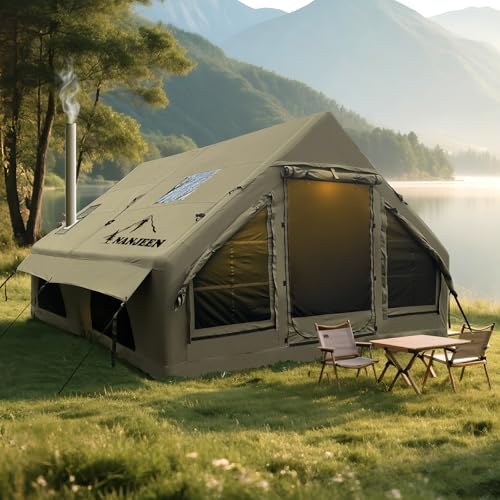
The NANJEEN is the largest-capacity shelter here by its range, with space described for 2–10 people and a 12 m² interior. Its dimensions are 157.5 inches long, 118.1 inches wide, and 82.7 inches high; it weighs 77.2 pounds. The maker says it uses waterproof tech cotton with reinforced seams and includes a hand pump for setup. Dual doors and mesh windows are also identified in its name. This tent suits a larger group needing more floor length than the RBM Panda provides. Its 82.7-inch height is lower than the Panda’s height.
Bottom line: Choose this for a larger stated group capacity and longer interior.
4–6 Person Inflatable Tent
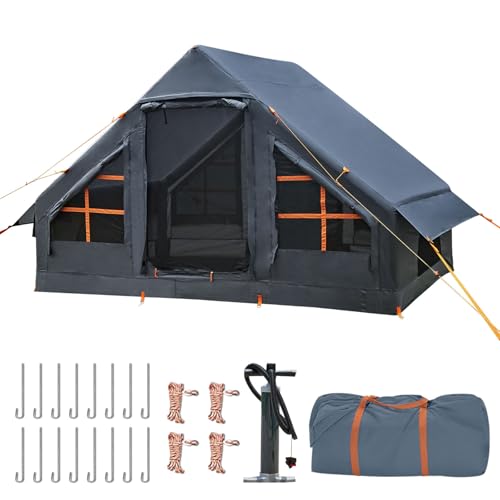
This 4–6-person inflatable tent is the lightest option in this comparison at a 20.1 pounds, and it uses 210D Oxford fabric rather than canvas. The maker claims a five-minute setup and describes the shelter as four-season, with 3000 mm PU waterproofing and a hand pump. Its 118-by-87-inch floor and 75-inch height make it much shorter inside than the RBM Panda. It suits buyers who prioritize a lower stated weight and a family-sized capacity. The shorter ceiling and synthetic fabric are meaningful tradeoffs for anyone specifically seeking a tall canvas air tent.
Bottom line: Choose this when lower carry weight matters more than canvas construction.
13 × 10 ft Inflatable Tent

This 13-by-10-foot inflatable tent is positioned for 8–10 people and identifies a stove jack and AC vent, setting it apart from the RBM Panda. Its dimensions are 157.5 inches long, 118.1 inches wide, and 82.7 inches high; weight is 73.9 pounds. The maker also describes a waterproof rainfly and moisture-proof pad, and calls it a four-season hot tent. This option suits campers seeking those specific features and a larger stated capacity. Its size is substantially beyond a small-group tent, so confirm the available campsite footprint and that the stove setup suits your intended use.
Bottom line: Choose this for the hot-tent features and 8–10-person capacity.
How to Choose an Inflatable Air Tent
Start with sleeping space, then compare the fabric and carry weight. A two-person tent generally fits two sleeping pads side by side, but bags and equipment take additional floor area; measure your pads and gear footprint before choosing. Check the floor dimensions against the campsite, allowing room for stakes and guy lines outside the tent body. Canvas or cotton blends differ from Oxford-style synthetic fabric in feel and airflow, while waterproof coatings and rainflies affect how the shelter handles wet conditions. Air beams replace rigid poles, but still require inflation and a suitable pump. If you expect to carry the tent far from a vehicle, use its weight as a hard filter rather than judging by packed dimensions alone.
| Need | Compare first |
|---|---|
| Small group | Capacity and sleeping-pad footprint |
| More floor space | Interior area and length |
| Hot-tent use | Stove jack and safe stove compatibility |
Canvas and Synthetic Inflatable Tent Fabrics
Canvas and cotton-blend tents prioritize a different fabric feel from Oxford polyester shelters. The RBM Panda is described as waterproof canvas, while the Coody uses 210 gsm TC fabric with a polyester-cotton blend; the 4–6-person option uses 210D Oxford. Fabric alone does not establish how a tent will perform in a particular storm, so compare the construction and weather features actually given for the model. A rainfly adds another protective layer, and a groundsheet can help keep moisture from the campsite surface out of the sleeping area. Breathable fabric does not eliminate condensation: occupants, wet clothing, and closed ventilation can all add interior moisture. Favor tents with usable ventilation and keep damp gear separated from sleeping bags.
Air Beam Setup and Campsite Fit
Air-beam shelters replace conventional pole frames with inflatable supports, but they still need a flat, clear pitching area and secure anchoring. Check the ground for sharp sticks or stones before laying out the tent, since damage to the floor or beams can interrupt setup. Leave room around the footprint for doors, guy lines, and stakes; a tent measuring about 10 feet wide needs more than 10 feet of clear space. Inflate beams with the or compatible pump and close valves as directed for that design. Wind exposure matters: choose a sheltered pitch when possible, orient the narrower end toward prevailing wind, and stake the tent before filling it with gear. Do not assume an air frame removes the need for anchors.
Safe Use of a Hot Tent Stove
A stove jack alone does not make indoor stove use safe. Only use a stove in a tent specifically designed for that purpose, follow the stove and tent makers’ clearance requirements, and keep the flue correctly installed through the jack. Burning fuel produces carbon monoxide, an odorless, potentially fatal gas; never sleep with a stove burning, and maintain ventilation. Keep combustible sleeping bags and clothing away from the stove and flue, and use a stable, heat-resistant surface where required by the stove maker. Let ashes cool completely before disposal. A tent described as having a stove jack may still require compatible stove dimensions and additional components, so verify those before planning a heated camp.
Frequently Asked Questions
How many people fit in an inflatable tent?
Capacity labels vary by sleeping arrangement and gear load. Compare floor dimensions with your sleeping pads; leave additional room for bags and equipment rather than assuming the maximum stated capacity will feel spacious.
Do air tents need a pump to set up?
Inflatable beams need air, and the pump arrangement varies by model. The RBM Panda and Coody entries identify a pump as included, while the NANJEEN identifies a hand pump; check compatibility if you already own a pump.
Can a canvas air tent get condensation inside?
Yes, breathable canvas can still collect condensation when people, wet clothing, or damp ground add moisture. Ventilation and separating wet gear help, especially when the tent is closed during cool or rainy conditions.
How much space should I allow for tent stakes?
Plan for more than the tent’s floor dimensions because stakes and guy lines extend beyond the body. Clear obstacles around the whole footprint and use a sheltered pitch when wind exposure is a concern.
Is a stove jack enough for tent heating?
No. A stove jack is only a pass-through feature; safe use also depends on a compatible stove, correct flue installation, required clearances, and ventilation. Never sleep while a stove is burning because fuel combustion can produce carbon monoxide.