
Best Cup Cleaner Sink Attachment: 3 Models Compared

AquatiQ 2-in-1 Glass Rinser is the best cup cleaner sink attachment for most people because its 2-in-1 design combines a cup rinser and a pull-out nozzle, with a tilted basin intended to drain water and reduce splashing. Choose Pull-Out Glass Rinser, 80 cm instead if an 80 cm extension matters, or 304 Stainless Steel Pull-Out Rinser if you prefer a 304 stainless steel base.
A sink cup rinser uses water jets to rinse the inside of drinkware when you press the glass onto its plate. Confirm the mounting-hole and plumbing-connection compatibility before ordering.
We earn a commission if you buy through links on this page. As an Amazon Associate I earn from qualifying purchases. Products are compared on manufacturer specifications, not hands-on testing.
- Best overall: AquatiQ 2-in-1 Glass Rinser – Combines a cup washer and pull-out nozzle, with a tilted basin and taller sides.
- Best for extra reach: Pull-Out Glass Rinser, 80 cm – Its retractable nozzle extends 80 cm to reach around the sink.
- Best for stainless steel: 304 Stainless Steel Pull-Out Rinser – Uses a 304 stainless steel base and a pull-out, rotating wash head.
| Product | Best for | Design | Material | Shop |
|---|---|---|---|---|
| AquatiQ 2-in-1 Glass Rinser | Integrated sink rinsing | Rinser and pull-out nozzle | Stainless steel | Check Price on Amazon |
| Pull-Out Glass Rinser, 80 cm | Longer sink reach | Rinser and pull-out spray | — | Check Price on Amazon |
| 304 Stainless Steel Pull-Out Rinser | Stainless steel base | Pull-out, rotating rinser | 304 stainless steel base | Check Price on Amazon |
Cup Cleaner Sink Attachments
Compare the spray design, reach and construction to find a sink rinser that suits your setup.
AquatiQ 2-in-1 Glass Rinser
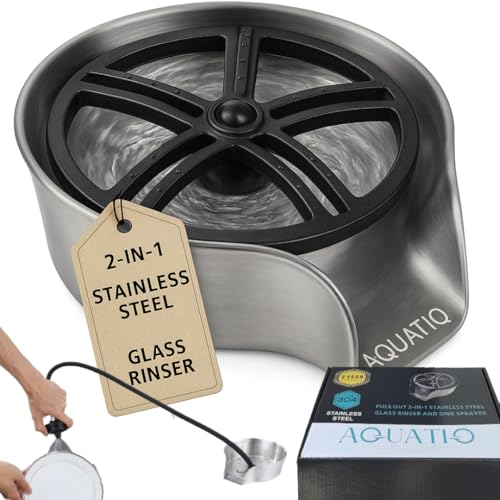
AquatiQ 2-in-1 Glass Rinser stands out for combining a cup washer with a pull-out nozzle sprayer, so the same attachment is intended for drinkware, dishes and other kitchen rinsing. Its basin measures 14.5 × 13 × 4 cm, and its tilted base and taller sides are designed to direct water toward the drain and limit splashing. The maker says the rotating spray cleans in seconds.
This model suits buyers who want more than a dedicated cup plate. Its dimensions are metric, and the product calls for reviewing installation instructions before fitting; measure the available space and confirm mounting and plumbing compatibility first.
Bottom line: Choose this if you want a cup rinser paired with a pull-out nozzle.
Pull-Out Glass Rinser, 80 cm

Pull-Out Glass Rinser, 80 cm is distinguished by its retractable nozzle extension, which reaches 80 cm and can be moved around the sink. The design combines a glass rinser with a pull-out spray gun, making it suited to buyers who also want to rinse areas beyond the cup plate. The maker says the rotating water jets rinse drinkware quickly.
The extension is the clearest reason to choose this option over a fixed-position rinser. The dimensions are 4.0 × 2.4 × 2.4, without units, so use the 80 cm reach—not those figures—to judge coverage, and confirm the mounting and plumbing fit before purchase.
Bottom line: Pick this when an 80 cm pull-out reach is the deciding feature.
304 Stainless Steel Pull-Out Rinser

304 Stainless Steel Pull-Out Rinser differs with a 304 stainless steel base paired with a flexible pull-out hose and rotating wash head. The maker says its water jets rinse cup walls, bottoms and container corners, making this a fit for buyers who want a rotating head and a specified base material. Its dimensions are 2.63 × 9.05 × 6.73, though the measurements do not include units.
Measure the installation area and confirm the mount and plumbing connections fit your sink before ordering.
Bottom line: Choose this if a 304 stainless steel base matters most.
How to choose a cup cleaner sink attachment
Start with the spray layout and installation fit: a cup rinser plate is for rinsing drinkware, while a pull-out spray head can extend cleaning beyond that plate. A 360-degree rotating head can redirect spray around cup interiors, but it does not tell you how far a hose reaches. Compare stated extension length when sink coverage is important; Pull-Out Glass Rinser, 80 cm gives an 80 cm reach, while no reach figure is available for the other two.
Next, compare the footprint and material. AquatiQ 2-in-1 Glass Rinser gives a basin size of 14.5 × 13 × 4 cm and specifies stainless steel; 304 Stainless Steel Pull-Out Rinser specifies a 304 stainless steel base. Before choosing, measure the installation area and confirm both the mounting-hole size and water connection match your sink. Shut off the water supply before plumbing work, and check for leaks after installation.
Sink fit and installation measurements
Measure the counter or sink opening, available depth below it, and clearance around the faucet before selecting a rinser. A common US accessory opening is 1⅜ inches, but faucet and accessory openings can differ, so do not assume the existing hole will fit an attachment. The products here do not provide a shared opening specification, which makes compatibility a must-check before ordering.
AquatiQ 2-in-1 Glass Rinser supplies basin measurements in centimeters, while the dimensions for Pull-Out Glass Rinser, 80 cm and 304 Stainless Steel Pull-Out Rinser have no units; do not use those latter figures to calculate a cutout. Leave enough hose travel for the sink area you intend to rinse, and check the space beneath the sink for hoses and connections. Turn off the water supply before altering plumbing, then inspect connections for leaks once water is restored.
Glass rinser and pull-out spray designs
Dedicated glass rinsers use a plate activated by pressing a cup against it, sending water into the vessel; pull-out sprayers instead place a movable nozzle in the user’s hand. Combination designs pair the two functions, as AquatiQ 2-in-1 Glass Rinser does. A rotating spray head can change the direction of the jets, while hose reach determines how far the nozzle can travel from its base.
| Need | Useful design feature | Example |
|---|---|---|
| Rinse drinkware at the sink | Press-activated cup plate | AquatiQ 2-in-1 Glass Rinser |
| Move the spray around the sink | Pull-out nozzle | Pull-Out Glass Rinser, 80 cm has an 80 cm extension |
| Prioritize base material | Specified stainless steel base | 304 Stainless Steel Pull-Out Rinser uses 304 stainless steel |
A rotating head is not the same as a longer hose: choose by the movement you need, and verify the attachment’s sink compatibility before installation.
Frequently Asked Questions
How does a sink cup rinser work?
A cup rinser sends water jets into a vessel when its rim presses the actuator plate. Hold the cup upside down over the plate and allow the water to drain into the sink.
Will a glass rinser fit my sink opening?
Measure the opening before choosing an attachment; 1⅜ inches is a common US accessory-hole size, but openings vary. Confirm the specific mounting and plumbing requirements before installation.
How much room does a pull-out rinser need?
Allow room for the hose to extend and return without catching on the faucet, sink, or stored items below. Pull-Out Glass Rinser, 80 cm specifies an 80 cm extension; measure the distance from its proposed base to the farthest area you want to reach.
Can a cup rinser clean baby bottles?
A cup rinser’s spray can reach inside drinkware, and Pull-Out Glass Rinser, 80 cm is marketed for baby bottles as well as glasses. Rinse bottles with clean water and use the bottle’s normal cleaning and sanitizing routine; a rinser is not a substitute for it.
Should I shut off water before installing a sink rinser?
Yes, shut off the water supply before connecting or changing plumbing. After installation, restore water slowly and check every connection for leaks.