
NextGen TV ATSC 3.0 Tuners Compared by Setup and Fit

For a standalone TV receiver, the ADTH NextGen TV Box Gen 2 is the clearest match because it supports ATSC 3.0 and legacy ATSC 1.0 with up to 4K HDR output. Choose a network tuner or USB tuner instead if you need multi-device viewing or have a verified compatible streaming device.
The named tuner category includes receivers that bring over-the-air broadcast signals to a display; a TV antenna is required for broadcast reception.
We earn a commission if you buy through links on this page. As an Amazon Associate I earn from qualifying purchases. Products are compared on manufacturer specifications, not hands-on testing.
- Best overall: ADTH NextGen TV Box Gen 2, 64GB – Combines ATSC 3.0 and ATSC 1.0 reception with up to 4K HDR output and 64GB built-in storage.
- Best for whole-home viewing: SiliconDust HDHomeRun Flex 4K – Offers four tuners and network streaming to multiple devices simultaneously.
- Best for compatible streaming devices: ADTH NextGen TV USB Tuner – USB tuner supports both broadcast generations, but protected channels depend on host codecs, DRM and internet.
| Product | Best for | Recording storage | Shop |
|---|---|---|---|
| ADTH NextGen TV Box Gen 2, 64GB | Standalone TV setup | 64GB built-in | Check Price on Amazon |
| ADTH NextGen TV USB Tuner | Compatible streaming host | — | Check Price on Amazon |
| SiliconDust HDHomeRun Flex 4K | Whole-home streaming | USB drive required | Check Price on Amazon |
NextGen TV ATSC 3.0 tuners
Match the receiver style to your screen, streaming device, and recording needs before choosing.
ADTH NextGen TV Box Gen 2, 64GB
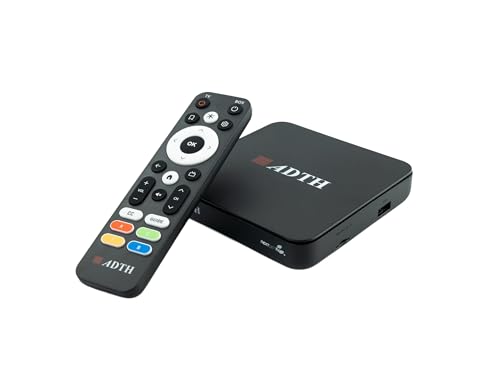
Unlike the streaming-device and network tuners, this receiver is a standalone box with up to 4K HDR output and built-in 64GB storage. It supports ATSC 3.0 and legacy ATSC 1.0, making it a straightforward option for an HDMI display when you want one tuner for both broadcast generations. An antenna is required, and 4K HDR reception depends on compatible broadcasts and a compatible TV. The maker does not establish the recording format or whether scheduled recording is supported, so buyers focused on DVR features should verify those before choosing.
Bottom line: Pick this for a direct TV connection and built-in storage.
ADTH NextGen TV USB Tuner

The ADTH USB tuner differs from a standalone converter because it relies on a compatible Android TV, Google TV, or Fire TV host. ATSC 3.0 playback requires HEVC and Dolby AC-4 support on the host; encrypted channels also require internet access and a device with Widevine L1. The maker names the Onn 4K Pro and third-generation Fire TV Cube as devices known to work well. This is a fit for buyers who have a compatible streaming device, but not for a TV without a supported host. Check device compatibility and local ATSC 3.0 availability before ordering.
Bottom line: Pick this only with a confirmed compatible streaming host.
SiliconDust HDHomeRun Flex 4K

The HDHomeRun Flex 4K is the network option: it can stream live TV to multiple devices in a home, rather than connecting as a single-screen converter. Its four tuners comprise two ATSC 3.0 tuners and four ATSC 1.0 tuners; whole-home DVR requires a USB hard drive. ATSC 3.0 compatibility depends on the channel and playback device, and protected ATSC 3.0 channels are not compatible. It suits multi-room households with compatible devices, but a buyer seeking protected-channel reception should choose a different receiver.
Bottom line: Choose it for multi-device viewing and USB-drive DVR.
How to choose an ATSC 3.0 tuner
Choose first by connection style: a standalone converter feeds one TV, a USB tuner depends on a compatible streaming host, and a network tuner distributes channels to devices on a home network. ATSC 3.0 and ATSC 1.0 support matters during the transition because many stations may still be received through the older standard. ATSC 3.0 availability varies by city and channel, so check local coverage before selecting a tuner specifically for NextGen TV. If protected channels matter, confirm DRM compatibility on both the tuner and playback device; the HDHomeRun Flex 4K supports only DRM-free ATSC 3.0 content. In practical terms, choose a network tuner when you need more than one viewing location, and a direct receiver when the TV is the only display.
ATSC 3.0 DRM and streaming-device compatibility
ATSC 3.0 reception alone does not guarantee that every channel will play: encrypted broadcasts can require DRM support, internet access, and compatible codecs. For the ADTH USB tuner, the host must support HEVC and Dolby AC-4, while protected channels additionally require Widevine L1 and an internet connection. USB tuners therefore need a compatibility check before purchase, not just an available USB port. Network tuners also have playback-device limits; the HDHomeRun Flex 4K supports DRM-free ATSC 3.0 content, not protected channels. Use this guide to match a setup to the content you expect to watch.
| Need | Receiver type | Key check |
|---|---|---|
| One TV, built-in storage | Standalone box | Display output and local channel reception |
| Streaming-device integration | USB tuner | Host codecs and DRM support |
| Several screens | Network tuner | Device compatibility and channel DRM |
Antennas, reception and channel availability
Every over-the-air tuner needs an antenna, and the antenna’s location and direction affect reception. UHF and VHF stations use different frequency bands, so an antenna should cover the bands used by local stations; an outdoor antenna generally has fewer obstructions than one placed inside. Signal strength can change with terrain, buildings, distance, and weather, so a tuner’s 4K capability does not mean local stations broadcast in 4K. Check which channels offer ATSC 3.0 in your area and whether those channels are protected before deciding which receiver features matter. For weak or unstable reception, improve antenna placement before treating the tuner as the cause.
DVR storage and tuner count
Tuner count determines how many channels a device can tune at once, while storage determines where recordings can be kept. The HDHomeRun Flex 4K has four tuners overall, including two ATSC 3.0 tuners, and requires a USB hard drive for DVR use. A box with built-in storage avoids a separate drive, but storage capacity by itself does not confirm recording controls or recording duration. For network viewing, each playback device also needs a compatible app or platform; multiple tuners do not guarantee every channel can stream on every screen. If simultaneous recording is essential, compare the number of ATSC 3.0 tuners specifically rather than relying on the total tuner count.
Frequently Asked Questions
Does an ATSC 3.0 tuner need an antenna?
Yes, over-the-air reception requires an antenna connected to the tuner. Reception depends on local station distance, terrain, obstructions, and antenna placement.
Can an ATSC 3.0 tuner receive ATSC 1.0 channels?
Some tuners, including the ADTH box, ADTH USB tuner, and HDHomeRun Flex 4K, also support ATSC 1.0. Check the receiver’s broadcast support before buying if local channels still use the older standard.
Why do some NextGen TV channels need internet?
Encrypted ATSC 3.0 channels may require an internet connection for DRM authorization. The ADTH USB tuner also requires a host with Widevine L1 for protected channels.
How many tuners are enough for recording?
One tuner can tune one channel at a time, so simultaneous recordings generally need a separate tuner for each channel being recorded. The HDHomeRun Flex 4K has two ATSC 3.0 tuners, even though its total tuner count is four.
Will an ATSC 3.0 tuner give me 4K channels?
Not necessarily: the receiver’s output capability does not determine whether local stations broadcast in 4K. The ADTH box supports output up to 4K HDR, but broadcast availability varies by location.