
Best Deer Feed Mix: 3 Options Compared by Use

For most people, BestNest Deer Feed Mix, 100 lb is the best deer feed mix because its 100-pound bag combines corn, soybeans, molasses and salt for regular feeding. Choose Sommer’s Sweet Deer Corn Mix, 50 lb instead if you want sunflower in the blend or a smaller 50-pound bag; Evolved Habitats Deer Cane Powder, 6.5 lb is a mineral attractant, not a grain-based feed mix.
Deer feed mixes supplement natural forage, while mineral powders are applied to establish mineral sites. Check local wildlife rules before feeding, since some areas restrict baiting or feeding.
We earn a commission if you buy through links on this page. As an Amazon Associate I earn from qualifying purchases. Products are compared on manufacturer specifications, not hands-on testing.
- Best overall: BestNest Deer Feed Mix, 100 lb – Its 100-pound blend combines corn, soybeans, molasses and salt for ongoing feeding.
- Best for sunflower: Sommer’s Sweet Deer Corn Mix, 50 lb – Its 50-pound mix adds oil sunflower to corn, roasted soybeans and cane molasses.
- Best for mineral sites: Evolved Habitats Deer Cane Powder, 6.5 lb – The 6.5-pound powder is a concentrated mineral attractant rather than a grain feed.
| Product | Best for | Ingredients or type | Weight | Form | Shop |
|---|---|---|---|---|---|
| BestNest Deer Feed Mix, 100 lb | Regular feeding | Corn, soybeans, molasses, salt | 100 lb | Feed mix | Check Price on Amazon |
| Sommer’s Sweet Deer Corn Mix, 50 lb | Sunflower blend | Corn, roasted soybeans, oil sunflower | 50 lb | Feed mix | Check Price on Amazon |
| Evolved Habitats Deer Cane Powder, 6.5 lb | Mineral sites | Concentrated mineral attractant | 6.5 lb | Powder | Check Price on Amazon |
Best deer feed mix options
Compare grain-based supplemental feeds with a mineral powder by intended use, ingredients and bag weight.
BestNest Deer Feed Mix, 100 lb

For recurring feeding across a larger property, this 100-pound mix provides the largest supply among the grain-based options here. Corn and soybeans form the blend, with molasses and salt; the maker says it is intended for year-round use and can be spread by hand or used in a feeder. The large bag suits people who want a single mix for repeated feeding rather than a smaller trial quantity. Its limitation is the bulk: a 100-pound bag can be inconvenient to move or store if feeding is occasional or storage space is limited.
Bottom line: Pick this if you feed regularly and can handle a 100-pound bag.
Sommer’s Sweet Deer Corn Mix, 50 lb

Unlike the corn-and-soy blend in BestNest Deer Feed Mix, 100 lb, this 50-pound mix includes oil sunflower alongside corn, roasted soybeans and cane molasses. The maker describes it as supplemental feed for deer and wildlife and says it can be used in gravity, spin or trough feeders, or spread on the ground where permitted. Its smaller bag is a practical fit for people who do not need the larger supply in BestNest Deer Feed Mix, 100 lb. The tradeoff is that it contains half the weight of BestNest Deer Feed Mix, 100 lb, so it may require more frequent replenishment during regular feeding.
Bottom line: Choose this if you want sunflower in a 50-pound supplemental mix.
Evolved Habitats Deer Cane Powder, 6.5 lb
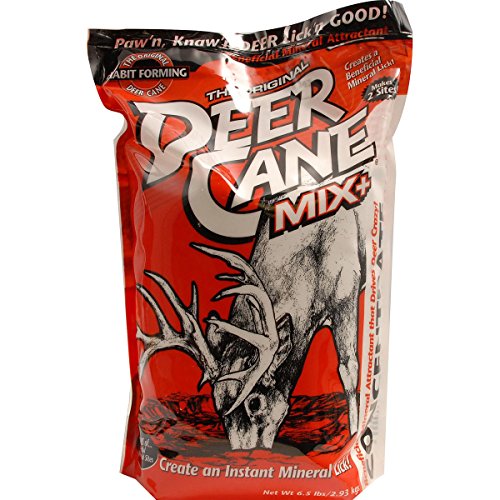
This is the only mineral-site product in the group, not a grain-based feed mix like BestNest Deer Feed Mix, 100 lb or Sommer’s Sweet Deer Corn Mix, 50 lb. The 6.5-pound powder is intended to be applied at a mineral site; the maker says its minerals react with moisture and describes it as a year-round supplemental attractant. It suits a buyer specifically looking to establish or maintain a mineral site rather than provide corn, soybeans or other feed ingredients. Because its purpose and format differ from feed mixes, it is not a substitute for a bag of supplemental feed.
Bottom line: Pick this only if you want a mineral-site powder, not feed.
How to choose a deer feed mix
Choose a deer feed mix by matching the ingredients, intended use and bag weight to your feeding plan. Corn supplies concentrated carbohydrate; soybeans contribute protein and fat, while sunflower seeds add fat. These ingredients are supplemental, not a replacement for natural forage or a complete, professionally formulated ration. A larger bag makes sense for regular feeding only if you can keep it dry and secure from rodents. For a new feeding site, start with a small amount and increase gradually over about 7 to 10 days; a sudden shift to a high-carbohydrate diet can disrupt a deer’s rumen. Do not assume a sweetened mix is suitable for every season or herd. Local rules and wildlife-agency guidance should decide whether feeding is appropriate at all.
Feed mix versus mineral attractant
A feed mix provides edible grains or seeds, while a mineral attractant is a separate product intended for a mineral site. Corn-and-soy blends are more directly comparable to each other than either is to a concentrated powder. Mineral powders may react with moisture, but that does not make them a meal or a complete source of nutrition. Use this distinction to avoid choosing a product by the word “deer” alone.
The table separates each option by its purpose and form.
| Product type | Typical purpose | Decision rule |
|---|---|---|
| Grain-based feed mix | Supplemental feeding | Choose when you want corn, soybeans or seeds as feed |
| Mineral powder | Mineral-site attractant | Choose only when you specifically want a mineral site |
Feeding safety and local rules
Check state and local wildlife rules before placing feed: baiting and supplemental feeding restrictions can change by jurisdiction, season and disease-management zone. Chronic wasting disease (CWD) is a fatal prion disease of deer and related cervids, and concentrating animals at feed sites can increase close contact. Keep feed away from roads and neighboring property, and do not leave wet or moldy feed where animals can consume it. Where feeding is legal, place only what animals can consume promptly and clean up leftovers; excess feed attracts rodents and can spoil. Never interpret an attractant’s marketing language as proof that it improves health or prevents disease.
Storing deer feed between uses
Store grain-based feed dry, cool and in a rodent-resistant container; moisture encourages mold and pests can contaminate exposed feed. A sealed bin is more protective than leaving an opened bag on a shed floor, and raised storage helps prevent contact with damp ground. Buy or open only what you can store properly, especially when handling a large bag. Check the product before use and discard feed that smells musty, clumps from dampness or shows visible mold. Do not mix fresh feed into a spoiled batch, since that can spread contamination.
Frequently Asked Questions
Should I switch deer to a new feed mix suddenly?
No; introduce a new high-carbohydrate feed gradually over about 7 to 10 days. Sudden diet changes can disrupt rumen microbes and cause digestive illness.
Can deer feed mix replace natural forage?
No; supplemental mixes are not a substitute for a diverse natural diet or a complete formulated ration. Keep the feed supplemental and follow local wildlife guidance.
How should I store an opened deer feed bag?
Keep it sealed in a dry, rodent-resistant container and off damp ground. Discard feed with visible mold, musty odor or moisture clumps.
Are mineral powders the same as deer feed?
No; mineral powders are intended for mineral sites, while grain mixes supply ingredients such as corn, soybeans or sunflower. Choose based on whether you need feed or a mineral-site product.
Can I feed deer anywhere in my state?
No; feeding and baiting rules vary by state, season and disease-management area. Confirm the current local wildlife regulations before setting out feed.