
Fishing Rod Bags and Cases 7: Options by Fit

For most anglers carrying assembled rods, XTreme Canvas Rod and Reel Bag, 90 in is the most flexible choice because it fits setups up to 90 inches and can hold multiple rod-and-reel combinations. Choose a different case if you need a telescoping hard shell, a compact 53-inch bag or a case tailored to breakdown spinning combos.
We earn a commission if you buy through links on this page. As an Amazon Associate I earn from qualifying purchases. Products are compared on manufacturer specifications, not hands-on testing.
- Best overall: XTreme Canvas Rod and Reel Bag, 90 in – Fits most conventional and spinning setups up to 90 inches and accommodates multiple rod-and-reel combinations.
- Best for hard-shell transport: Plano Airliner Telescoping Rod Case – Its polypropylene case telescopes from 47 to 88 inches and stores up to eight 7-foot rods.
- Best for breakdown combos: PEKREWS 90–96 in Breakdown Rod Case – Its adjustable 90-to-96-inch length and separate reel and tackle pockets suit breakdown spinning setups.
| Product | Best for | Length | Capacity | Material | Shop |
|---|---|---|---|---|---|
| XTreme Canvas Rod and Reel Bag, 90 in | Assembled combos | Up to 90 in | Multiple combos | Marine-grade canvas | Check Price on Amazon |
| Plano Airliner Telescoping Rod Case | Rigid rod transport | 47–88 in | Up to eight 7-ft rods | Polypropylene | Check Price on Amazon |
| Booms Fishing PB4 Extended Rod and Reel Case | Longer setups | 76–96 in | 2–3 rods | Nylon with foam | Check Price on Amazon |
| Booms Fishing PB1 Folding Rod Case, 53 in | Compact setups | 53 in | Up to two rods | Waterproof nylon | Check Price on Amazon |
| PEKREWS 90–96 in Breakdown Rod Case | Breakdown spinning combos | 90–96 in | Two combos | — | Check Price on Amazon |
Fishing rod bags and cases compared
Compare case length, carrying capacity and construction against your rod setup and transport needs.
XTreme Canvas Rod and Reel Bag, 90 in

For assembled conventional or spinning setups, this canvas bag accepts gear up to 90 inches, including conventional reels up to 50-pound class. It can carry multiple rod-and-reel combinations, so it suits anglers transporting a mix of spinners and trolling gear. The maker says the marine-grade canvas resists water, and the single zipper encloses rods and reels. Measure the fully assembled setup, including reel placement, against the 90-inch limit before choosing it. This soft-sided bag is a different fit from a telescoping hard case, so it may not suit someone seeking a rigid outer shell.
Bottom line: Choose this for carrying multiple assembled setups up to 90 inches in one soft bag.
Plano Airliner Telescoping Rod Case
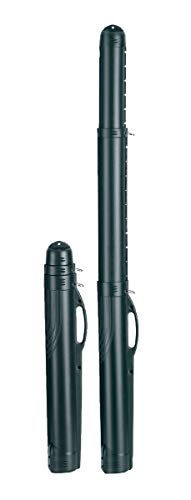
The Airliner is the hard-case option here: its polypropylene body telescopes from 47 to 88 inches and stores up to eight 7-foot rods. A 4.5-inch diameter and three-tier design distinguish it from the soft bags, while a molded handle and locking position device support carrying and length adjustment. It suits anglers who want a rigid case that can shorten for transport and expand for longer rods. Its maximum extension is 88 inches, so rods or assembled setups longer than that need another solution; confirm the gear fits inside the case’s diameter as well as its length.
Bottom line: Pick this when a telescoping rigid case and room for several rods matter most.
Booms Fishing PB4 Extended Rod and Reel Case

The PB4 reaches 96 inches with its fold-out extension, giving it more length than the 90-inch canvas bag and compact 53-inch case. It holds two to three rods, with outer nylon, cushioning foam and rod-fixing straps. The maker advises against using it for surf or ocean rods, so it is better suited to other rod setups within its length range. Its folded and extended design makes length flexibility the main draw, but buyers should check assembled gear dimensions and avoid assuming that the rod capacity guarantees a fit for every reel combination.
Bottom line: Choose this if you need a soft case that extends to 96 inches for up to three rods.
Booms Fishing PB1 Folding Rod Case, 53 in

The PB1 is the shortest option, at 53 inches, and holds up to two rods with reels. Its soft nylon body folds for packing, and it has an adjustable, nonslip shoulder strap. The maker describes the fabric as waterproof, but the case’s short length limits it to setups that fit within 53 inches; it is not a match for full-length rods that exceed that measure. This bag suits travel with shorter rods or setups that can be broken down. Compare the reel and rod dimensions together before selecting it, rather than relying on rod length alone.
Bottom line: Pick this for up to two rod-and-reel setups that fit within 53 inches.
PEKREWS 90–96 in Breakdown Rod Case

The PEKREWS case is specifically sized for breakdown spinning combos, with adjustable length from 90 to 96 inches and space for two rod-and-reel combos. Its dedicated reel pouch has a padded divider; two side tackle pockets and an accessory pocket separate small gear. The reel pouch is sized for standard freshwater spinning reels in sizes 1000–3000, and the maker says the case is not suitable for larger saltwater rods or oversized reels. It is the most targeted choice for separated rod sections and reel storage, but its length and reel limits make it a poor match for other setups.
Bottom line: Choose this for two breakdown spinning combos with standard freshwater reels.
How to choose a fishing rod bag or case
Start by matching the case’s interior length to the gear in its transport configuration, not just the rod’s advertised length. Measure the rod with reels attached if the setup will travel assembled, then compare that measurement with the case’s usable length. Soft bags can fold or flex, while a rigid telescoping case has a fixed diameter that can restrict how reels sit alongside rods. Capacity counts also need context: a case rated for multiple rods may not hold the same number of bulky reel setups. If the gear measures more than 90 inches assembled, choose a model reaching 96 inches or plan for a breakdown configuration; do not assume a rod count guarantees fit.
Rod case length and fit
Case length is the deciding fit measure: this selection spans 53 inches to 96 inches, with the rigid telescoping option extending to 88 inches. A 7-foot rod is 84 inches long, but reels, guides and the way a rod is packed affect the required space. Breakdown rods can fit a long case by section while the overall packed setup remains manageable; check each section and reel pouch separately. For assembled gear, leave room for the reel and avoid forcing a zipper or hard shell closed around guides. The table is a quick way to match transport need to case format.
| Need | Case style | Fit cue |
|---|---|---|
| Rigid protection | Telescoping hard case | Up to 88 inches; 4.5-inch diameter |
| Several assembled combos | Soft multi-setup bag | Up to 90 inches |
| Long soft case | Extended bag | 76–96 inches |
| Short travel setup | Folding bag | Up to 53 inches |
Soft bags versus telescoping rod cases
Soft bags prioritize flexible carrying and storage, while a hard case gives the rods a rigid exterior barrier. Soft models in this group use canvas or nylon; one includes internal cushioning foam and another uses a waterproof-fabric claim. A hard polypropylene model telescopes between 47 and 88 inches and has a 4.5-inch diameter. Choose a soft bag when folding, shoulder carrying or packing multiple assemblies is important; choose a hard case when the rigid shell and adjustable length suit your transport. No case removes the need to secure loose gear: keep hooks covered and reels positioned so they do not press against rod guides.
Preparing rods for transport
Protect rod guides and line by securing hooks and keeping loose tackle out of the rod compartment. For a one-piece or assembled setup, compare the full length with the case opening and closure path; a rod that technically fits lengthwise can still be awkward if its reel sits against a narrow section. Breakdown combos need their sections measured individually, and reel pouches should be checked against reel size. Cases with straps or dividers help separate equipment, but do not overfill beyond the rod capacity. Avoid forcing a zipper, extension or locking mechanism when the gear catches, since pressure can bend guides or strain the case closure.
Frequently Asked Questions
How do I measure a fishing rod for a case?
Measure from the rod tip to its butt in the configuration you plan to carry, then include the attached reel if the setup stays assembled. For a breakdown rod, measure the longest section and compare reel storage separately.
Can a 7-foot rod fit in an 88-inch case?
A 7-foot rod measures 84 inches, leaving 4 inches before an 88-inch maximum. Check the usable interior length and whether a reel or handle affects how the rod sits before relying on that margin.
Are soft fishing rod bags waterproof?
Fabric claims are model-specific: water-resistant canvas and waterproof nylon are not interchangeable guarantees. For exposure to standing water or heavy rain, use a genuinely sealed container rather than assuming a soft bag keeps water out.
Should I store reels attached to fishing rods?
Store reels attached only when the case is designed for assembled setups and has room around the reel. Separate storage can reduce crowding around rod guides, while padded reel compartments help keep reels apart.
How many rods can one case hold?
Capacity varies by case and setup: some are designed for two rods, while one hard case holds up to eight 7-foot rods. Bulky reels and rod diameter can reduce the practical number, so test-fit the packed configuration.