
Best Dog Proof Door Handle Locks Compared by Fit

Pet Proof Lever Lock, 4-Pack is the best fit for most homes because its four screw-mounted blockers avoid adhesive and are sized for a 2¾-inch handle area. Choose Pet Proof Lever Lock, 1-Pack if you only need one blocker; choose Inaya Adhesive Lever Lock, 2-Pack if you prefer an adhesive mount and can wait 24 hours after installation.
Dog-proof lever locks restrict a pet’s ability to press a lever down; check that a blocker clears the handle’s movement and does not prevent people from opening the door.
We earn a commission if you buy through links on this page. As an Amazon Associate I earn from qualifying purchases. Products are compared on manufacturer specifications, not hands-on testing.
- Best overall: Pet Proof Lever Lock, 4-Pack – Four blockers use existing handle screws and require no adhesive.
- Best for one door: Pet Proof Lever Lock, 1-Pack – A single screw-mounted blocker fits up to 2¾ inches.
- Best for adhesive mounting: Inaya Adhesive Lever Lock, 2-Pack – Pre-applied adhesive avoids drilling or changing handle screws.
| Product | Best for | Mounting | Pack size | Fit size | Shop |
|---|---|---|---|---|---|
| Pet Proof Lever Lock, 4-Pack | Several doors | Existing screws | 4 blockers | 2¾ in. | Check Price on Amazon |
| Pet Proof Lever Lock, 1-Pack | One door | Existing screws | 1 blocker | Up to 2¾ in. | Check Price on Amazon |
| Inaya Adhesive Lever Lock, 2-Pack | Adhesive mounting | Pre-applied adhesive | 2 locks | Universal lever fit | Check Price on Amazon |
Dog Proof Door Handle Locks
Compare lever blockers by how they mount, how many doors they cover and the fit dimensions provided.
Pet Proof Lever Lock, 4-Pack

Four blockers make Pet Proof Lever Lock, 4-Pack the practical choice when several doors need restricting without adhesive. Installation uses the handle’s existing screws: loosen them without removing them, then fit the blocker. The product comes in white, black, brown and silver, and its size is 2¾ inches. It suits households that want a screw-mounted option for multiple lever handles. The limitation is that a four-pack may be more than needed for one doorway, and the size does not establish fit on every handle shape; measure the mounting area before choosing.
Bottom line: Choose this set when you need blockers for multiple doors and prefer a screw-mounted fit.
Pet Proof Lever Lock, 1-Pack

Pet Proof Lever Lock, 1-Pack is the single-blocker option for a door where the handle area measures no more than 2¾ inches. It attaches with the existing handle screws, so installation does not call for drilling or adhesive. Its compact dimensions are 3.35 by 2.95 by 2.56 inches, and it weighs 0.09 pounds. This is a straightforward pick for one bedroom or bathroom door. The main tradeoff is coverage: one blocker does not address other doors pets can reach, so count the doors that need restricting before deciding.
Bottom line: Pick this for one compatible door when screw mounting is preferred.
Inaya Adhesive Lever Lock, 2-Pack
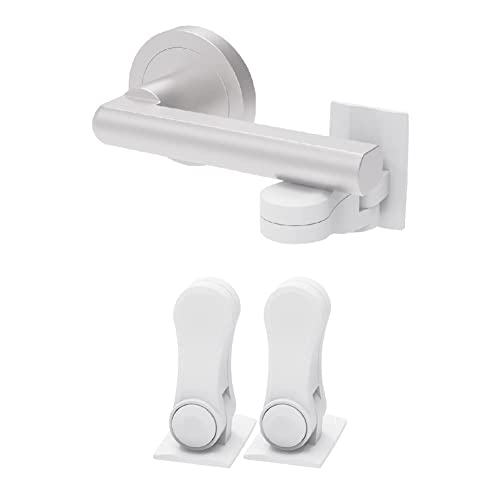
For a mount that does not use handle screws, Inaya Adhesive Lever Lock, 2-Pack supplies two lever locks with pre-applied adhesive. Its maker says the design fits all types of door levers and works on rough as well as smooth surfaces. The instructions call for allowing 24 hours after installation for maximum adhesive bonding. This option suits someone who would rather not loosen the handle hardware. Adhesive installation is the limitation for renters or anyone concerned about the door finish; confirm that the mounting surface and removal approach suit your door before applying it.
Bottom line: Choose this two-pack if adhesive mounting suits your door surface and installation timing.
How to Choose a Dog Proof Door Handle Lock
Choose a blocker by matching its mounting method and clearance to the lever, rather than by pack count alone. Lever handles rotate downward to retract a latch; a blocker needs to restrict that movement without binding the handle or keeping an adult from opening the door. Measure the mounting area around the handle screws and check the full sweep of the lever. A size limit of 2¾ inches is not proof that every lever shape fits within it. If you have multiple doors a pet can reach, count them first: a multi-pack reduces the chance of leaving an accessible route open. For an adhesive model, consider the door finish and allow its specified bonding time before relying on it.
Mounting Styles and Door Fit
Screw-mounted blockers use the existing handle screws, while adhesive models attach to the door surface; the right choice depends on hardware access and surface suitability. Before fitting a screw-on unit, inspect whether the handle screws are accessible and compare their position with the blocker’s required area. For adhesive mounting, clean, dry surfaces generally support better bonding than dusty or damp ones, and textured finishes can make consistent contact harder. A decision rule: if you cannot loosen the existing screws comfortably or do not want to adhere anything to the finish, select a different mount style. Test the latch and handle from both sides after fitting. A pet blocker should not create a door that traps a person or prevents a quick exit.
| Need | Mount style to consider | Check before fitting |
|---|---|---|
| Several doors | Screw-mounted multi-pack | Count doors and measure each handle area |
| One door | Single screw-mounted blocker | Keep within its size limit |
| No handle screw changes | Adhesive-mounted pair | Surface compatibility and bonding time |
Safe Use Around Pets and People
A door handle blocker is a barrier to lever operation, not a substitute for supervising a pet around doors. Keep bedroom, bathroom and exit routes usable by people, and check that the device does not jam the latch or stop an adult from opening the door promptly. After installation, operate the handle from each side and close the door normally; repeat the check whenever the device loosens or shifts. If a door is part of an emergency route, do not use any fitting that delays opening. Pets may still scratch, nose or push at a door, so remove tempting access to handles and keep unsafe rooms secured by a method that does not obstruct human egress.
Common Door-Blocker Fit Mistakes
The most common fit error is treating a maximum dimension as universal compatibility. Measure the distance around the lever mount, check whether the blocker can sit flat, and confirm the lever moves freely when the lock is not engaged. A second mistake is choosing an adhesive model for a dusty, wet or unsuitable finish; weak contact can let the blocker shift. With adhesive installation, respect the 24-hour bonding wait given for the adhesive option here rather than testing it immediately. Screw-mounted designs also need a secure fit: loosen screws only as needed and make sure the handle remains stable afterward. If the latch sticks, the handle feels loose or a person cannot open the door easily, remove or reposition the blocker before normal use.
Frequently Asked Questions
How do I measure a door lever for a blocker?
Measure the area around the handle mount and compare it with the blocker’s size limit. Also check the lever’s full downward movement so the fitting does not bind the handle.
Can a pet handle blocker stop a dog from opening every door?
No single blocker protects doors where it is not installed. Count the accessible lever-handled doors and fit each compatible door while keeping human exit routes unobstructed.
How long should adhesive door locks set before use?
Allow 24 hours after installing the adhesive option described here for maximum bonding. Surface cleanliness and contact matter, so do not rely on a loose or shifting fitting.
Will a lever lock fit a round door knob?
These products are designed for lever handles, not round knobs. A knob generally needs a different style of cover or restraint.
Can a door blocker keep people from getting locked inside?
A blocker should not interfere with opening the door from either side. Test the handle and latch from both sides after installation, and remove any device that prevents a person from opening the door promptly.