
Best Ear Pads for Oxygen Tubing: 5 Options Compared

ZAPNO 20-Pack Fabric Ear Cushions is the best fit for most oxygen tubing users because it combines soft fabric, hook-and-loop closures and 20 washable pads. Choose ResOne Foam Ear Cushions, 5 Pairs instead if you want split foam cushions that slide over tubing, or a smaller reusable wrap if you prefer fewer pieces.
Ear pads are soft sleeves or wraps that cushion the contact point between tubing and the ear; keep the tubing unobstructed and away from flames while oxygen is in use.
We earn a commission if you buy through links on this page. As an Amazon Associate I earn from qualifying purchases. Products are compared on manufacturer specifications, not hands-on testing.
- Best overall: ZAPNO 20-Pack Fabric Ear Cushions – Twenty washable fabric pads use hook-and-loop closures for a reusable wrap.
- Best for foam: ResOne Foam Ear Cushions, 5 Pairs – Five pairs have a split-tube design that fits over tubing or mask straps.
- Best for a compact set: 10-Piece Fleece Cannula Ear Cushions – Ten washable fleece wraps measure about 3.4 by 1.5 inches.
| Product | Best for | Material | Pack size | Attachment | Shop |
|---|---|---|---|---|---|
| ZAPNO 20-Pack Fabric Ear Cushions | Reusable fabric wraps | Soft fabric | 20 pads | Hook and loop | Check Price on Amazon |
| ResOne Foam Ear Cushions, 5 Pairs | Split foam cushions | Foam | 5 pairs | Split tube | Check Price on Amazon |
| 10-Piece Fleece Cannula Ear Cushions | Washable fleece wraps | Polar fleece | 10 pieces | Hook-and-loop | Check Price on Amazon |
| NATAKU 12-Piece Fleece Ear Cushions | Six-pair supply | Polar fleece | 12 pieces | — | Check Price on Amazon |
| 24-Piece Gray Ear Cushions | Largest pad quantity | — | 24 pieces | Hook and loop | Check Price on Amazon |
Best ear pads for oxygen tubing
Choose by how the pad attaches, the material you prefer, and how many pieces you want on hand.
ZAPNO 20-Pack Fabric Ear Cushions
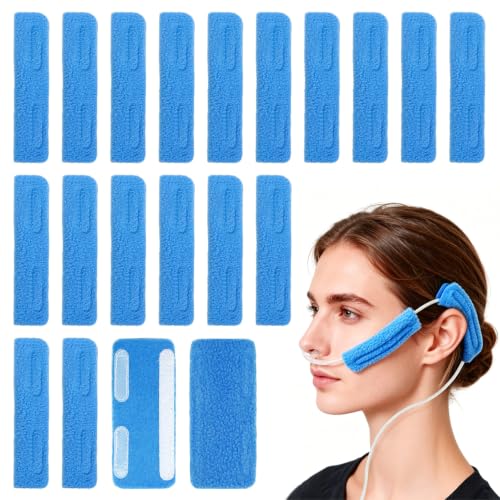
ZAPNO 20-Pack Fabric Ear Cushions stands out for its 20-piece washable set and hook-and-loop closure. The cushions are soft, breathable fabric and measure 3.5 by 1.5 inches; the maker says they fit most nasal cannula tubing, including standard tubing. That combination suits someone who wants reusable wraps and extra pads available between washes.
The size and closure may not suit every preferred fit, so compare the 3.5-inch length with the space around your ear before choosing. The maker also describes the fabric as moisture-absorbing, but that does not replace routine cleaning.
Bottom line: Choose this set if reusable fabric wraps and a larger supply matter most.
ResOne Foam Ear Cushions, 5 Pairs

ResOne Foam Ear Cushions, 5 Pairs is the foam option, with five pairs of lightweight cushions cut lengthwise for installation over oxygen tubing or mask straps. The flexible foam forms a barrier around the contact point, so this design suits someone who wants a sleeve-style cushion rather than a fabric wrap fastened around the tube.
Choose it for the split fit, not if a reusable, washable wrap is your priority.
Bottom line: Pick this option if you prefer split foam sleeves over wraparound pads.
10-Piece Fleece Cannula Ear Cushions

10-Piece Fleece Cannula Ear Cushions gives you washable, reusable polar-fleece wraps in a 10-piece set. Each cushion measures about 3.4 by 1.5 inches and fastens with hook-and-loop, making it a straightforward choice for users who want a defined size and a smaller set than the 20-piece option.
The maker says the wraps fit standard-width oxygen tubing and can also be used with eyeglasses or sunglasses. That broader use does not guarantee a comfortable fit on every frame, and the size may feel different from a longer or shorter wrap.
Bottom line: Choose this if a washable fleece wrap in a 10-piece set fits your routine.
NATAKU 12-Piece Fleece Ear Cushions
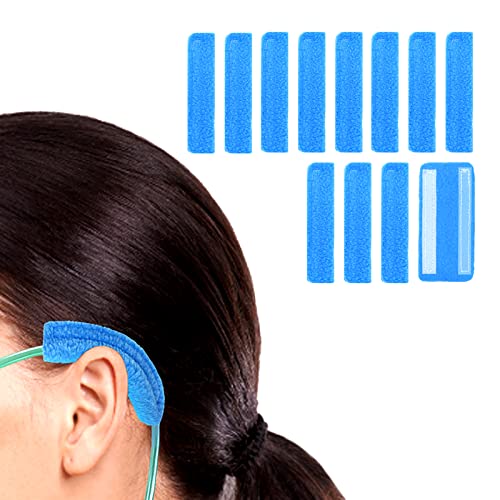
NATAKU 12-Piece Fleece Ear Cushions provides six pairs of polar-fleece cushions measuring about 3.5 by 1.5 inches. The maker says the size suits standard-width oxygen tubing; the fleece is also described as sweat-absorbing. This option makes sense when you want a mid-sized supply and a pad intended to cushion contact around both the ear and cheek.
The product facts do not identify its fastening style, so check how it stays closed before choosing if attachment method is important to you. Its 12 pieces fall between the 10-piece and 20-piece fabric sets.
Bottom line: Pick this set if six pairs and the cushion size suit your needs.
24-Piece Gray Ear Cushions
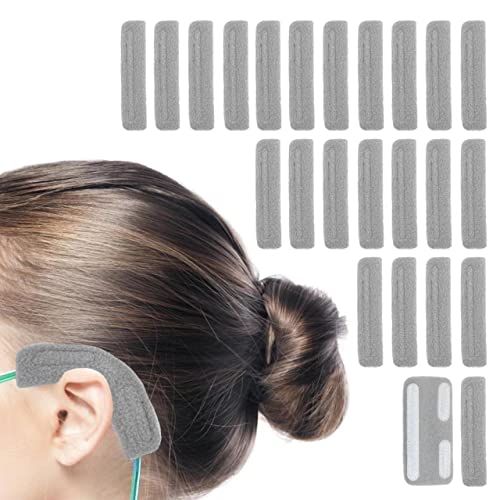
24-Piece Gray Ear Cushions has the largest quantity here: 24 pieces, or 12 pairs, with a 3.5-inch size. The maker says these pads fit standard oxygen and nasal tubing and fasten with hook-and-loop. It suits someone who wants the most replacements in one set and prefers the gray color.
If material feel or laundering is a deciding factor, this option leaves that choice less clear; choose it primarily for the quantity and closure.
Bottom line: Choose this when 12 pairs and a hook-and-loop closure are your priorities.
How to choose ear pads for oxygen tubing
Start with attachment style: split foam sleeves slide over tubing, while wrap pads close around it with hook-and-loop. The options here range from five pairs to 12 pairs, so choose a larger pack if you want more replacements between wash cycles. Fabric options list dimensions around 3.4 to 3.5 inches long and 1.5 inches wide; compare those measurements with the area you want cushioned. A practical rule is to choose a 3.4- to 3.5-inch wrap only if that length fits comfortably around your ear without pulling tubing out of position. Keep the tubing open and unkinked after fitting any cushion.
Fit and attachment for cannula ear cushions
Most of these pads are intended for standard-width tubing, but the product-specific dimensions differ slightly: two sets are about 3.4 inches long and two are about 3.5 inches. A wrap that is too loose may shift; one closed too tightly can press on or deform the tube. Check that the cannula remains seated and oxygen can flow freely after adjusting a pad. Foam split sleeves and hook-and-loop wraps attach differently, so match the design to whether you want to slide a cushion on or wrap it around tubing. Confirm your tubing’s width before ordering if it is not standard.
Foam sleeves versus fabric wraps
Foam sleeves use a lengthwise split to fit over the tube, while fabric wraps fasten around it; those are the key design differences in these choices. The foam set includes five pairs and names compatibility with mask straps as well as oxygen tubing. The fabric choices range from 10 to 24 pieces, and some specify washable, reusable fleece or soft breathable fabric. Use the table to match a purchase need to a format rather than assuming every cushion attaches the same way.
| Need | Suitable format | Example attribute |
|---|---|---|
| Slide-on cushion | Split foam sleeve | Lengthwise cut |
| Reusable wrap | Fabric with hook-and-loop | Washable material stated |
| More replacements | Larger fabric set | 20 or 24 pieces |
Cleaning and oxygen safety
Wash only pads whose maker identifies them as washable, and let a cushion dry fully before putting it back around tubing. Replace a pad if its closure no longer holds or its material is damaged, and avoid sharing personal ear cushions. Supplemental oxygen supports combustion, so keep oxygen equipment and tubing away from smoking, flames, sparks and heat; oxygen itself is not a fuel, but nearby materials can burn more vigorously. Never let a pad pinch or block the oxygen tube, and check the cannula position after readjusting cushions.
Frequently Asked Questions
How do I keep ear pads from slipping?
Choose a closure that matches your preferred fit: split foam sleeves slide over the tube, while hook-and-loop wraps fasten around it. After fitting, make sure the pad stays in place without pulling the cannula or flattening the tubing.
Can I wash oxygen tubing ear cushions?
Wash them only when the product identifies them as washable; the fleece wraps in some sets are described as washable and reusable. Let a washed pad dry completely before putting it back around tubing.
How long should an ear cushion be?
The fabric options here measure about 3.4 to 3.5 inches long and 1.5 inches wide. Use those dimensions as a comparison point and check that the cushion fits around your ear without shifting the cannula.
Can ear pads block oxygen flow?
A properly placed cushion should not pinch or cover the tubing opening. Check the tube for kinks and confirm the cannula remains seated whenever you adjust a pad.
Are oxygen tubing ear cushions safe near a flame?
No; keep oxygen equipment away from flames, smoking, sparks and heat. Supplemental oxygen supports combustion, so nearby materials can burn more vigorously even though oxygen is not itself a fuel.