
Best Electric Brush Cutter Options for Yard Clearing

WeGofly 13-Inch 4-in-1 Trimmer suits most people seeking an electric brush cutter because it combines a 13-inch size with a cordless, multi-function design and includes two 21V 6.0Ah batteries. Choose 21V Cordless Stringless Brush Cutter for a lighter stated weight, or AZZUNO 21V 12-Inch Brushless Trimmer if you want a brushless motor and several blade types.
Brush cutters use a cutting head or blade to handle tougher vegetation than ordinary grass trimming; choose by the growth you need to cut and whether you need a complete tool or an attachment for a compatible power head.
We earn a commission if you buy through links on this page. As an Amazon Associate I earn from qualifying purchases. Products are compared on manufacturer specifications, not hands-on testing.
- Best overall: WeGofly 13-Inch 4-in-1 Trimmer – Its 13-inch size, cordless design and included pair of 21V 6.0Ah batteries suit general yard clearing.
- Best for lighter handling: 21V Cordless Stringless Brush Cutter – Its weight is 3.5 pounds, and the cordless tool uses two 21V 2.0Ah batteries.
- Best for blade options: AZZUNO 21V 12-Inch Brushless Trimmer – Its 12-inch cutting range and three blade types cover grass, thick weeds and small branches.
| Product | Best for | Cutting width | Battery | Weight | Shop |
|---|---|---|---|---|---|
| WeGofly 13-Inch 4-in-1 Trimmer | General yard clearing | 13 inches | Two 21V 6.0Ah | — | Check Price on Amazon |
| 21V Cordless Stringless Brush Cutter | Lighter handling | — | Two 21V 2.0Ah | 3.5 pounds | Check Price on Amazon |
| AZZUNO 21V 12-Inch Brushless Trimmer | Multiple blade types | 12 inches | 21V 4.0Ah | 5.5 pounds | Check Price on Amazon |
Electric Brush Cutters
Compare the cutting width, battery setup and cutting system to match a tool to the vegetation and yard work you have in mind.
WeGofly 13-Inch 4-in-1 Trimmer
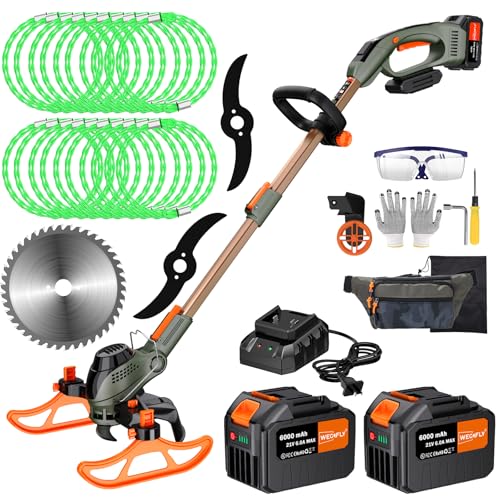
WeGofly 13-Inch 4-in-1 Trimmer stands out for combining a 13-inch cutting size with four functions: string trimming, edging, mini mowing and brush cutting. The cordless tool comes with two 21V 6.0Ah rechargeable batteries and a charger, and its maker identifies a 15,000-RPM brushless motor. That setup may suit someone who wants one tool for several kinds of routine yard work rather than a dedicated brush cutter attachment. The tradeoff is that the cutting-width figure alone does not tell you what thickness of brush the tool can safely cut; match the cutting head to the vegetation before tackling woody growth.
Bottom line: Choose this for a multi-purpose cordless yard tool with two included batteries.
21V Cordless Stringless Brush Cutter

21V Cordless Stringless Brush Cutter is the lightest option here by weight, at 3.5 pounds, and is presented as a stringless cordless brush cutter. Its maker says the 21V motor is intended for thick grass, stubborn weeds and overgrown areas, while the package includes two rechargeable 2.0Ah batteries and a charger. The compact weight may appeal to someone prioritizing maneuverability around fences, trees and garden beds. Unlike the other exact-fit options, its maker does not give a cutting width or a distinct blade system, so it is harder to compare its reach or match its cutting head to a particular type of brush.
Bottom line: Pick this when a low listed tool weight matters more than a specified cutting width.
AZZUNO 21V 12-Inch Brushless Trimmer

AZZUNO 21V 12-Inch Brushless Trimmer distinguishes itself with three cutting options: a 40-tooth alloy saw blade for branches and shrubs, a diamond-shaped blade for thick weeds, and a trimmer-line kit for grass. Its 12-inch cutting range, 21V brushless motor, 4.0Ah battery and 5.5-pound stated weight make it a fit for buyers who want to switch between lighter trimming and tougher growth. The maker says the motor reaches 25,000 RPM. A blade system is only useful when matched to the material and used with suitable precautions, so this model may be more involved than a simple string trimmer for routine lawn edging.
Bottom line: Choose this if you want dedicated blade choices for different vegetation.
How to Choose an Electric Brush Cutter
Start with the material you need to cut, then compare cutting width, blade options and power setup. String is suited to grass and light weeds; a rigid blade is used for tougher, denser growth, but the correct blade depends on the tool and the vegetation. A wider cutting path covers more ground per pass, while a narrow path can be easier to guide around obstacles. For small yards with grass and occasional weeds, a multi-function unit may be enough; for woody stems, favor a tool whose maker specifies a suitable blade and stem capacity. Do not infer cutting capacity from motor RPM or cutting width alone. If the tool is an attachment, confirm the compatible power head before ordering.
Battery and Cutting Width
Battery voltage and amp-hour capacity answer different questions: voltage identifies the battery system, while amp-hours describe its capacity. A 6.0Ah battery has three times the amp-hour capacity of a 2.0Ah battery at the same voltage, but actual runtime also changes with load, vegetation and cutting technique. Cutting width describes the swath across each pass, not the thickness of brush the cutter can handle. For example, a 12-inch width does not establish that a tool can cut a 12-inch stem. Choose by the maker’s material capacity when available, and avoid treating RPM as a substitute for that limit.
Blade Safety for Brush Cutting
Rotating blades can throw stones and cut through vegetation unexpectedly, so clear the work area of people, pets and loose debris before starting. Wear eye protection, sturdy footwear and hearing protection, and keep both hands on the tool with its guard installed. A rigid blade needs more clearance than trimming line; avoid working near rocks, wire, fences or tree trunks where the blade can strike and kick back. Cut brush within the tool’s capacity rather than forcing the blade through thick stems. Stop the motor and disconnect or remove the battery before changing a blade, clearing a jam or inspecting the cutting head.
Match the Cutter to Yard Work
A multi-function trimmer is convenient when most work is grass, edging and small weed patches, while a blade-equipped brush cutter is more suited to dense growth and small woody stems within its maker’s limit. Attachments can save storage space, but they only work with compatible power heads and may add length or weight at the cutting end. Compare tool weight alongside battery capacity: a larger battery can extend work between charges but can also change handling. Use this decision guide to narrow the type before considering individual specifications.
| Yard task | Useful feature | Check before use |
|---|---|---|
| Grass and edging | Trimmer line or edging function | Guard and cutting-head fit |
| Thick weeds | Blade option suited to weeds | Maker’s material guidance |
| Small branches | Branch-rated saw blade | Maximum stem capacity |
| Attachment setup | Dedicated brush cutter head | Compatible power-head model |
Frequently Asked Questions
What is the difference between a string trimmer and brush cutter?
A string trimmer uses flexible line for grass and light weeds, while a brush cutter uses a blade for tougher vegetation. Rigid blades require more clearance from rocks, fencing and people because they can throw debris or kick back.
Does a brush cutter attachment work with any trimmer?
No, an attachment must match the power head it was designed for. Check the exact power-head model, coupling and maker compatibility before purchase.
How much battery capacity is enough for yard trimming?
Amp-hour capacity helps compare batteries at the same voltage: 6.0Ah is three times the capacity of 2.0Ah. Runtime still depends on cutting load, vegetation and technique, so battery capacity alone cannot promise a specific working time.
What safety gear should I wear when brush cutting?
Wear eye protection, sturdy footwear and hearing protection, and keep the guard installed. Clear people, pets and loose debris from the work area before operating a rotating blade.