
Best Football Referee Whistle: 3 Options Compared

Hipat Stainless Steel Whistles suits most football referees because its stainless steel construction and cork pea distinguish it from the two plastic pairs.
We earn a commission if you buy through links on this page. As an Amazon Associate I earn from qualifying purchases. Products are compared on manufacturer specifications, not hands-on testing.
- Best overall: Hipat Stainless Steel Whistles – Stainless steel construction and a cork pea make this pair the clearest match for regular field officiating.
- Best for plastic whistles: Hipat Plastic Whistles – The pair is made of thickened plastic and includes a lanyard for each whistle.
| Product | Best for | Material | Shop |
|---|---|---|---|
| Hipat Stainless Steel Whistles | Field officiating | Stainless steel | Check Price on Amazon |
| Hipat Plastic Whistles | Plastic whistle pair | Thickened plastic | Check Price on Amazon |
| JKQAGD Plastic Whistles | Portable spare pair | Plastic | Check Price on Amazon |
Football referee whistles compared
Choose by construction and whether the whistle is for game duties or a fan event.
Hipat Stainless Steel Whistles

Hipat Stainless Steel Whistles is the only pair here with stainless steel bodies and natural cork peas, making it the strongest fit for football officials who prefer a metal whistle. The package includes two whistles and black lanyards; the lanyard bead adjusts its length. The maker says the sound reaches up to 120 dB. Stainless steel offers a different feel from the plastic options, but the cork pea means this is not a pealess whistle; officials seeking a pealess design should choose another type.
Bottom line: Pick this pair if you want metal whistles with cork peas and adjustable lanyards.
Hipat Plastic Whistles
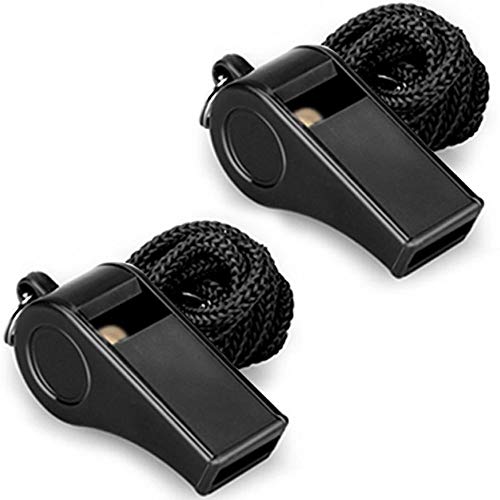
Hipat Plastic Whistles pairs thickened plastic construction with two whistles and lanyards, providing a straightforward option for referees who want a plastic set rather than stainless steel. The maker says the sound reaches up to 120 dB, and gives the whistles as 1.81 inches long. Teachers, coaches, and officials are among the intended users. The tradeoff is material: buyers who prefer metal construction or specifically want a cork-pea whistle should consider the stainless steel pair instead.
Bottom line: Choose this pair if plastic construction and two lanyarded whistles are your priorities.
JKQAGD Plastic Whistles

JKQAGD Plastic Whistles stands out for its compact stated dimensions of 1.75 by 0.85 by 0.65 inches, which may suit officials who want a small spare set to carry. It includes two black plastic whistles with soft lanyards, and the maker says the sound reaches up to 120 dB. The maker also identifies coaches, referees, teachers, and outdoor users as intended audiences. The limitation is its plastic build; choose a metal option if stainless steel is a requirement.
Bottom line: Pick this pair when compact dimensions and a portable spare matter most.
How to choose a football referee whistle
For regular field use, prioritize a whistle you can grip and carry consistently, then choose material and mechanism. Pealess whistles use an internal rotor rather than a cork pea; they can sound without the pea sticking when wet, while pea whistles have a moving cork ball. Loudness claims in this group reach 120 dB, but the figure is a maker claim and does not tell you how well a whistle carries across a noisy stadium. For outdoor play, a lanyard helps keep the whistle available between calls. If you officiate in rain or expect frequent wet conditions, choose a pealess model; none of these four is identified as pealess.
Whistle materials and mechanisms
Plastic and stainless steel are the two construction choices here, while the Hipat metal pair specifically identifies a natural cork pea. A cork pea moves inside the chamber to produce its trill; pealess designs instead use a rotor and have no loose pea to jam. A metal body does not make a whistle pealess, so check the mechanism as well as the material. A simple decision rule is to choose a named pealess model for wet-weather use, and a pea whistle when you specifically want that sound mechanism. Do not assume every stainless steel whistle has the same sound or maintenance needs: construction and chamber design differ by model.
Whistle pairs versus a referee accessory set
A dedicated whistle pair suits officials who need a primary and spare whistle, while an accessory kit serves a different purpose. A referee outfitting a game should distinguish props from gear intended for repeated use. The table helps match the package to the task rather than treating every product with a whistle as equivalent.
| Need | Package type | Why it fits |
|---|---|---|
| Primary and spare | Whistle pair | Two whistles included |
| Metal body with cork pea | Stainless steel pair | Mechanism and material are identified |
| Costume or fan game | Hat and flag set | Includes six flags and a hat |
Using and carrying a referee whistle
A lanyard reduces the chance of setting a whistle down between plays, but keep it positioned so it cannot snag during movement. Football officiating uses brief, controlled whistle signals; a whistle intended for coaches or emergency use may not be the preferred feel for every official. Sound level is measured in decibels, and 120 dB is very loud, so avoid blowing close to anyone’s ears. For field use, practice producing a short, consistent signal before a game, and keep a spare whistle accessible if your duties require one. A party set with flags and a hat is better suited to informal play than a substitute for an official’s full equipment.
Frequently Asked Questions
Are pealess whistles better for rainy football games?
Pealess whistles avoid a cork pea that can stick when wet, so they are a practical choice in rain. None of these products is identified as pealess, so confirm the mechanism before ordering if wet-weather reliability is essential.
How loud should a football referee whistle be?
A whistle needs to carry over players and spectators, but a higher decibel figure is not the only factor in how clearly it is heard at a distance. The maker claims up to 120 dB for the first three options; avoid blowing any whistle near someone’s ear.
What is the difference between pea and pealess whistles?
A pea whistle contains a small ball that rolls inside the chamber to create a trill; a pealess whistle uses a rotor instead. For wet conditions, favor pealess construction because there is no pea to stick.
Why do referees wear a whistle lanyard?
A lanyard keeps the whistle within reach and can reduce the chance of dropping it between calls. Keep the cord positioned to avoid snagging while running or handling other equipment.
Can a referee party set work for an actual game?
A party set can supply a hat, flags, and a whistle, but its inclusion of costume accessories does not establish that it meets an officiating league’s equipment rules. Check your league’s required flag type and uniform standards before using a set in a game.