
Best Full Leg Compression Sleeves: 4 Picks Compared

Onecompress Bamboo Full Leg Sleeve is the best full leg compression sleeve for most people because it covers thigh to ankle and slides on without straps. Choose a different sleeve if you want a two-sleeve pack, anti-slip strips, or zone-specific support for activity.
Full leg sleeves are stretchy garments that cover more of the leg than a knee-only sleeve; they are not necessarily medical-grade compression garments.
We earn a commission if you buy through links on this page. As an Amazon Associate I earn from qualifying purchases. Products are compared on manufacturer specifications, not hands-on testing.
- Best overall: Onecompress Bamboo Full Leg Sleeve – Thigh-to-ankle coverage, a strap-free pull-on design and seven sizes make it a versatile everyday choice.
- Best for sports: Copper Compression Thigh-to-Calf Sleeve – The thin, flexible thigh-to-calf sleeve is designed to fit under joggers or a knee brace.
- Best for a two-sleeve set: Ruilaibao 2-Pack Long Leg Sleeves – The package contains two sleeves and uses silicone strips at the top to help limit slipping.
- Best for zoned support: MOTIONONE Zone-Specific Full Leg Sleeve – Zone-specific compression is designed to support the calf, knee and thigh.
| Product | Best for | Coverage | Design feature | Pack | Shop |
|---|---|---|---|---|---|
| Onecompress Bamboo Full Leg Sleeve | Everyday wear | Thigh to ankle | Strap-free pull-on | 1 sleeve | Check Price on Amazon |
| Copper Compression Thigh-to-Calf Sleeve | Sports layering | Thigh to above ankle | 85% copper-infused nylon | 1 sleeve | Check Price on Amazon |
| Ruilaibao 2-Pack Long Leg Sleeves | Two-sleeve set | Full leg | Silicone top strips | 2 sleeves | Check Price on Amazon |
| MOTIONONE Zone-Specific Full Leg Sleeve | Targeted support | Full leg | Zone-specific compression | 1 sleeve | Check Price on Amazon |
Full Leg Compression Sleeves Compared
Compare coverage and construction first, then match the sleeve to your intended use and size.
Onecompress Bamboo Full Leg Sleeve

Unlike the shorter thigh-to-calf options, this bamboo sleeve runs from thigh to ankle and pulls on in one motion without straps. The fabric stretches in every direction, and the maker describes its pressure as lighter and its knit as suitable for daytime or overnight wear. Seven sizes, from S to 4XL, offer more size choices than the S-to-XL range given for Copper Compression Thigh-to-Calf Sleeve. Choose it if full-length coverage and a simple on-and-off design matter more than adjustable fasteners. The tradeoff is that its softer, lighter compression may not suit someone seeking firm, quantified pressure.
Bottom line: Choose this for broad coverage and a strap-free fit.
Copper Compression Thigh-to-Calf Sleeve
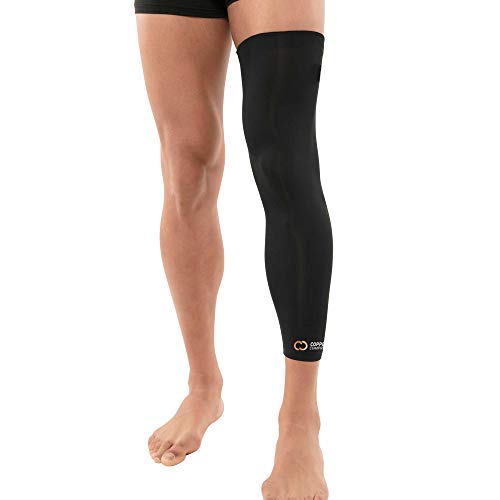
Copper Compression Thigh-to-Calf Sleeve is a thinner, flexible thigh-to-calf sleeve intended to fit under joggers or a knee brace, which makes layering its clearest distinction. Its fabric is 85% copper-infused nylon, and the maker describes the knit as sweat-wicking. The sleeve is sold individually and comes in S to XL; black, navy and pink are named color options. It may suit training sessions when a low-bulk sleeve is wanted around the knee, hamstring and calf. The limitation is its above-ankle endpoint: choose a thigh-to-ankle sleeve instead if you want coverage over the lower leg to the ankle.
Bottom line: Pick this for a flexible sleeve that layers under clothing.
Ruilaibao 2-Pack Long Leg Sleeves

Ruilaibao 2-Pack Long Leg Sleeves stands apart by including two sleeves rather than one, with two silicone strips at the top intended to help keep each sleeve in position. Its fabric is described as breathable, moisture-absorbing and soft, and the maker presents it as support for activity. The pair may suit buyers who want matching sleeves for both legs or a spare. The named size is Large, so it offers less visible size flexibility than Onecompress Bamboo Full Leg Sleeve’s seven-size range. Check that the size fits your measurements before choosing this two-piece option.
Bottom line: Choose the pair if you want sleeves for both legs.
MOTIONONE Zone-Specific Full Leg Sleeve
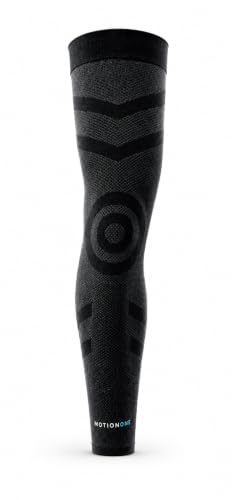
MOTIONONE Zone-Specific Full Leg Sleeve differentiates itself with zone-specific compression intended to support the calf, knee and thigh, rather than a fabric or fastening feature. It is a lightweight, breathable sleeve for sports and everyday activities, and the maker says its design supports stability and recovery. Choose it if targeted coverage is the priority. The product is identified as Large, so buyers who need another size should confirm fit before ordering. The measurements describe the item rather than a sizing chart, so they should not be used as body measurements.
Bottom line: Pick this if zoned support across the leg is your priority.
How to Choose a Full Leg Compression Sleeve
Choose a sleeve by coverage, fit and the kind of pressure you need; the word “compression” alone does not tell you its pressure level. Medical compression is commonly grouped into ranges such as 15–20 mmHg and 20–30 mmHg, while athletic sleeves may not give a pressure rating at all. If a clinician has recommended a particular compression level, select a garment that explicitly meets it rather than assuming a sports sleeve is equivalent. For a general activity sleeve, prioritize a size chart and intended coverage. If the maker provides no body-measurement chart, confirm the fit range before ordering rather than guessing from clothing size.
Full-Length Sleeve Coverage and Fit
Full leg designs can end at different points, so compare the actual endpoints: thigh-to-calf coverage leaves the ankle uncovered, while thigh-to-ankle coverage extends farther down. Measure the body area the maker specifies—often the thigh—and use its size chart, because fabric stretch does not make sizing interchangeable. A sleeve that rolls, bunches behind the knee or causes numbness is a poor fit; remove it if those symptoms occur. The table is a quick way to match the most distinct construction to a need.
| Need | Feature to prioritize | Fit check |
|---|---|---|
| Coverage to the ankle | Thigh-to-ankle length | Confirm the lower endpoint |
| Layering under clothes | Thin, flexible knit | Check thigh measurement |
| Limit sleeve slipping | Top grip strips | Confirm the top band sits flat |
| Clinician-directed pressure | Measured mmHg rating | Match the prescribed range |
Compression Sleeve Safety and Pressure
Compression sleeves should feel supportive, not painful or restrictive; remove one promptly if the foot becomes cold, discolored, numb or more painful. Medical compression can be unsuitable for some people with poor arterial circulation, so anyone with circulation problems or a clinician-directed treatment plan should ask a healthcare professional before using a tight garment. A sports sleeve without a pressure rating cannot be assumed to deliver a medical compression class. Do not use a longer sleeve as a substitute for a prescribed medical garment, and do not size down to seek stronger pressure.
Frequently Asked Questions
How tight should a full leg compression sleeve feel?
A sleeve should feel evenly snug without pain, numbness or color change. Remove it if the foot becomes cold, discolored or tingly, rather than trying to stretch it into comfort.
How do I measure for a compression leg sleeve?
Use the body location required by the maker’s size chart, commonly the widest part of the relaxed thigh. Measure with a flexible tape and compare the result with that chart instead of choosing by usual clothing size.
Can I wear a compression sleeve overnight?
Overnight wear is not automatically appropriate for every sleeve or wearer. Follow clinician guidance if the sleeve is being used for a medical reason, and remove it if it causes numbness, pain or skin changes.
Are sports compression sleeves medical grade?
Not necessarily: a sports sleeve may have no pressure rating in mmHg. Medical compression commonly uses specified ranges such as 15–20 or 20–30 mmHg, so match any prescribed level to a garment that explicitly provides it.
Should I wear a sleeve on one or both legs?
Wear a sleeve on the leg or legs that need support and fit the garment correctly on each side. If a clinician prescribed compression for swelling or circulation, ask whether one or both legs should be covered.