
Best Gloves for Below Zero Temperatures Compared

For most outdoor use below zero, LFNTUQ Rechargeable Heated Gloves is the strongest match because its rechargeable batteries power three heat settings, while FreezeGuard PR3388 Black Knight A6 suits cold work where cut resistance matters more than active heating.
Choose WIOR USB Heated Gloves only when you can keep it connected to a USB power bank, and reserve CryoKing 14-Inch Cryogenic Gloves for specialized cryogenic handling rather than ordinary winter wear.
We earn a commission if you buy through links on this page. As an Amazon Associate I earn from qualifying purchases. Products are compared on manufacturer specifications, not hands-on testing.
- Best overall: LFNTUQ Rechargeable Heated Gloves – Rechargeable batteries and three heat settings suit changing outdoor conditions.
- Best for cold work: FreezeGuard PR3388 Black Knight A6 – Acrylic terry lining pairs with an ANSI A6 cut-resistance rating.
- Best for USB power: WIOR USB Heated Gloves – Dual-sided heat has three settings when connected to a separate power bank.
- Best for cryogenic handling: CryoKing 14-Inch Cryogenic Gloves – The 14-inch glove is made for low-temperature work and claims a -482°F rating.
| Product | Best for | Heat or protection | Power | Intended use | Shop |
|---|---|---|---|---|---|
| LFNTUQ Rechargeable Heated Gloves | Outdoor heated use | 3 heat settings; 104–150°F | Two 7.4V 2600mAh batteries | Winter activities | Check Price on Amazon |
| FreezeGuard PR3388 Black Knight A6 | Cold work protection | ANSI A6 cut resistance | Not heated | Cold storage and work | Check Price on Amazon |
| WIOR USB Heated Gloves | USB-powered warmth | 3 heat settings; 35–50°C | Continuous USB connection | Winter outdoor activity | Check Price on Amazon |
| CryoKing 14-Inch Cryogenic Gloves | Cryogenic handling | Maker claims protection to -482°F | Not heated | Cryogenic and cold-storage work | Check Price on Amazon |
Gloves for Below Zero Temperatures
Match the glove to the cold exposure and task, especially whether you need active heat, cut protection, or cryogenic handling.
LFNTUQ Rechargeable Heated Gloves

Adjustable battery heat sets these gloves apart for outdoor activity in cold weather. The maker says they warm within 30 seconds, heat the backs of the hands and fingers, and run for 2.5–6 hours depending on the setting. Waterproof polyester and touchscreen capability are also specified. The included battery capacity is two 2600mAh units.
Choose these when you want heat without a tether to a power bank. Runtime is limited, so they are less suitable for outings longer than the maximum at the selected setting; plan for the shorter high-heat runtime when sustained warmth is the priority.
Bottom line: Pick these for outdoor use when adjustable, untethered heat is the deciding need.
FreezeGuard PR3388 Black Knight A6

Cut protection distinguishes these gloves from the heated options: the maker identifies an ANSI A6 rating for medium- to high-risk cutting tasks. An acrylic terry lining provides insulation, and the nitrile foam coating is specified. The pair is size small.
Choose them for cold work that also involves sharp materials, rather than for the highest active warmth. These are insulated, not electrically heated, and the maker gives no numeric operating-temperature rating, so confirm the required temperature range before ordering for a specific below-zero workplace.
Bottom line: Pick these for cold handling tasks where cut resistance is essential.
WIOR USB Heated Gloves

A continuous USB connection is the key distinction: these gloves are not rechargeable and need a separate power bank to provide heat. The maker says double-sided heating warms within 30 seconds, with three settings spanning 35–50°C. Silicone on the palm adds grip, and touchscreen use is included.
Choose them when a portable power source can stay connected throughout use. The tether and excluded power bank make them a poor fit for activities where a cord would interfere or where you cannot keep the battery pack accessible. The dimensions are 9.8 by 4.1 by 0.7 inches.
Bottom line: Pick these only when continuous USB power is practical for your activity.
CryoKing 14-Inch Cryogenic Gloves
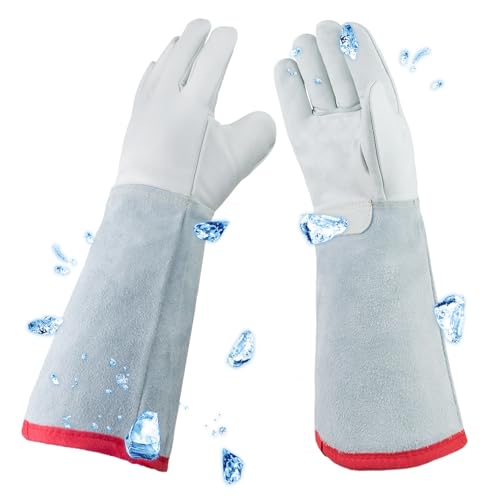
Cryogenic handling, rather than ordinary winter wear, is the defining use for these 14-inch gloves. The maker claims protection to -482°F/-250°C and identifies leather and cotton construction, reinforced wrists, and a length of 14 inches. That long cuff is intended to extend protection up the arm.
Choose them only for a task that calls for cryogenic gloves and a long cuff. They are not described as heated, and their specialized purpose makes them a poor substitute for flexible outdoor gloves. For liquid nitrogen or other hazardous cold materials, use appropriate workplace procedures and equipment; a glove rating alone does not make handling safe.
Bottom line: Pick these for specialized cryogenic work that requires a long cuff.
How to Choose Gloves for Below Zero Weather
Choose by exposure time, task, and whether you need active heat; an insulated work glove and a heated outdoor glove solve different problems. Wind removes heat faster, so wind chill matters alongside the air temperature. At wind chills of -15°F or colder, exposed skin can freeze in about 30 minutes, and the time can be shorter in stronger wind. Cover wrists and avoid relying on a palm coating or touchscreen fingertips as insulation. For extended outdoor exposure, carry a dry backup pair because wet insulation loses warmth. If the task involves sharp edges, prioritize a cut-resistance rating; if it involves cryogenic material, use purpose-specific protective equipment rather than ordinary winter gloves.
Battery and USB Heated Gloves Compared
Battery gloves provide heat without a constant cable, while USB gloves need a connected power source throughout use. A warmer setting generally uses stored energy faster, so plan around the manufacturer’s shortest runtime rather than the longest. Keep rechargeable batteries warm and dry when practical; cold reduces battery performance in many portable devices. A USB power bank adds bulk and a cable that can snag, making connection and placement part of the fit decision. Use this comparison to match power to the outing:
| Need | Choose | Trade-off |
|---|---|---|
| No tether | Rechargeable heat | Runtime is finite |
| Power bank available continuously | USB heat | Cable stays connected |
| Cut-resistant cold work | Insulated cut glove | No active heat |
| Cryogenic handling | Cryogenic glove | Specialized equipment |
Fit and Layering for Cold Gloves
A glove should leave enough room to move fingers without compressing the insulation; tight gloves reduce the insulating air space and can make hands colder. If layering, choose an outer glove that fits over the liner without pulling at the fingertips or restricting grip. Long cuffs help cover the wrist gap between glove and sleeve, while wrist closures can limit drafts. Do not assume a glove’s size label guarantees a fit across brands: check palm and finger measurements against the wearer’s hand, especially when buying a small size or adding a liner. For below-zero work, also check the required temperature range before relying on a glove that has no numeric temperature rating.
Safe Use for Cryogenic and Heated Gloves
Cryogenic gloves are not a guarantee against every exposure: liquid nitrogen can cause severe cold injury, and splashes may enter an open cuff. Use the equipment and handling procedures required for the material and task, and never treat a temperature claim as permission for immersion. Heated gloves also need sensible limits: discontinue use if a heating element or battery is damaged, and avoid wearing electrically heated gloves where wet conditions or a damaged cable could create an electrical hazard. For cold-weather comfort, use dry gloves and replace wet ones promptly. Keep a backup pair for long trips, because a single wet or failed glove can leave one hand unprotected.
Frequently Asked Questions
How cold is too cold for ordinary winter gloves?
There is no universal cutoff because wind, moisture, exposure time, and activity change heat loss. At a -15°F wind chill, exposed skin can freeze in roughly 30 minutes, so use covered skin and task-appropriate protection rather than relying on a general winter label.
Do heated gloves work below zero?
Heated gloves can add warmth, but power source and runtime determine how long that help lasts. Battery models have finite runtime, while USB models need continuous connection; plan for the shortest duration at the setting you expect to use.
Are cryogenic gloves suitable for winter hiking?
Cryogenic gloves are intended for specialized low-temperature handling, not ordinary winter activity. Their long cuffs and construction can limit the flexibility needed for hiking, so choose gloves designed for outdoor movement instead.
Can I wear liners under insulated work gloves?
Yes, if the outer glove remains roomy enough to flex the fingers without compressing the liner. A tight fit reduces insulating air space and can also reduce grip and dexterity.
What should I check before buying below-zero work gloves?
Check that the glove suits the task and its required temperature range, and verify fit with any liner you plan to wear. For sharp-object work, confirm a suitable cut-resistance rating; for cryogenic hazards, follow the workplace’s protective-equipment requirements.