
Hibiscus and Honey Firming Cream: 3 Options Compared

For a hibiscus and honey firming cream, Hibiscus and Honey Neck & Face Cream, 1.7 oz is the closest match for neck-and-face use with retinol, collagen and hyaluronic acid.
Choose by intended area and ingredient preferences: these creams are marketed for neck or face, while retinol can irritate sensitive skin and needs a cautious introduction.
We earn a commission if you buy through links on this page. As an Amazon Associate I earn from qualifying purchases. Products are compared on manufacturer specifications, not hands-on testing.
- Best overall: Hibiscus and Honey Neck & Face Cream, 1.7 oz – Combines neck-and-face use with retinol, collagen and hyaluronic acid.
- Best for a 60 mL size: Hibiscus and Honey Firming Cream, 60 mL – A 60 mL hibiscus and honey cream marketed for neck lines and face moisturizing.
- Best for a larger jar: Jtopyrt Hibiscus Honey Firming Cream, 5.29 oz – The 5.29-ounce size is larger than the other two options.
| Product | Best for | Size | Highlighted ingredients | Intended area | Shop |
|---|---|---|---|---|---|
| Hibiscus and Honey Neck & Face Cream, 1.7 oz | Retinol preference | 1.7 fl oz | Retinol, collagen, hyaluronic acid | Neck and face | Check Price on Amazon |
| Hibiscus and Honey Firming Cream, 60 mL | Neck-line focus | 60 mL | Collagen, hyaluronic acid, hibiscus, honey | Neck; also face | Check Price on Amazon |
| Jtopyrt Hibiscus Honey Firming Cream, 5.29 oz | Larger jar size | 5.29 oz | Honey, hibiscus, collagen, centella | Neck, chest, décolletage | Check Price on Amazon |
Hibiscus and honey firming creams
Compare the size, highlighted ingredients and intended use before choosing a cream.
Hibiscus and Honey Neck & Face Cream, 1.7 oz

The 1.7-ounce cream is marketed for neck and face moisturizing and for day-and-night use. Its maker says results may take time and that some customers see visible results after three months; that is a product claim, not a guaranteed outcome. The retinol focus may suit someone seeking that ingredient, but buyers with sensitive skin should introduce retinol gradually because irritation and dryness can occur.
Bottom line: Choose this if retinol is a priority and you want a neck-and-face cream.
Hibiscus and Honey Firming Cream, 60 mL

The 60 mL cream is positioned for the appearance of neck lines and as a face moisturizer; its maker describes the texture as non-sticky and says it is suitable for all skin types. This may fit buyers who prefer a formula without a highlighted retinol ingredient. The use is still cosmetic moisturizing and smoothing, so it should not be treated as a guaranteed way to tighten skin or remove wrinkles.
Bottom line: Pick this for neck-line-focused use without a highlighted retinol claim.
Jtopyrt Hibiscus Honey Firming Cream, 5.29 oz
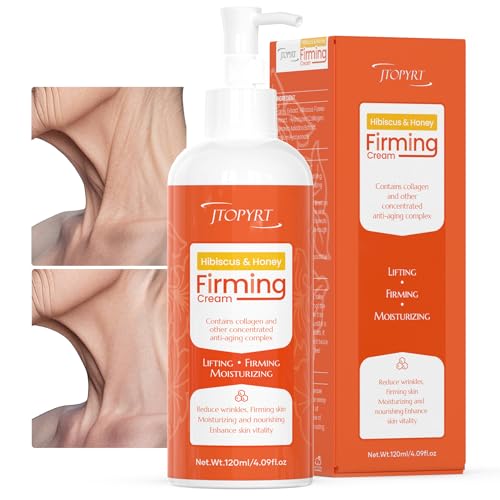
Jtopyrt Hibiscus Honey Firming Cream, 5.29 oz comes in a 5.29-ounce size, larger than the other hibiscus-and-honey options here, and names centella asiatica extract in addition to honey, hibiscus, hydrolyzed collagen and sodium hyaluronate. The maker positions it for moisturizing and for use on the neck, chest and décolletage. That broader target-area wording may suit someone who wants one cream for more than the neck. Its maker does not give a usage frequency, so buyers should use the package directions and stop if irritation develops.
Bottom line: Choose this if you want a larger size for neck and décolletage use.
How to choose a hibiscus and honey firming cream
Choose first by the area you plan to moisturize and then by ingredients you tolerate. The three options span 1.7 to 5.29 ounces, and their marketed areas range from neck-and-face use to neck, chest and décolletage. Retinol is a vitamin A derivative used in topical skincare; common starting guidance is to apply it two or three nights a week and increase only if skin tolerates it. A pea-size amount is generally enough for the face, while the neck may be more irritation-prone. Cream claims about firmness or wrinkle appearance are cosmetic goals, not a promise of a particular result.
For the options here, choose Hibiscus and Honey Neck & Face Cream, 1.7 oz if retinol matters, Hibiscus and Honey Firming Cream, 60 mL if you want a formula without a highlighted retinol claim, or Jtopyrt Hibiscus Honey Firming Cream, 5.29 oz if larger size and broader area use matter most.
Using retinol near the neck
Retinol can cause dryness, redness or peeling, so introduce a retinol cream slowly rather than applying it nightly at first. Start with two or three nights per week, use a small amount on dry skin, and reduce frequency if irritation appears. Keep retinol away from eyelids, corners of the nose and broken or freshly shaved skin; those areas are more prone to irritation. A moisturizer can help with dryness, but layering additional active products may increase irritation.
Daily broad-spectrum sunscreen rated SPF 30 or higher is important when using retinol because sun exposure can worsen irritation and UV exposure contributes to skin aging. If pregnant or trying to become pregnant, ask a clinician before using topical retinoids. The specifications do not establish a safe retinol concentration for each option, so confirm the ingredient label and directions before use.
Comparing cream types and target areas
These products differ in their highlighted formula and stated use, not just in jar size. A cream marketed for the neck and face may be convenient for those areas, while a product mentioning chest and décolletage speaks to broader application. A larger container does not establish that a cream is more effective or that it will suit every skin type.
The table is a quick way to match the product’s emphasis to the area or ingredient you care about.
| Need | Option | Why it fits |
|---|---|---|
| Retinol included | Hibiscus and Honey Neck & Face Cream, 1.7 oz | Highlights retinol, collagen and hyaluronic acid |
| Neck and face use | Hibiscus and Honey Firming Cream, 60 mL | Marketed for neck-line appearance and face moisturizing |
| Larger size and décolletage | Jtopyrt Hibiscus Honey Firming Cream, 5.29 oz | 5.29 ounces; mentions neck, chest and décolletage |
Common mistakes with firming creams
Expecting a topical cream to produce an instant lift is a common mistake: moisturizers can temporarily make skin look smoother by reducing dryness, but they cannot reproduce a surgical lift. Give a new product time while watching for irritation, and avoid adding several new active ingredients at once, which makes it harder to identify a trigger. A patch test on a small area can help reveal irritation, though it cannot guarantee that the product will be problem-free on the face or neck.
Another mistake is ignoring sun protection when using retinol. Use broad-spectrum SPF 30 or higher during the day, and reapply about every two hours outdoors or after swimming or sweating. Keep creams out of the eyes and discontinue use if significant irritation develops.
Frequently Asked Questions
How long does a firming cream take to show results?
Moisturizing effects can make dry skin look smoother soon after application, but visible changes in wrinkles or firmness can take weeks and vary by person. The maker of Hibiscus and Honey Neck & Face Cream, 1.7 oz says some customers see results after three months; that timing is not a guarantee.
Can retinol cream be used every night on the neck?
Starting two or three nights per week is a common approach, since neck skin can be more sensitive than facial skin. Increase use only if dryness, redness or peeling do not develop.
Should I use sunscreen with a retinol moisturizer?
Yes, use broad-spectrum SPF 30 or higher during daytime retinol use. Reapply about every two hours outdoors and after swimming or sweating.
Can I apply a firming cream to my chest?
Only use it on areas its package directions allow; Jtopyrt Hibiscus Honey Firming Cream, 5.29 oz is marketed for the neck, chest and décolletage. Patch-test a small area first, because skin can react differently across body areas.
What should I do if a cream causes irritation?
Stop using the cream if significant redness, burning or peeling develops, and let the skin recover before trying other active products. Seek medical advice for a severe or persistent reaction.