
Best Glue for Wood Models: 5 Options Compared

For wood model assembly, Testors Fast Drying Wood Cement Testors Fast Drying Wood Cement is the clearest fit because it is specifically made for wood models. Choose a different adhesive when you need to join wood to another material, want more time to adjust a large assembly, or need a water-resistant bond.
Wood model glue ranges from quick-setting cement for small parts to wood glue for larger, close-fitting joints; the right choice depends on the materials and how much alignment time you need.
We earn a commission if you buy through links on this page. As an Amazon Associate I earn from qualifying purchases. Products are compared on manufacturer specifications, not hands-on testing.
- Best overall: Testors Fast Drying Wood Cement – It is specifically described as extra-fast-drying cement for wood models.
- Best for mixed materials: Testors Cement for Metal and Wood Models – It is made for metal and wood models.
- Best for adjustable CA bonding: Starbond Medium CA Glue Pro Kit, 2 oz – Its 10–15 second set time allows some repositioning.
| Product | Best for | Adhesive type | Container size | Set or dry time | Shop |
|---|---|---|---|---|---|
| Testors Fast Drying Wood Cement | Wood model assembly | Model cement | 5/8 oz | Extra fast drying | Check Price on Amazon |
| Testors Cement for Metal and Wood Models | Wood and metal models | Model cement | — | — | Check Price on Amazon |
| Wood Super Glue Liquid, 1 oz | Small mixed-material repairs | Cyanoacrylate (CA) | 1 oz | 30–60 sec initial dry | Check Price on Amazon |
| Starbond Medium CA Glue Pro Kit, 2 oz | Precise CA application | Medium cyanoacrylate (CA) | 2 oz | 10–15 sec set | Check Price on Amazon |
| Titebond III Ultimate Wood Glue, 4 oz | Larger wood assemblies | Wood glue | 4 fl oz | Extended open time | Check Price on Amazon |
Glue for wood models
Match the adhesive to the model’s materials, joint size, and the time you have to align parts.
Testors Fast Drying Wood Cement
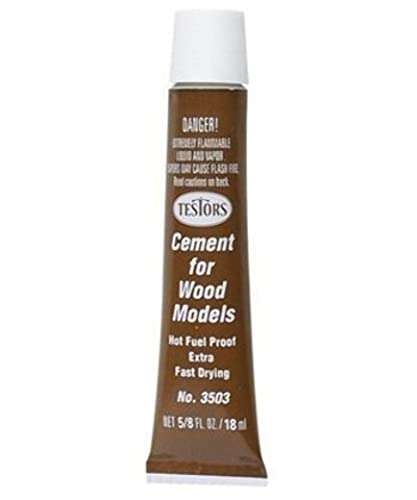
Unlike general woodworking adhesives, this cement is specifically described for wood models and extra-fast drying. Its 5/8-ounce container suits small-scale model work where a modest amount of adhesive can handle small joints. Fast-drying cement can help keep tiny parts from shifting, but it also leaves less time to correct alignment than a slower-setting glue. Work through a dry fit first and apply sparingly so excess adhesive does not mar visible surfaces. This is the most direct match for wood-only model assembly; choose another option when you need a working window or a bond to metal.
Bottom line: Choose this for wood model parts when quick setting is more important than extended adjustment time.
Testors Cement for Metal and Wood Models

This cement is intended for models that combine metal and wood, unlike the wood-model-specific option that emphasizes extra-fast drying. Its instructions call for applying it sparingly to one surface and pressing the pieces together. The same instructions warn that smudged adhesive cannot be removed from areas that should not be joined, and that it can discolor or cloud clear parts. Avoid using it on transparent model components; the maker directs users to a separate clear-parts cement for those. Pick it for wood-and-metal joints, but not when your build depends on bonding clear parts.
Bottom line: Choose this when your model joins metal to wood and does not require clear-part bonding.
Wood Super Glue Liquid, 1 oz
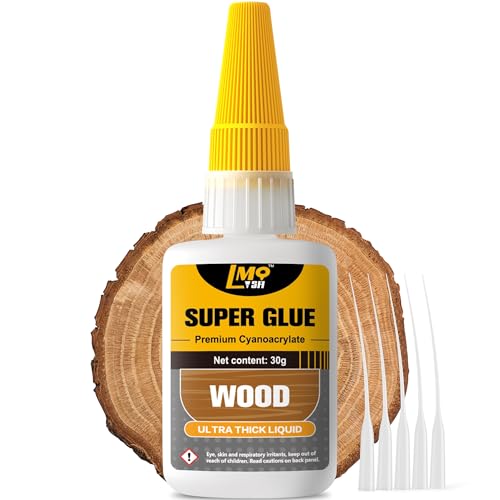
This clear, thick cyanoacrylate glue is a better fit for small repairs and mixed-material joints than for routine wood-only model assembly. The maker says it forms bonds between wood and materials including metal, dries in 30–60 seconds, and fully cures within 24 hours. The quick initial grip can help hold small components in alignment, while the 1-ounce size provides more adhesive than the small model cement option. Rapid setting leaves little time for repositioning, so make sure the parts fit before applying it. Choose a model cement instead when the project is primarily wood-model assembly.
Bottom line: Choose this for small wood repairs or when a model joint needs to connect dissimilar materials.
Starbond Medium CA Glue Pro Kit, 2 oz

This medium CA glue stands apart from the model cements by giving a 10–15 second set time and including applicator nozzles and a clog-prevention pin cap. The maker says the formula allows some repositioning while still setting quickly, which can help when placing small hobby-model components. The 2-ounce container is larger than the wood-model cement option, and the included tips support more controlled application. CA is a related but different choice from cement made specifically for wood models; its short set window may still be too tight for complicated assemblies that need repeated adjustment.
Bottom line: Choose this when controlled CA application and a brief adjustment window matter.
Titebond III Ultimate Wood Glue, 4 oz

This woodworking glue is the better choice for larger wood assemblies that need more alignment time, rather than small model joints that benefit from quick-setting cement. The maker says it has an extended open assembly time, bonds hardwoods, softwoods, and composites, and passes ANSI/HPVA Type I water-resistance standards. It can be applied at temperatures as low as 45°F. Those properties suit complex glue-ups or projects exposed to moisture, but they do not make it the most direct pick for fine model details. Its tan color may also be less suitable where a visible glue line must remain clear.
Bottom line: Choose this for larger, wood-only assemblies where working time and water resistance are priorities.
How to choose glue for wood models
Choose the adhesive by joint size, materials, and how long you need to position parts. Model cement is suited to small model joints, while cyanoacrylate (CA) glue sets quickly and can join different materials; woodworking glue is more practical for larger wood-to-wood glue-ups. Dry-fit parts before applying any quick-setting adhesive, because even a few seconds can matter when aligning small pieces. For a model with more than one material, check that the adhesive is intended for both surfaces. If you need to adjust a complex assembly repeatedly, favor an adhesive with a longer working window over one that sets in seconds.
When wood model cement is the right type
Wood-model cement is the most direct fit when the build is primarily wood and the joints are small. The products here distinguish wood-only model cement from cement intended for metal and wood models, so match the formula to the materials actually being joined. A separate issue is clear plastic: the metal-and-wood cement instructions warn that it can cloud or discolor clear parts, so keep it away from transparent components. Use only a small amount at the joint and protect visible surfaces from smears. For a mixed-material model with clear components, plan separate adhesives for the clear parts rather than assuming one cement will suit every joint.
Working time and joint fit
A snug, clean-fitting joint generally needs less adhesive than a gap, and excess glue can leave a visible bead or smear. Assemble dry first, confirm the contact surfaces meet, and decide how the parts will be held before applying glue. CA products in this selection set in 10–15 seconds or have a 30–60 second initial-dry time, so they give less time to correct alignment than an adhesive with extended open time. A useful decision rule is to choose a slower-working wood glue for a large assembly with several pieces to align; use a fast-setting option for a small joint that is already positioned accurately. Keep adhesive off skin and avoid breathing concentrated fumes; follow the product’s safety directions.
Wood glue types compared
Model cement, CA glue, and woodworking glue solve different assembly problems rather than serving as interchangeable choices. Use this guide to narrow the type before matching a specific product to your build.
| Type | Good fit | Main tradeoff |
|---|---|---|
| Wood model cement | Small wood-model joints | Quick setting can limit adjustment |
| CA glue | Small joints or mixed materials | Short set time leaves little repositioning time |
| Woodworking glue | Larger wood-to-wood assemblies | Less suited to tiny, rapid model assembly |
Frequently Asked Questions
Can wood glue work on small model parts?
Wood glue can work on wood-to-wood joints, especially larger assemblies that need alignment time. For very small parts, a quick-setting model cement or CA glue may be easier to handle, but dry-fit first because fast adhesives leave little time for correction.
How long should model glue cure before handling?
Allow the adhesive’s cure time before putting a joint under strain. One CA option here says it fully cures within 24 hours, while its initial dry time is 30–60 seconds; those are different stages, not interchangeable wait times.
Can model cement be used on clear plastic?
Some model cements can cloud or discolor clear parts. The metal-and-wood cement instructions specifically warn against clear parts and direct users to use a clear-parts cement for those components.
Should model wood joints have gaps?
Aim for close-fitting surfaces rather than relying on glue to fill a large gap. Dry-fit each piece and correct the fit first; gaps can weaken a joint or leave a conspicuous glue line, particularly on small visible parts.
Is CA glue suitable for wood models?
CA glue can be useful for small wood-model joints or bonds between wood and other materials. Its set time can be as short as 10–15 seconds, so position and dry-fit the parts before applying it.