
Best Golf Training Mat for Swing Detection: 4 Picks

Birdie Swing Training Mat is the best golf training mat for swing detection for most players because its 19.25-by-12.32-inch sequin surface changes color to show club-ground contact. Choose COSPOPTIC Swing Path Mat instead if having a spare replaceable turf surface matters more than a larger footprint.
These compact mats give visual feedback on swing path or impact marks; they are not full-size stance mats, so plan to stand on a separate, stable surface.
We earn a commission if you buy through links on this page. As an Amazon Associate I earn from qualifying purchases. Products are compared on manufacturer specifications, not hands-on testing.
- Best overall: Birdie Swing Training Mat – Its 19.25-by-12.32-inch sequin surface changes color at impact for visual feedback.
- Best for spare turf: COSPOPTIC Swing Path Mat – It includes one replaceable surface and measures 16 by 12 inches.
- Best for cushioning: 17 × 12-Inch Feedback Mat – Its 0.59-inch-thick rubber construction adds a cushioned base.
- Best for two surfaces: COSPORTIC Replaceable Velvet Mat – The package includes two replaceable velvet mats.
| Product | Best for | Surface size | Thickness | Shop |
|---|---|---|---|---|
| Birdie Swing Training Mat | Larger feedback area | 19.25 × 12.32 in | — | Check Price on Amazon |
| COSPOPTIC Swing Path Mat | Replaceable turf | 16 × 12 in | 1 in | Check Price on Amazon |
| 17 × 12-Inch Feedback Mat | Cushioned construction | 17 × 12 in | 0.59 in | Check Price on Amazon |
| COSPORTIC Replaceable Velvet Mat | Two spare surfaces | 16 × 12 in | 0.5 in | Check Price on Amazon |
Golf Training Mats for Swing Detection
Compare the feedback surface and footprint first, then match the mat to the space and drills you have planned.
Birdie Swing Training Mat
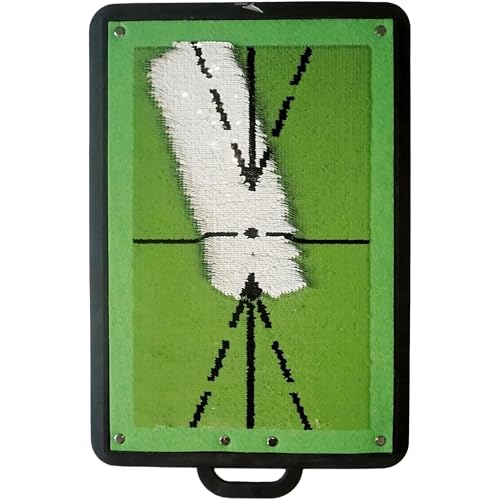
The Birdie mat has the largest footprint here, at 19.25 by 12.32 inches, and uses sequin technology that changes from green to white when the club contacts the surface. The maker says the impact-resistant surface is built for repeated use and thousands of impacts. That makes it a fit for golfers who want a larger trace area for repeated swing-path drills. Its compact footprint still does not provide room for a full stance, and the maker does not identify a spare surface.
Bottom line: Choose this if a larger visual feedback area is your priority.
COSPOPTIC Swing Path Mat

The COSPOPTIC mat pairs a 16-by-12-inch velvet-turf surface with one spare replaceable surface, a useful distinction for golfers who expect to repeat the same drills often. The maker says the impact surface visually traces toe, center or heel contact, while the textured rubber base is intended to resist slipping on several indoor and outdoor floor types. The small hitting area suits targeted contact practice rather than a full stance. Its spare surface is included, but the dimensions remain compact.
Bottom line: Pick this if a replaceable practice surface matters more than footprint.
17 × 12-Inch Feedback Mat

The 17-by-12-inch mat emphasizes cushioning: its rubber construction is 0.59 inch thick, unlike the thinner stated mat in this group. Its color-change surface is designed to show swing traces, and the maker says the rubber helps absorb club impact and reduce club wear. Golfers seeking a cushioned base for indoor drills may prefer this combination. The footprint is still narrow for a normal stance, so set it in front of a separate stable standing area rather than expecting it to support both feet.
Bottom line: Choose this for a thicker rubber base under swing-path drills.
COSPORTIC Replaceable Velvet Mat

The COSPORTIC replaceable-velvet version comes with two velvet mats, more replaceable surfaces than the single spare included with COSPOPTIC Swing Path Mat. The maker says the soft turf shows the swing path and is intended to reduce club-face abrasion. At 16 by 12 inches and 0.5 inch thick, it is a compact choice for practice focused on reading the trace rather than standing on the mat. The product uses velvet turf rather than a described color-changing sequin surface, so choose it for replaceable surfaces, not a sequin effect.
Bottom line: Pick this if having two replaceable velvet surfaces is useful.
How to choose a swing-detection golf mat
Choose a feedback mat by the mark it makes, the area it covers and whether it stays planted during a swing. A color-changing or trace surface can show where the club brushed the mat, but it does not by itself measure clubface angle, launch direction or ball flight. Use it for repeatable contact drills and pair it with ball-flight feedback when the goal is to assess where the shot went. A mat narrower than 20 inches is a target area, not a full stance platform; keep both feet on a stable, level surface. If your practice plan includes full swings, leave enough clear space for the clubhead and follow-through, and keep people and breakable objects outside the swing area.
Mat size and practice-space fit
These mats span 16 to 19.25 inches in length and about 12 to 12.32 inches in width, so they are best treated as small impact zones. Set the mat on a firm, level floor with its long axis aligned to the intended swing direction; a skewed mat can make a straight trace harder to interpret. For a full stance, use a separate stable surface large enough for your feet and keep its height close to the hitting surface so the setup does not create an awkward step. A compact mat can be useful in a garage or yard, but confirm the club can pass through the full swing arc without hitting a wall, ceiling, vehicle or person.
What swing-path feedback can tell you
A trace on a hitting mat can indicate where the club contacted or brushed the surface, which helps compare repeated swings from the same setup. It is not a substitute for a launch monitor: the trace alone cannot give ball speed, spin, face angle or carry distance. Keep ball position and stance consistent between swings so changes in marks are easier to interpret. For many right-handed golfers, an inside-to-out path is associated with a club moving toward the target line from inside it, but a mat trace is not a calibrated path measurement. Use the visual mark as a drill cue, not as a complete diagnosis of ball flight or swing mechanics.
Frequently Asked Questions
Can a swing mat measure club path in degrees?
No, a visual trace mat shows a surface mark rather than a calibrated club-path angle. A launch monitor or camera-based system is needed for a numerical path reading.
Can I hit real golf balls from a small practice mat?
The product names and features describe hitting or golf practice mats, but they do not all clarify whether real-ball use is intended. Confirm real-ball compatibility before hitting balls, and always use a safe net or open practice area.
How much room do I need to swing indoors?
There is no single clearance number that fits every club and golfer; the club must clear the ceiling, walls and nearby objects throughout the backswing and follow-through. Practice with no one inside the swing arc, and move outside if any part of the club can strike an obstruction.
Does a swing trace show where the ball will go?
No, a trace records club contact with the mat and does not directly show ball flight. Ball direction also depends on factors such as clubface orientation and the strike, so use a safe ball-flight practice setup when judging shots.