
Best Graphite Fishing Rods Compared by Length and Style

For a light freshwater rod with a 6-foot-6-inch length and graphite-composite blank, Okuma Celilo 6’6″ Ultra Light is the clearest fit for most anglers. Choose a different rod if you need a telescopic travel setup, a casting model, or a longer 7-foot rod for other techniques.
Graphite rods use a graphite-containing blank, valued for low weight and sensitivity; blank construction and rod length still affect how each rod suits a fishing style.
We earn a commission if you buy through links on this page. As an Amazon Associate I earn from qualifying purchases. Products are compared on manufacturer specifications, not hands-on testing.
- Best overall: Okuma Celilo 6’6″ Ultra Light – Its 6-foot-6-inch graphite-composite blank and cork grips suit light freshwater fishing.
- Best for travel: Ghosthorn 6 ft Telescopic Combo – The 6-foot graphite rod is telescopic and comes as part of a rod-and-reel kit.
- Best for longer casts: Sougayilang IM6 6 ft Rod – The 7-foot rod has a medium-heavy power rating and fast action.
| Product | Best for | Length | Construction | Format | Shop |
|---|---|---|---|---|---|
| Okuma Celilo 6’6″ Ultra Light | Light freshwater | 6 ft 6 in | Graphite composite | Spinning rod | Check Price on Amazon |
| Ghosthorn 6 ft Telescopic Combo | Portable travel | 6 ft | 30-ton graphite | Telescopic combo | Check Price on Amazon |
| Sougayilang IM6 6 ft Rod | Casting versatility | 6 ft | IM6 graphite | Casting or spinning | Check Price on Amazon |
| KastKing Spartacus II 7 ft MH | Heavier tackle | 7 ft | 24-ton carbon fiber, IM6 graphite | Two-piece, extra tip | Check Price on Amazon |
Best Graphite Fishing Rods
Compare blank construction, length, and rod format to match a graphite rod to your fishing style.
Okuma Celilo 6’6″ Ultra Light

Okuma Celilo 6’6″ Ultra Light stands apart with an ultra light graphite-composite blank and cork grips, a combination suited to light freshwater fishing. Its 6-foot-6-inch length offers a middle ground between compact handling and added reach. The rod also has aluminum oxide guide inserts, a stainless steel hooded reel seat, and a stainless steel hook keeper. The maker describes the blank as sensitive; sensitivity is useful for noticing subtle changes in line tension. The main limitation is its ultra light designation: anglers targeting larger fish or using heavier lures should choose a rod with power matched to that tackle.
Bottom line: Choose this for light freshwater fishing with an ultra light setup.
Ghosthorn 6 ft Telescopic Combo

Ghosthorn 6 ft Telescopic Combo is the travel-oriented option here: its 6-foot graphite rod collapses telescopically and is paired with a spinning reel in a multi-piece kit. The maker says the rod uses 30-ton graphite and describes a ceramic guide-ring attachment intended to resist coming loose. Its reel features carbon drag washers, stainless steel bearings, and a maximum drag of 34.3 pounds. Those combo features make it distinct from the standalone rods, but the rod length is shorter than the 6-foot-6-inch and 7-foot options. Choose it when portability matters more than additional rod reach.
Bottom line: Pick this when a collapsible rod-and-reel kit suits your travel needs.
Sougayilang IM6 6 ft Rod
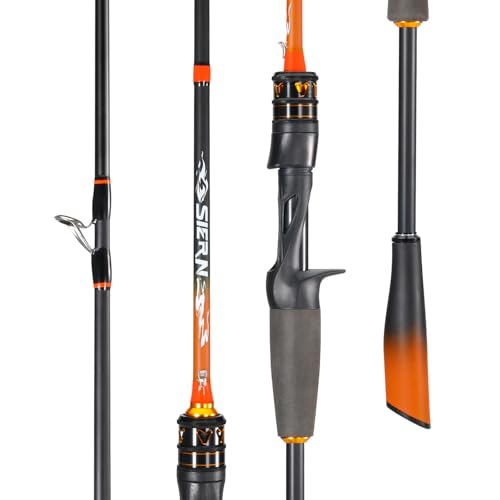
Sougayilang IM6 6 ft Rod differs from the other standalone rods by offering a 6-foot, two-piece IM6 graphite design in casting and spinning versions. The maker describes it as fast action with medium power, a pairing intended for anglers who want a responsive tip and moderate backbone. Stainless steel guides have zirconium rings, and the split handle uses EVA and SuperPolymer materials. This shorter length can be easier to manage around close cover or in tight spaces. Its medium-power configuration is less suited to anglers specifically seeking an ultra light rod or a 7-foot option.
Bottom line: Choose this if you want a shorter two-piece rod with casting and spinning options.
KastKing Spartacus II 7 ft MH

KastKing Spartacus II 7 ft MH is the longest option among these standalone rods and is rated medium-heavy power with fast action. Its two-piece build includes an extra tip section, and the blank combines 24-ton carbon fiber with IM6 graphite. The rod also has stainless steel guides with zirconium oxide rings and a rubber cork handle. The maker describes the blank as strong and sensitive and says its power-transition design supports casting. The medium-heavy rating makes this a different choice from an ultra light rod; anglers using very light lures should match rod power to their tackle instead.
Bottom line: Pick this for a 7-foot rod with medium-heavy power and a spare tip section.
How to Choose a Graphite Fishing Rod
Start with the fish and lure weight, then choose rod power and length to match; graphite alone does not determine whether a rod suits your setup. Ultra light power is aimed at light tackle, while medium and medium-heavy rods are built for progressively heavier presentations. Rod length also changes handling: a shorter rod is easier to maneuver in confined spaces, while a longer rod generally provides more casting leverage. Graphite blanks are valued for low weight and sensitivity, but they can be damaged by sharp impacts or high-sticking, which means lifting a fish with the rod held nearly vertical. For these choices, favor Okuma Celilo 6’6″ Ultra Light for ultra light use, Sougayilang IM6 6 ft Rod for medium power, and KastKing Spartacus II 7 ft MH when medium-heavy power is the target.
Rod Length and Fishing Space
A 6-foot rod is a practical choice for tight casting lanes, while 6-foot-6-inch and 7-foot rods offer more length for open-bank casts. The best length also depends on obstacles behind the angler, casting style, and the lure being used. A longer rod is not automatically a better fit if branches, docks, or a small boat restrict the backswing. A telescopic design can reduce transport length, but its deployed fishing length still matters once assembled. Use this guide to make the main tradeoff:
| Need | Consider | Why |
|---|---|---|
| Tight spaces | 6 ft | Shorter reach can be easier to manage |
| Mixed open and tight water | 6 ft 6 in | Balances handling and reach |
| More casting leverage | 7 ft | Longer blank can help extend a cast |
Graphite, Composite, and Rod Sensitivity
Graphite is a broad term for carbon-based rod blanks, and a composite blank blends materials rather than using graphite alone. Manufacturers may identify graphite grades or tonnage, but those labels do not replace practical fit factors such as power, action, length, and lure range. Higher sensitivity can help an angler detect line movement, yet graphite rods also need careful handling because a hard impact or a sharply bent, high-sticked rod can concentrate stress. Avoid using the rod to hoist a fish out of the water; bring the fish within net or hand-landing range instead. For a compact setup, compare the graphite telescopic option with two-piece rods, and weigh transport convenience against rod length and chosen power.
Matching Rod Power and Action to Tackle
Rod power describes resistance to bending, while action describes where the blank bends; the terms are related but not interchangeable. Medium power is a general-purpose middle choice, and medium-heavy power is more appropriate when tackle calls for a stronger rod. Fast action usually means the blank bends more toward the tip than a moderate-action rod. Check the rod’s lure-weight and line-weight range against your reel and tackle before ordering; using tackle outside a rod’s intended range can make casting and fish control harder. Where a product choice is explicitly between ultra light, medium, and medium-heavy power, make that rating the deciding factor rather than graphite grade alone.
Frequently Asked Questions
Are graphite fishing rods more sensitive than fiberglass rods?
Graphite rods are generally valued for transmitting light taps and line movement, while fiberglass rods tend to flex more. A composite blank combines materials, so the actual feel also depends on blank design, power, and action.
Can I use a graphite rod in saltwater?
A graphite blank can be used in saltwater, but corrosion resistance depends on components such as guides and reel seats. Rinse the rod and reel with fresh water after saltwater use, and dry them before storage.
What rod length works in a small stream?
A 6-foot rod is often easier to handle where trees and banks limit casting room. Choose longer than 6 feet only if the stream gives you enough space for the extra reach and casting arc.
How should I protect a graphite rod from breaking?
Avoid sharp impacts, pinched blanks, and lifting fish with the rod held almost vertical. Graphite rods can be stressed by high-sticking, so use a net or bring the fish within safe landing reach.
What is the difference between rod power and action?
Power is the force needed to bend a rod, while action describes where it bends along the blank. A fast-action rod bends closer to the tip, and medium-heavy power is stiffer than medium power.