
Best Gravity Water Bowl Not Working: 5 Fixes and Picks

Heouvo 2.5-Gallon Gravity Water Dispenser is the best choice for many pet owners whose gravity water bowl is not working because its wide-mouth tank makes the inside easier to scrub. If the problem is a loose or unstable setup rather than cleaning, choose a dispenser with a stable base or anti-skid feet instead.
A gravity water bowl uses an inverted reservoir to refill a dish as water is consumed; the water level and the reservoir opening must form a seal for the flow to stop between refills.
We earn a commission if you buy through links on this page. As an Amazon Associate I earn from qualifying purchases. Products are compared on manufacturer specifications, not hands-on testing.
- Best overall: Heouvo 2.5-Gallon Gravity Water Dispenser – The wide-mouth tank and removable stainless steel bowl make cleaning buildup easier.
- Best for bowl stability: Gardner Pet 1-Gallon Stainless Steel Waterer – Its extra-wide, anti-tipping base is designed to resist tipping.
- Best for floor grip: Amazon Basics 135.3-Fluid-Ounce Dispenser – Anti-skid rubber feet help keep the dispenser in place.
| Product | Best for | Capacity | Bowl material | Height | Shop |
|---|---|---|---|---|---|
| Heouvo 2.5-Gallon Gravity Water Dispenser | Easy tank cleaning | 2.5 gal | Stainless steel | 18 in | Check Price on Amazon |
| Gardner Pet 1-Gallon Stainless Steel Waterer | Steadier placement | 1 gal | Stainless steel | 9.65 in | Check Price on Amazon |
| Petmate Pet Cafe 0.75-Gallon Dispenser | Simple refilling | 0.75 gal | — | 9.7 in | Check Price on Amazon |
| Amazon Basics 135.3-Fluid-Ounce Dispenser | Grip on floors | 135.3 fl oz | Plastic | 12 in | Check Price on Amazon |
Gravity Water Bowls for Cats and Dogs
Compare capacity, bowl construction, and practical design features before choosing a dispenser or checking a refill problem.
Heouvo 2.5-Gallon Gravity Water Dispenser
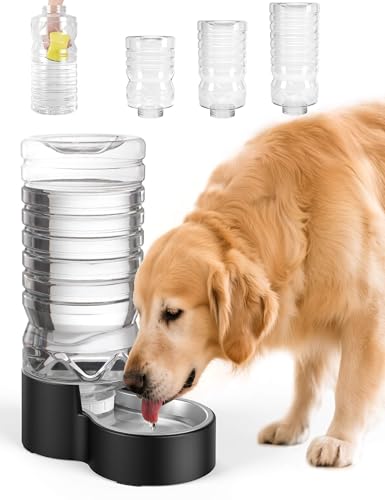
Heouvo 2.5-Gallon Gravity Water Dispenser stands out for cleaning access: its wide-mouth tank is made to let a hand reach inside, and the stainless steel bowl detaches for washing. The 2.5-gallon capacity suits larger dogs or homes with several pets that need more water between refills. The maker says the gravity-fed tank automatically refills the bowl; a gravity dispenser still needs a level surface and a clear tank opening to flow correctly. Its 18-inch height may be too tall for a tight feeding nook, so measure the space first.
Bottom line: Choose it when cleaning access and a larger reservoir matter most.
Gardner Pet 1-Gallon Stainless Steel Waterer

Gardner Pet 1-Gallon Stainless Steel Waterer is the stability-oriented option, with an extra-wide, anti-tipping base and a detachable 304 stainless steel bowl. Its 1-gallon reservoir is smaller than the 2.5-gallon option, while the bowl is dishwasher-safe according to the maker. The maker says gravity keeps water available as a pet drinks. For a refill fault, check that the reservoir is upright and the bowl opening is free of debris; a tilted dispenser can interfere with reliable water flow. This is a practical fit for owners who prioritize a sturdy base over maximum capacity.
Bottom line: Pick it for a wide base and a removable stainless steel bowl.
Petmate Pet Cafe 0.75-Gallon Dispenser

Petmate Pet Cafe 0.75-Gallon Dispenser uses a wide-mouth bottle that lifts out of the base for washing, making it a straightforward choice for routine refill and cleaning. Its 0.75-gallon capacity is smaller than the 1-gallon and 2.5-gallon options, so it better suits a smaller water station or pets with modest daily consumption. The maker says gravity gradually dispenses water into the bowl. If a bowl stops refilling, inspect the bottle opening and base for buildup and reseat the bottle securely. The specifications do not identify the bowl material, which may matter to buyers choosing a specific dish surface.
Bottom line: Choose it for a compact dispenser with an easy-to-remove bottle.
Amazon Basics 135.3-Fluid-Ounce Dispenser

Amazon Basics 135.3-Fluid-Ounce Dispenser is the option with anti-skid rubber feet, a feature intended to help keep the base in place on indoor floors. Its 135.3-fluid-ounce capacity is about 1.06 gallons, between the 0.75-gallon and 2.5-gallon models. The transparent container lets owners check the water level, and its plastic construction combines polyethylene terephthalate and polypropylene. If the bowl is not refilling, a visible water level helps distinguish an empty reservoir from a flow issue; remove the container and check its opening for obstruction. Its 12-inch height may require more vertical room than the shorter options.
Bottom line: Pick it when floor grip and visible water level are priorities.
Why a Gravity Water Bowl Stops Refilling
A gravity water bowl usually stops flowing when the reservoir opening is blocked, the bottle is not seated correctly, or the water level no longer forms a seal at the opening. Start by removing the reservoir and rinsing the mouth and bowl; mineral film, fur, or food crumbs can interfere with the opening. Then refill and reseat the reservoir on a flat, level floor. An inverted bottle is not a pump: water releases until the bowl water covers the outlet, creating a seal that stops further flow. If the bowl remains dry after cleaning and reseating, check for a cracked reservoir or loose cap before using it again.
How to Choose a Gravity Water Bowl
Choose capacity based on how much water your pets use and how often you can refill: these options range from 0.75 gallon to 2.5 gallons. A bigger tank reduces refill frequency but also takes more room and can be heavier to lift when full. For cleanup, removable bowls and a tank opening wide enough for a hand make scrubbing easier; stainless steel bowls can be detached on several options here. For a slippery floor, look for grip feet or a wide base. Keep fresh water available, and do not rely on reservoir capacity alone to judge whether a pet has enough water, since consumption depends on pet size, diet, and conditions.
Gravity Water Dispensers Compared by Need
Match the dispenser design to the failure or inconvenience you want to address: tank access, floor movement, or refill frequency are separate considerations. A wide-mouth tank helps with cleaning but does not itself guarantee flow; the outlet still has to stay clear. A wide, anti-tipping base addresses stability, while rubber feet are designed to resist sliding. Capacity is useful for planning refills, but every pet needs access to a clean bowl that is monitored and replenished. The table compares the main decision points across the offered styles.
| Need | Feature to prioritize | Trade-off |
|---|---|---|
| Scrubbing inside the tank | Wide-mouth opening | Larger unit may need more space |
| Reducing tipping | Wide, anti-tipping base | Does not prevent a flow blockage |
| Reducing sliding | Anti-skid feet | Does not replace level placement |
| Fewer refills | Higher capacity | Full reservoir is heavier to lift |
Cleaning and Safe Water Setup
Wash the water bowl daily and clean the reservoir regularly; warm, soapy water and a thorough rinse help remove slime and residue without leaving soap behind. Replace water rather than topping off a dirty bowl, and inspect the outlet each time the dispenser is cleaned. Stainless steel bowls are generally nonporous and resist rust when maintained, while plastic can develop scratches that hold residue. Never leave a pet without a separate supply of fresh water while cleaning a dispenser. Place the unit away from food debris and litter, and check that it sits flat so the refill mechanism can work as intended.
Frequently Asked Questions
Why does my gravity water dispenser keep overflowing?
An overflowing bowl can result when the reservoir is not seated or its outlet seal is disrupted. Set the dispenser on a level floor, reseat the reservoir, and check that the bowl and bottle mouth are clean.
How often should I clean a pet water bowl?
Wash the drinking bowl daily and clean the reservoir regularly to remove residue and slime. Rinse thoroughly so soap does not remain in the water path.
Can a gravity water bowl work on carpet?
A gravity water bowl works best on a firm, level surface because a tilted base can disrupt refilling. If the carpet is uneven or soft, use a stable floor area instead.
How much water should a pet drink each day?
A common guide for dogs and cats is roughly 1 ounce of water per pound of body weight daily, though food moisture, activity, and heat change intake. Contact a veterinarian if a pet’s drinking pattern changes suddenly.
Why is my gravity water bowl not filling after cleaning?
Check that the reservoir is upright and seated, then inspect the opening for residue or a blocked outlet. A cracked bottle or loose cap can also break the seal needed to stop and restart the water flow.