
Best Headlamp for Night Fishing: 4 Models Compared

For most night anglers, 230° Wide-Beam Rechargeable Headlamp is the strongest fit because its 230-degree beam lights a wide area without requiring head movement, and its maker says runtime reaches 12 hours on low mode. Choose Blukar Zoomable Rechargeable Headlamp instead if a zoomable spotlight and a red rear light matter more than broad hands-free coverage.
We earn a commission if you buy through links on this page. As an Amazon Associate I earn from qualifying purchases. Products are compared on manufacturer specifications, not hands-on testing.
- Best overall: 230° Wide-Beam Rechargeable Headlamp – Its 230-degree beam covers a broad viewing area, with up to 12 hours of low-mode runtime claimed by the maker.
- Best for adjustable beam: Blukar Zoomable Rechargeable Headlamp – Its zoomable front light shifts between spotlight and floodlight, and it includes a red rear light.
- Best for hands-free switching: LHKNL Motion-Sensor Headlamp 2-Pack – The motion-sensor lets you switch the light with a hand wave, and the set includes two headlamps.
| Product | Best for | Beam coverage or focus | Runtime | Water resistance | Shop |
|---|---|---|---|---|---|
| 230° Wide-Beam Rechargeable Headlamp | Wide-area lighting | 230° wide beam | 12 hours low; 6 hours high | IPX6 | Check Price on Amazon |
| Blukar Zoomable Rechargeable Headlamp | Focused beam control | Zoomable spotlight or floodlight | 20+ hours claimed | IPX6 | Check Price on Amazon |
| LHKNL Motion-Sensor Headlamp 2-Pack | Hands-free controls | 8 modes; white and red light | — | — | Check Price on Amazon |
| 230° Wide-Beam Motion-Sensor Headlamp | Wide-beam switching | 230° wide beam plus spotlight | — | — | Check Price on Amazon |
Headlamps for Night Fishing
Compare beam shape, controls and runtime claims to match a headlamp to the way you fish after dark.
230° Wide-Beam Rechargeable Headlamp
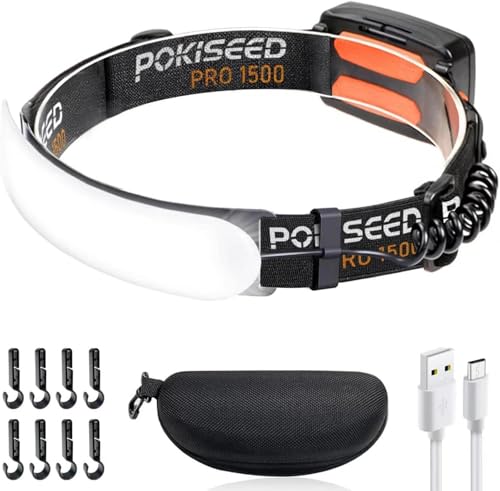
The 230-degree lightbar beam separates this headlamp from models that focus on a narrower adjustable beam, making it suited to tying knots or scanning nearby gear without turning your head. The maker claims 1,500 lumens and up to 12 hours on low mode or 6 hours on high; it has a 5,000 mAh battery, USB-C charging and a taillight. Its elastic strap is adjustable. The broad beam is less suited to anglers who want to concentrate light on a distant target, so consider a zoomable spotlight for that need.
Bottom line: Choose this for broad hands-free coverage around the boat or bank.
Blukar Zoomable Rechargeable Headlamp
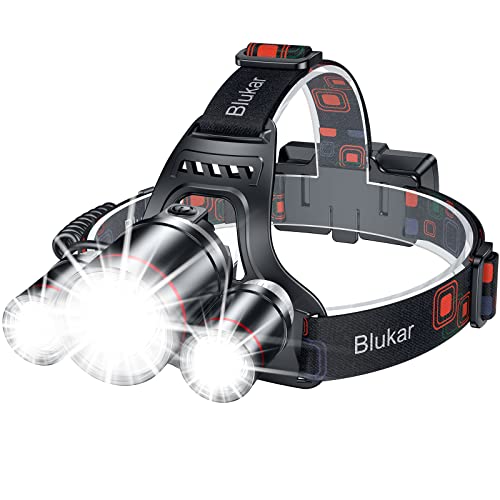
The zoomable lens makes this headlamp the focused-beam alternative, shifting between spotlight and floodlight; it also has a red rear light and a red main-light mode. Its five modes cover a mix of front-light options, including flashing white light. The maker claims more than 20 hours of runtime, though the figures do not tie that runtime to a particular mode. The zoom function suits anglers who alternate between checking a distant spot and working close in. It lacks the 230-degree coverage of a lightbar, so it is not the pick for the widest near-field view.
Bottom line: Pick this if you want to switch between a focused beam and flood lighting.
LHKNL Motion-Sensor Headlamp 2-Pack

The two-headlamp set and motion-sensor control distinguish this option: a hand wave can turn the light on or off, which is useful when handling bait or wet gear. It offers white and red light and eight modes, plus a long press that turns it off without cycling through settings. The maker describes it as rechargeable and lightweight, but the battery capacity fragment does not provide a usable runtime figure. That makes it harder to plan for a long overnight session than a model with a runtime; verify that your intended charging setup is compatible before relying on it.
Bottom line: Choose this when hand-wave control and having two lights are priorities.
230° Wide-Beam Motion-Sensor Headlamp

This headlamp pairs a 230-degree wide-beam with a spotlight, giving it both broad-area and more concentrated illumination. A motion-sensor responds to a hand wave within 10 centimeters, and the six modes include high and low settings for both COB and XPE lights, strobe and sensor operation. Runtime and battery capacity are also absent, making it a less certain choice for long sessions than options with a low-mode duration.
Bottom line: Select this for wide and focused lighting plus gesture-based switching.
How to Choose a Headlamp for Night Fishing
Beam shape determines whether a headlamp suits close work or longer-distance viewing: a wide-beam helps with nearby tasks, while a focused beam carries light farther. A 230-degree beam can illuminate a broad nearby area without moving your head; a zoomable light can shift between flood and spotlight. Red light can help preserve dark adaptation better than white light, but it is still visible and should be used with care around other anglers. For bank fishing, prioritize a stable headband and hands-free controls; on a boat, avoid shining a bright beam into another person’s eyes or toward navigation lights. If you need to identify a distant float, choose a model with a defined spotlight rather than relying on wide coverage alone.
Understanding Waterproof Ratings for Fishing
Neither rating means a headlamp is intended for underwater use, and seals can be compromised by wear or an improperly closed charging port. Keep charging ports closed and dry before charging, and never charge a wet device. A light without an IP rating may still work in dry conditions, but confirm water protection before exposing it to spray or heavy rain.
Runtime, Brightness and Battery Planning
Runtime usually falls as brightness rises, so compare hours at the mode you will actually use rather than a maximum low-mode claim alone. A 5,000 mAh battery gives a capacity figure, but battery capacity by itself cannot predict how long a headlamp runs because LED power and circuitry vary. Keep a charged backup light for fishing after dark; a headlamp failure can leave hands and footing poorly lit. Use the lowest brightness that still lets you see the task, then reserve high mode for locating gear or scanning farther away. Avoid relying on a built-in rechargeable battery when you cannot recharge during a long trip.
Match Beam Type to Fishing Tasks
Use a wide flood beam for tying knots, baiting hooks and handling gear at close range; choose a focused spot beam for finding a marker or checking a distant area. A combined beam or zoom lets one lamp cover both tasks, but the beam pattern matters more than a headline lumen figure when the light is used at close range. The table compares the main beam styles and the job each suits.
| Beam style | Useful for | Trade-off |
|---|---|---|
| Wide flood | Nearby gear and footing | Less concentrated reach |
| Spotlight | Looking toward distant targets | Narrower nearby view |
| Zoom or combined beam | Switching between close and far tasks | Requires adjusting the beam |
For close work within arm’s reach, favor wide coverage; for identifying a target beyond the immediate fishing area, favor a controllable spotlight.
Frequently Asked Questions
Does red light help when fishing at night?
Red light can help preserve dark adaptation better than white light, but it still affects visibility and may bother nearby anglers. Use the dimmest setting that lets you complete the task.
How many lumens do I need for night fishing?
For close tasks such as tying knots, a low or medium setting is often enough; use higher brightness when scanning farther away. Beam shape and glare control matter as much as a maximum lumen claim.
How long should a headlamp last on one charge?
Choose a runtime that exceeds your planned time outside, with spare capacity for setup and unexpected delays. Runtime claims can refer to low mode, so compare the specific mode you expect to use.
Is a wide-beam better than a spotlight for fishing?
A wide-beam is more useful for nearby tasks and footing, while a spotlight concentrates light on a farther target. Anglers doing both benefit from a zoomable or combined-beam lamp.