
Best Kind of Target for Throwing Knives: 5 Picks

A sturdy wooden target made from soft lumber is the best kind for most knife throwers because it can accept sticking blades and offers a durable practice surface; Tomahawk Targets 4-Ring Tripod Board combines a large board with a stand. Choose a smaller hanging target if space is tight, or a foam block if portability matters more than a traditional wood surface.
Keep the target firmly secured and use it only in a clear area where nobody can enter the throwing path.
We earn a commission if you buy through links on this page. As an Amazon Associate I earn from qualifying purchases. Products are compared on manufacturer specifications, not hands-on testing.
- Best overall: Tomahawk Targets 4-Ring Tripod Board – Its 48-inch wooden target and stand provide a full-height practice setup.
- Best foldable target: Crosshairs Foldable Spruce Target – Foldable legs and spruce lumber suit a target that can be put away.
- Best for compact spaces: Tomahawk Targets 17-Inch Spruce Bullseye – The 17-inch spruce board is a smaller hanging option.
| Product | Best for | Material | Size | Mounting | Shop |
|---|---|---|---|---|---|
| Tomahawk Targets 4-Ring Tripod Board | Backyard practice | Wood | 28 × 48 in | Stand included | Check Price on Amazon |
| Crosshairs Foldable Spruce Target | Stowable setup | Spruce lumber | 40 × 30 in | Foldable legs | Check Price on Amazon |
| Tomahawk Targets 17-Inch Spruce Bullseye | Small spaces | Spruce lumber | 17 × 17 in | Hanging | Check Price on Amazon |
| Z-Hunter 6.5-Inch Knife Set with Board | Starter set | Board material unspecified | 9-in diameter board | Board included | Check Price on Amazon |
| TOPARCHERY 20-Inch EVA Foam Target | Portable target | High-density EVA | 20 × 20 × 2 in | Carry handle | Check Price on Amazon |
Kinds of Targets for Throwing Knives
Compare target material, dimensions, and setup style to match your practice space and throwing routine.
Tomahawk Targets 4-Ring Tripod Board
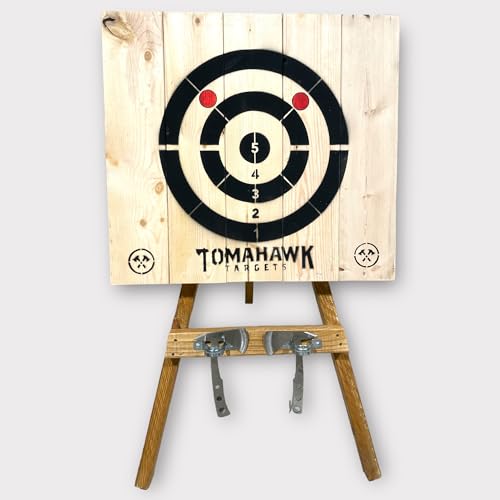
For a freestanding, full-height setup, this wooden target measures 28 inches wide by 48 inches tall and comes with a stand. The four-ring board is made for axe, knife, and tomahawk throwing, so it suits a dedicated practice area better than a small hanging board. Its 40-pound weight and 2-inch depth make it a substantial piece to position. The tradeoff is its footprint: choose it only if you have room to set it up securely and maintain a clear throwing lane.
Bottom line: Choose this if you want a large freestanding target and have room for a dedicated practice area.
Crosshairs Foldable Spruce Target
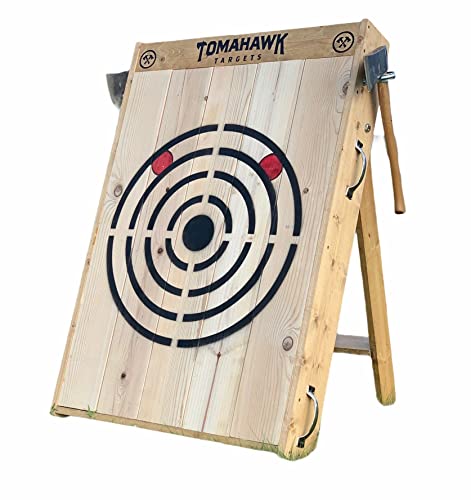
Foldable legs distinguish this spruce lumber target, making it a practical choice when a permanent stand would take up too much space. Its dimensions are 40 by 30 inches, giving it a broad practice face compared with the compact hanging board. The target is made for axe and knife throwing. The main limitation is that the features do not establish how its legs lock or how the board anchors; inspect the setup before throwing, and do not use it if it shifts under impact.
Bottom line: Choose this when you want a broad wooden target that can be folded away between sessions.
Tomahawk Targets 17-Inch Spruce Bullseye

This 17-inch spruce target is a compact hanging option with a bullseye and kill-shot markings, unlike the larger boards with stands. Its small face can work where a full-size target is impractical, but it leaves less room for missed throws, so careful placement and a clear area behind it matter. The target is sold without knives. Choose a secure mounting point that can hold the board firmly; a swinging or loose target can make practice unpredictable.
Bottom line: Choose this for a compact hanging target when you can mount it securely.
Z-Hunter 6.5-Inch Knife Set with Board

This set includes three 6.5-inch overall throwing knives, a nylon sheath, and a 9-inch-diameter target board, so it is the only option here that bundles knives with a board. The knives have 3CR13 stainless steel blades with black oxidized and satin finishes, and green cord-wrapped handles. That combination suits someone seeking a coordinated set rather than a large practice stand. The board is much smaller than the freestanding targets, so it offers less target area; choose a larger board if you want a broad practice face.
Bottom line: Choose this if you want knives and a small target board together.
TOPARCHERY 20-Inch EVA Foam Target

A carry handle and 2-pound weight make this 20-inch EVA foam block the portable choice among these targets. It has printed target rings and is described for both archery and knife throwing, while the wooden options provide a different target surface and mounting style. Choose it when easy movement matters and you want a lightweight block rather than a stand or hanging board. The 2-inch thickness is a key constraint: verify that the target is suitable for your knife type and secure it so it cannot shift during practice.
Bottom line: Choose this if portability is the priority and the 2-inch block suits your intended knives.
How to Choose a Throwing Knife Target
For most practice, choose a firmly secured target made of wood rather than a thin decorative board. Traditional knife-throwing targets commonly use soft, solid lumber such as spruce, pine, or cottonwood; blade entry depends on the wood, grain, moisture, and knife point. A broad face gives beginners more room to land throws, while a small board demands tighter accuracy. As a practical rule, if your practice area cannot accommodate a 28-inch-wide target and a clear throwing lane, choose a smaller board only if you can mount it securely. Avoid particleboard and plywood as target faces because their layered construction is not the same as a solid-wood target. Keep people and pets out of the throwing and retrieval zone.
Wood, Foam, and Target Construction
Solid softwood is the conventional target material because knives can bite into its fibers, but the board’s orientation and condition affect sticking. End grain—where the wood fibers are exposed at the cut ends—is commonly preferred for knife targets; many commercial boards instead use assembled lumber, so inspect the actual face and replace split or badly damaged sections. Foam targets are lighter and easier to move, but foam made for arrows may behave differently with knife points and repeated impacts. A painted bullseye improves aiming reference, not blade retention. Do not assume a printed ring pattern or a target’s use guarantees compatibility with every knife; match the target’s thickness and construction to the knives you intend to throw.
Target Size and Mounting for Knife Practice
A larger target face provides more margin for error, while a compact board requires greater placement accuracy. For example, a 28-inch-wide board gives substantially more horizontal area than a 17-inch target; choose the smaller format only when space is limited and your throws are controlled. Freestanding targets need stable legs and a level base, while hanging targets need a solid support that will not loosen or swing unpredictably. Before practice, check that the board cannot tip or shift and that the space behind and around it is clear. Establish a retrieval rule: nobody approaches the target until all throwing has stopped and the thrower signals the lane is safe.
Common Throwing Target Mistakes
The most common setup mistake is using a target that moves, splits, or has too little usable surface for the thrower’s current accuracy. Check the board and supports before each session, especially after a hard impact or a move to a new location. A target must be placed with a safe backstop and no person, pet, window, or walkway behind it; never throw toward a target while anyone is downrange. Retrieve knives only after every thrower has stopped and the area is explicitly clear. Avoid treating archery target ratings as knife-target ratings: arrow penetration and knife sticking are different uses, so confirm the foam block is suitable for the knives before relying on it.
Frequently Asked Questions
What wood works best for throwing knife targets?
Soft solid woods such as spruce, pine, and cottonwood are commonly used because their fibers can accept a blade. End grain is often preferred, and wet, split, or very hard wood can change how well knives stick.
How thick should a knife throwing target be?
There is no single thickness that suits every knife and target material; the foam option here is 2 inches thick. Choose a construction intended for knife throwing, and confirm the target is suitable for your knives before use.
Should a throwing knife target hang or stand?
Either can work if it is secured and does not shift or swing unpredictably. Freestanding boards need stable legs and a level base, while hanging boards need a solid support that can hold them firmly.
How far away should I stand from a knife target?
Throwing distance varies with technique and knife rotation, so there is no universal distance that fits every thrower. Start close enough to practice controlled throws, increase distance gradually, and keep the entire throwing lane clear.
Can I use an archery target for throwing knives?
Some foam targets are marketed for both uses, but arrow performance does not establish that a block will hold knife impacts well. Check compatibility with your knife type and secure the target before practice.