
Best Kneepads for Flooring: 4 Models Compared

NoCry Flooring Gel Knee Pads suits most flooring work because it combines an extra-wide gel area with a leather surface designed to protect floors from marks. Choose a different style if you need a rigid shell for rough surfaces, prefer soft foam alone, or want a hard-shell pair with a grip strip.
Flooring kneepads cushion the knee between the installer and the floor; the right surface matters as much as padding when working over finished material.
We earn a commission if you buy through links on this page. As an Amazon Associate I earn from qualifying purchases. Products are compared on manufacturer specifications, not hands-on testing.
- Best overall: NoCry Flooring Gel Knee Pads – Its extra-wide gel area and leather contact surface are intended for comfort and floor protection.
- Best for hard-shell protection: Sellstrom KneePro Professional – A flexible hard shell, 3/4-inch foam padding and non-marking grip strip suit rougher tasks.
- Best for lightweight foam: WORKPRO Garden Foam Knee Pads – The pair weighs 6.35 ounces and uses an EVA foam cushion.
| Product | Best for | Cushion or shell | Strap design | Weight | Shop |
|---|---|---|---|---|---|
| NoCry Flooring Gel Knee Pads | Floor-safe contact | Gel and high-density foam | Adjustable reinforced straps | 0.97 lb | Check Price on Amazon |
| Sellstrom KneePro Professional | Shell protection | Flexible hard shell, 3/4-in foam | Grip strip and double straps | 1.19 lb | Check Price on Amazon |
| REXBETI Gel Construction Knee Pads | Longer straps | Thick gel and high-density foam | Hook-and-loop, thigh support | 1.71 lb | Check Price on Amazon |
| WORKPRO Garden Foam Knee Pads | Lightweight foam | EVA foam cushion | — | 0.40 lb | Check Price on Amazon |
Flooring Kneepads Compared
Compare the contact surface, cushioning and strap approach to match your kneepads to the flooring task.
NoCry Flooring Gel Knee Pads

For finished floors, the leather contact surface is the key distinction: the maker says it helps prevent scratches or marks, while the extra-large gel area and high-density foam provide cushioning. The pads are one size and use reinforced adjustable straps with military-grade rivets. That combination suits installers who want broad gel support without a hard outer shell. A leather surface is not a guarantee against every mark, so clear grit from the work area and check the floor material before kneeling on a delicate finish.
Bottom line: Choose these when a leather floor-contact surface and broad gel cushioning are priorities.
Sellstrom KneePro Professional
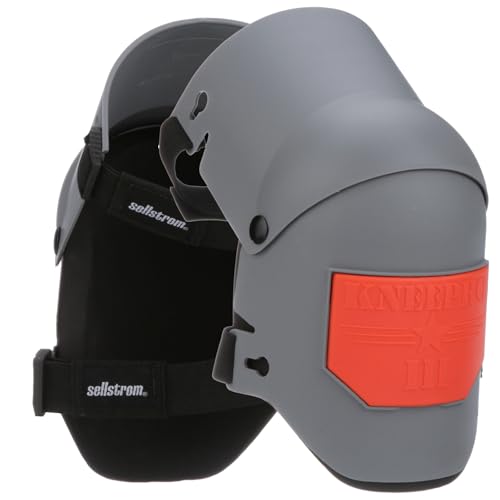
A flexible hard shell sets this pair apart from the soft-surface styles, adding a barrier against impact and sharp objects. The triple-layer inner pad is 3/4 inch thick and has ventilation holes; a non-marking grip strip adds stability. Its hinged design and double straps make it a candidate for jobs that move between kneeling and standing, or for rougher surfaces where a shell is useful. The rigid cap is less suited to buyers who need the softest possible contact over delicate flooring, so consider the work surface before choosing.
Bottom line: Pick these for shell protection and a ventilated, 3/4-inch foam pad.
REXBETI Gel Construction Knee Pads

Extra-long straps and thigh support distinguish this gel-and-foam pair from the other options. The maker says the hook-and-loop closure is designed to stay secure during activities including flooring, while the heavy-duty PVC shell and reinforced stitching target demanding work. This is a fit to consider if ordinary straps feel short or tend to shift. The weight is 1.71 pounds, making it the heaviest pair with a weight here; workers who prioritize low weight may prefer another option.
Bottom line: Choose these if extended straps and thigh support are your deciding fit features.
WORKPRO Garden Foam Knee Pads
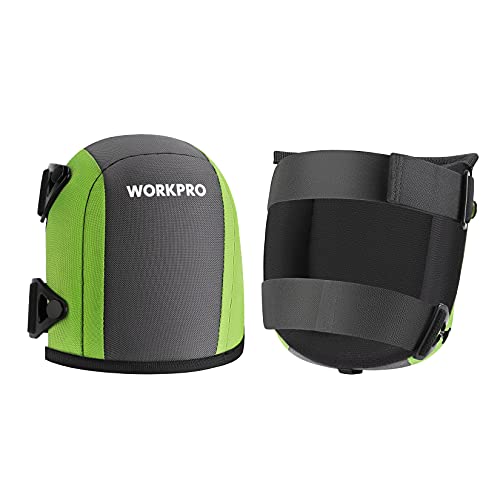
At 6.35 ounces per pair, these are the lightest kneepads with a weight, and their soft EVA foam lining avoids the rigid-cap construction of shell-style alternatives. An Oxford surface and flexible, tear-resistant build suit general kneeling tasks such as flooring, cleaning and gardening. The pad measures about 8.27 by 6.69 inches, with a size of 7.87 by 6.75 by 3 inches; those dimensions differ, so check which measurement matters for your fit before ordering. Soft foam may be less appropriate than a shell when sharp debris is present.
Bottom line: Pick these when low weight and flexible foam matter more than a hard shell.
How to choose flooring kneepads
Choose by floor contact first, then by the kind of cushioning and retention you need. Soft or leather contact surfaces are a better starting point for finished floors than exposed hard caps, but grit trapped under any pad can scratch a surface. Gel and foam distribute pressure differently from a rigid shell: cushioning suits long kneeling sessions, while shells add a barrier against sharp debris. A useful decision rule is to use a hard-shell style only when the work surface and flooring material can tolerate it; for a delicate finished floor, favor a non-marking or soft contact face. Fit matters too: straps should hold the pad in place without cutting into the leg or restricting circulation. Stand and reposition regularly rather than staying in one kneeling position for hours.
Floor contact and surface protection
A kneepad can protect a worker’s knees without being harmless to every floor finish. Hard plastic caps can catch grit or leave marks, so sweep debris before kneeling and test contact on an inconspicuous area when the floor is delicate. Non-marking labels describe the pad material’s intent, not a guarantee against scratching; sand and tile fragments are harder than most flooring finishes. Leather, fabric and foam can also pick up abrasive dust. Keep the contact face clean, and avoid pivoting on a loaded pad, which can drag grit across the surface. For unfinished subfloors or demolition work, shell protection may matter more than a soft floor-contact face; for finished flooring, prioritize a smooth, clean contact surface.
Gel, foam and hard shells compared
Gel and foam pads favor cushioning and flexibility, while hard shells add a physical barrier against sharp objects and impact. No one construction is ideal for every flooring stage: installation on a clean finished floor calls for careful surface contact, while rough subfloor preparation raises the value of shell coverage. Use this guide to match construction to the task rather than treating all kneepads as interchangeable.
| Work condition | Construction to consider | Tradeoff |
|---|---|---|
| Finished, delicate flooring | Soft, leather or non-marking contact | Clean grit frequently |
| Rough surface or debris | Flexible hard shell | Check floor compatibility |
| Long kneeling periods | Gel or thick foam cushioning | Fit and strap comfort remain essential |
Fit, straps and safe use
Proper fit means the pad stays centered over the kneecap as you bend, crawl and stand. Strap styles differ: hook-and-loop closures are easy to adjust, while double straps can stabilize a shell; neither should be tightened until circulation is restricted. Try a few kneeling-to-standing movements before starting work and reposition a pad if it rotates or slides. Kneepads reduce direct contact with the floor but do not eliminate strain from prolonged kneeling. Take standing breaks and change position, especially during repetitive installation. Keep pads free of loose grit, inspect straps and stitching for damage, and replace a pad that no longer stays in place or has torn cushioning.
Frequently Asked Questions
Can hard-shell kneepads scratch finished flooring?
Yes, a hard cap can scratch a floor if grit gets trapped beneath it or the cap drags across the surface. Sweep first and test contact on an inconspicuous area when the finish is delicate.
How tight should flooring kneepad straps be?
Straps should keep each pad centered while allowing comfortable movement and circulation. Recheck the fit after standing and kneeling, since straps can shift as the leg bends.
Are gel or foam kneepads better for flooring?
Gel and foam focus on cushioning, while a hard shell adds a barrier against sharp debris. For finished floors, prioritize a clean, floor-compatible contact surface regardless of the cushion type.
How often should I take a break from kneeling?
There is no universal interval that fits every task, but regular standing breaks and position changes reduce time spent loading the same area. Stop and adjust if a pad shifts, pinches or causes discomfort.
Can flooring kneepads be used on tile?
They can be used for tile work, but grout debris and tile chips can become abrasive under a pad. Clear the work area often and choose shell protection when sharp fragments are present.