
Best Leather Boot Repair Kits for Color and Care

For faded or scratched smooth leather boots, drtulz Black Recoloring Balm is the best match because it is specifically described for boots and leather color restoration. Choose a different option if you need a flexible filler for a tear or hole, or a cleaning and polishing routine rather than color repair.
Leather repair kits vary: recoloring balms refresh surface color, while liquid adhesive kits are aimed at damage such as cuts and holes.
We earn a commission if you buy through links on this page. As an Amazon Associate I earn from qualifying purchases. Products are compared on manufacturer specifications, not hands-on testing.
- Best overall: drtulz Black Recoloring Balm – Specifically covers smooth leather boots and faded or scratched color.
- Best for color matching: ARCSSAI 10-Color Leather & Vinyl Kit – Includes 10 mixable colors and names shoes among its intended uses.
- Best for routine care: 16-in-1 Leather Shoe Care Kit – Combines saddle soap, mink oil, polish, brushes, and cloths for leather shoe care.
| Product | Best for | Color options | Product type | Boot fit | Shop |
|---|---|---|---|---|---|
| drtulz Black Recoloring Balm | Smooth leather color | Black | Recoloring balm | Boots named | Check Price on Amazon |
| ARCSSAI 10-Color Leather & Vinyl Kit | Mixable color matching | 10 mixable colors | Liquid repair adhesive | Shoes named | Check Price on Amazon |
| COCONIX Black Leather & Vinyl Kit | Black surface repair | Black | Leather and vinyl repair kit | — | Check Price on Amazon |
| Vigorder Brown Leather Repair Kit | Brown shade matching | Brown shades | Liquid repair adhesive | — | Check Price on Amazon |
| 16-in-1 Leather Shoe Care Kit | Cleaning and polishing | Black, brown, neutral | Cleaning and care set | Shoes and boots named | Check Price on Amazon |
Leather Boot Repair Kits
Match the product to the damage: color restoration, liquid repair, and routine shoe care solve different problems.
drtulz Black Recoloring Balm

For boots with faded or scratched color, this black recoloring balm is the only option here specifically described for boots and smooth leather. The maker says the balm penetrates leather and is intended to repair cracks, restore elasticity, and renew texture; use it only on smooth leather, and watch the tutorial before applying it. The black shade suits boots that need a dark color refresh, not a different shade. Because this is a recoloring balm rather than a liquid filler kit, buyers with a hole or open tear should choose a repair product intended for that damage instead.
Bottom line: Pick this for color restoration on smooth leather boots, not for filling a hole.
ARCSSAI 10-Color Leather & Vinyl Kit

For repairs where color matching matters, this kit offers 10 colors that can be mixed and names shoes among its intended uses. The maker describes a quick-drying liquid repair adhesive and provides step-by-step directions for matching a surface color and applying the product. That makes it a broader leather-and-vinyl repair choice rather than a boot-specific recoloring balm. It may suit a wearer who wants to address a tear, crack, scratch, hole, or peeling and needs to blend a shade; the limitation is that the source does not identify boot materials or finishes, so match the kit to the boot surface before use.
Bottom line: Choose it when mixable color options matter for a shoe repair.
COCONIX Black Leather & Vinyl Kit

For a black leather or vinyl repair, this kit is the straightforward color-specific alternative to the multi-color options. Its maker describes an all-in-one solution with a mixing guide for shades from light gray through black, plus a flexible, durable formula intended for cracks, scratches, burns, holes, and peeling. The product name emphasizes car seats, couches, and furniture, with jackets also mentioned, rather than boots. It may be relevant when the boot surface and damage suit the formula, but do not treat the broad leather-and-vinyl claim as confirmation for every boot finish.
Bottom line: Consider it for black leather or vinyl surface damage when the material is a match.
Vigorder Brown Leather Repair Kit

For brown repairs, this kit is aimed at mixing a shade close to the original, with examples including tan, walnut, and chocolate. The maker describes quick-drying liquid adhesive for scratches, cuts, holes, tears, cracks, wear, and pet scratches, and includes a color-matching guide. Its focus is furniture, car interiors, purses, and jackets, so boots are not a named use. That makes this a possible alternative only when the boot material is compatible and the brown shade is a priority; its brown palette is less suitable for black or non-brown boots.
Bottom line: Pick it only when brown shade matching and compatible material are the priorities.
16-in-1 Leather Shoe Care Kit
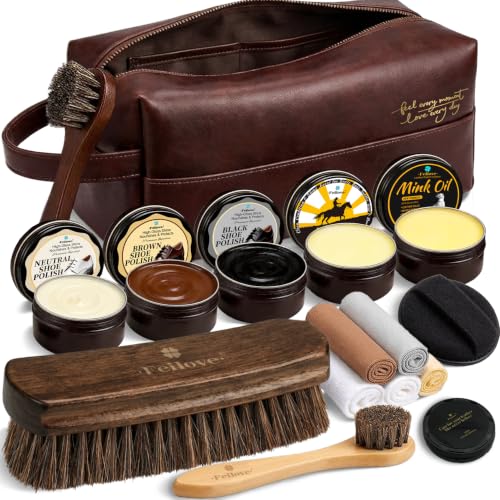
For ongoing shoe and boot care rather than repairing damage, this set brings together black, brown, and neutral polish with saddle soap, mink oil, brushes, cloths, towels, and sponges. The maker frames it as a three-step clean, condition, and polish routine, so it is the clearest choice here for maintenance instead of filling scratches or holes. Its 16-piece assortment covers several care tasks, but it is not a leather repair kit for tears, cracks, or peeling. Choose it when the boot needs cleaning and conditioning and already has a sound surface.
Bottom line: Choose this for routine cleaning and polishing, not structural repairs.
How to choose a leather boot repair kit
Start by identifying whether the boot needs color restoration, surface repair, or routine care. A recoloring balm is aimed at refreshing color; liquid adhesive kits are described for damage such as tears, holes, cracks, or peeling; polish and conditioner are for maintenance. Match the product’s intended surface to the boot, since smooth leather is not interchangeable with suede or nubuck. A practical decision rule is to use a color-restoration product only for discoloration or shallow scuffs on the compatible surface; choose a repair formula only when its damage types include the defect. For a hole, open tear, or separated seam, do not assume a color balm can restore the structure. Test any color product on a hidden area first and let it dry fully before judging the shade.
Leather finishes and boot fit
Finish matters as much as color: smooth, coated leather and porous suede absorb products differently. The balm here is specifically limited to smooth leather, so do not extend that use to suede or nubuck. Check whether a boot is finished leather, suede, nubuck, or synthetic before choosing a formula; a surface label such as “leather” alone does not establish compatibility. Liquid repair kits may cover leather and vinyl, but that broad material wording does not confirm every boot finish. The table separates the needs each product addresses, not a guarantee of fit. If the boot has a waterproof membrane or specialty finish, confirm product compatibility with the boot maker before applying a repair compound or conditioner.
Use this guide to narrow the product type by the problem you need to address.
| Boot need | Product type to consider | Key fit check |
|---|---|---|
| Faded or scratched smooth leather color | Recoloring balm | Shade and smooth-leather compatibility |
| Tear, hole, crack, or peeling | Liquid repair adhesive kit | Damage type and boot surface compatibility |
| Cleaning and shine | Polish and care set | Color and finish compatibility |
Prepare boots before applying a repair product
Clean and dry the repair area before applying color or adhesive; dirt and moisture can interfere with adhesion and make color matching harder. Remove loose debris gently, and avoid aggressive scraping that enlarges a tear or strips the finish. Apply a small amount to an inconspicuous spot first, especially when mixing shades or using black or brown color products. Follow the product’s own application and drying directions, because cure time and layering differ by formula. Keep repair compounds and conditioners off the sole and tread, where residue can affect traction. For a deep tear or a damaged seam that bears stress while walking, a surface kit may not restore the boot’s strength; seek a repair method designed for that structural damage.
Common mistakes with leather boot repair kits
The most common mistake is choosing by the word “leather” without checking the finish and the type of damage. A recoloring balm can refresh color on smooth leather but is not a substitute for a filler on an open hole; shoe polish can improve appearance but does not mend a tear. A second mistake is using a color that looks right while wet: let a test patch dry before deciding whether the shade blends. Avoid applying products to suede or nubuck unless the specific product says it is suitable. Do not rush layering or wear boots before the repair has dried, since movement and friction can disturb a fresh surface. When a boot’s material or finish is uncertain, confirm compatibility before application.
Frequently Asked Questions
Can a leather repair kit fix a hole in a boot?
Some liquid repair kits are described for holes, but a recoloring balm is not the same as a structural filler. For an open hole or tear that flexes during walking, use a method made for that damage and boot material.
Can leather boot repair balm be used on suede?
The recoloring balm described here is for smooth leather only, so it should not be assumed suitable for suede or nubuck. Check the boot finish and choose a product that explicitly covers it.
How do I match repair color to brown boots?
Use a color-matching guide or mixable shades, and test the blend on a hidden spot before treating the visible area. Brown repair kits may use shade names such as tan, walnut, and chocolate, so the dried test patch is the useful comparison.
Should I polish boots before repairing a scratch?
Clean and dry the area before applying a repair product, but polish is for care and appearance rather than filling damage. Keep polish or conditioner out of the repair area until the repair formula has dried as directed.
How can I tell whether my boots are smooth leather?
Smooth leather has a continuous, even surface, unlike the fuzzy nap of suede or nubuck. If a boot has a coated or specialty finish and you cannot identify it, confirm compatibility before applying balm or adhesive.