
Spider Web Removal Spray: 3 Options Compared

TERRO Cobweb Eliminator T2360 is the named spider web removal spray, and its maker says it helps prevent new webs after you knock down existing ones. Choose a dissolver or broader insect spray instead if you need to address active webs or insects beyond future web formation.
Spider web sprays generally work as web-dissolving cleaners, contact treatments, or residual repellents; check the label to match the application to the problem.
We earn a commission if you buy through links on this page. As an Amazon Associate I earn from qualifying purchases. Products are compared on manufacturer specifications, not hands-on testing.
- Best overall: TERRO Cobweb Eliminator T2360 – Combines instructions to remove existing webs with a formula intended to discourage new web formation.
- Best for outdoor web cleanup: Web Eater Web Dissolver, 3-Pack – Its maker describes a hose-end concentrate for dissolving webs and outdoor treatment.
- Best for measured coverage: Nisus Web Out, 1 Quart – The ready-to-use quart covers up to 300 square feet, according to its maker.
| Product | Best for | Form | Coverage or duration | Use focus | Shop |
|---|---|---|---|---|---|
| TERRO Cobweb Eliminator T2360 | Web prevention | Ready-to-use spray | Long-lasting; no duration given | Indoor and outdoor | Check Price on Amazon |
| Web Eater Web Dissolver, 3-Pack | Outdoor cleanup | Concentrate; hose-end sprayer | — | Outdoor | Check Price on Amazon |
| Nisus Web Out, 1 Quart | Defined coverage | Ready-to-use spray | Up to 300 sq ft; up to 60 days outdoors | Indoor and outdoor | Check Price on Amazon |
Spider Web Removal Sprays
Compare whether each formula is aimed at preventing webs, dissolving them, or treating nearby surfaces.
TERRO Cobweb Eliminator T2360
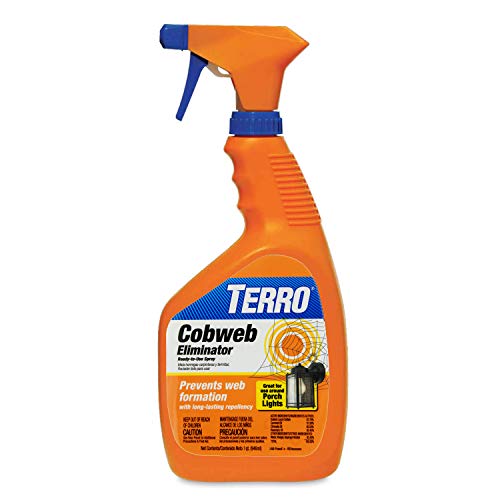
TERRO Cobweb Eliminator T2360 focuses on preventing web formation rather than dissolving webs: its maker recommends knocking down existing webs before spraying the target area. The 32-fluid-ounce ready-to-use bottle is intended for indoor and outdoor areas, with porch lights called out as a useful target. The maker says the formula starts working immediately and offers residual repellency, but gives no specific protection period here. Choose it when the main goal is discouraging webs from returning; buyers who need a web-dissolving formula or a coverage area should compare other options.
Bottom line: Pick this for post-cleanup web prevention around porch lights and similar areas.
Web Eater Web Dissolver, 3-Pack

Web Eater Web Dissolver, 3-Pack is the outdoor-oriented choice that combines web dissolving with spider repellency, rather than focusing only on post-cleanup prevention. The package contains three 32-ounce concentrate bottles with hose-end sprayers; its maker says the formula breaks down existing webs and targets active spiders. The maker also claims organic acids remain to discourage spiders from returning. This format suits decks, patios, garages, and sheds where outdoor coverage is the priority. The formula is a concentrate, so buyers wanting a ready-to-use hand-spray bottle should choose another type.
Bottom line: Choose this for outdoor web cleanup when a hose-end concentrate suits the job.
Nisus Web Out, 1 Quart

Nisus Web Out, 1 Quart stands out with a coverage area: one quart covers up to 300 square feet, and outdoor protection can last up to 60 days depending on conditions. The ready-to-use formula is intended for wood, brick, metal, and other surfaces, and its maker says it helps prevent future webs while eliminating several insects on contact. Plant-based oils and a quickly dissipating fragrance are also specified. This suits buyers treating a measured area without mixing concentrate. Its outdoor duration is conditional, so it may not fit someone seeking a fixed protection interval.
Bottom line: Pick this when ready-to-use application and a coverage area matter.
How to Choose a Spider Web Removal Spray
Choose by whether the immediate problem is an existing web, an active spider, or webs returning after cleanup. A web dissolver targets material already present, while a residual repellent is applied after web removal to discourage new formation; a contact insect treatment is intended for insects it reaches directly. Those are different jobs, so a single product claim should not be read as all three. For a porch light with webs already present, remove the webs first if the spray directions call for it, then use a prevention formula. For visible web buildup across outdoor structures, choose a formula whose directions specifically include dissolving webs.
Match the treatment to the task
Look for the target and intended surfaces on the label before applying, especially indoors. Coverage and duration help estimate how much to use and how often a treatment may need repeating, but outdoor conditions can change how long a treatment lasts.
Where to Apply and How to Prepare
Apply only to surfaces and locations allowed by the product label; the same formula is not automatically suitable for every room, plant, or finish. Dust and debris can obscure webs, so clear existing webs before using a preventive spray when the directions say to do so. Measure the area first: a 300-square-foot coverage limit means one quart is intended for that approximate area, not an unlimited number of structures. For broad outdoor work, a hose-end sprayer can reach farther than a trigger bottle, while a ready-to-use bottle avoids mixing concentrate.
Keep the application controlled
Do not spray near food, dishes, or food-preparation surfaces unless the label explicitly permits it. Keep children and pets away during application and until the label’s reentry directions allow access; allow treated surfaces to dry if instructed.
Web Sprays Compared by Function
Web-removal products differ most in whether they dissolve old webs or leave a treatment intended to discourage new ones. A prevention spray is best after visible webs are removed, while a dissolver directly addresses web material. A contact insect spray has a separate purpose: it targets insects reached by the spray and may not remove a web. This distinction avoids a common mistake—expecting a repellent to clean existing web buildup. Match the product format to the area too: hand sprays suit spot work, and hose-end formats can cover outdoor surfaces more conveniently.
The table links the immediate need to the product function to look for.
| Need | Look for | Use case |
|---|---|---|
| Existing web buildup | Web dissolver | Visible webs on outdoor structures |
| New webs after cleanup | Residual repellent | Porch lights and other recurring web sites |
| Active spider contact | Contact treatment | Direct treatment where label permits |
Safe Application and Repeat Treatments
Follow the label’s application and drying directions because reentry timing and permitted locations can differ between formulas. Keep sprays away from people, pets, food, and aquariums unless the label provides specific directions for those settings. Use only the amount and application method allowed; more spray does not necessarily extend protection and can leave unwanted residue. Before treating a delicate or visible finish, test a small inconspicuous spot if the label recommends it. Outdoor rain, sunlight, and exposure can affect residual treatments, so use a duration as a maximum claim rather than a guarantee for every surface or weather condition.
Reapply only at the interval and rate on the label. If a product gives a duration range or makes protection conditional on weather, inspect the treated area rather than assuming the same result in every location.
Frequently Asked Questions
Should I remove webs before spraying?
Yes, when the product directions call for it; a prevention spray is meant to treat the area after visible webs are knocked down. A dissolver is the type intended to break down existing web material.
Can I use spider web spray indoors?
Only if the label allows indoor application and the specific location. Keep the spray away from food and food-preparation surfaces, and follow any drying and reentry directions.
How do I estimate the area a bottle will cover?
Measure the length and width of the treatment area in feet and multiply them for square feet; for example, a 10-by-20-foot area is 200 square feet. Compare that result with the product’s coverage and follow the application rate on its label.
Does rain affect outdoor spider spray?
Rain and other outdoor exposure can affect residual treatments, so protection duration may differ across surfaces. Follow the product label’s weather and reapplication directions, and use a product with an outdoor duration if that matters.
When can children and pets return to a treated area?
Use the label’s reentry directions, since allowed timing depends on the formula and application. Keep children and pets away during spraying and until the specified conditions, such as complete drying, are met.