
Best Locking Gel for Twists: 4 Picks Compared

Jamaican Mango & Lime Start-A-Loc Gel is the best locking gel for twists for most people because it is specifically marketed for twists and retwists with firm hold in a 16-ounce jar. Choose AllDay Locks Lock N Twist Supreme Hold instead if you want a smaller 5-ounce jar and edge control, or Cantu Moisturizing Twist & Lock Gel if your priority is a shea butter twist-and-lock gel for curls and locs.
We earn a commission if you buy through links on this page. As an Amazon Associate I earn from qualifying purchases. Products are compared on manufacturer specifications, not hands-on testing.
- Best overall: Jamaican Mango & Lime Start-A-Loc Gel – Firm hold for twists and retwists, in the largest jar size at 16 ounces.
- Best for edge control: AllDay Locks Lock N Twist Supreme Hold – Combines locking gel for twists and retwists with edge control in a 5-ounce jar.
- Best for curls: Cantu Moisturizing Twist & Lock Gel – A shea butter twist-and-lock gel marketed for Type 3 curls, Type 4 coils, and locs.
| Product | Best for | Jar size | Hold / styling focus | Formula focus | Shop |
|---|---|---|---|---|---|
| Jamaican Mango & Lime Start-A-Loc Gel | Firm twist hold | 16 oz | Firm hold; twists, retwists | Moringa oil, manuka honey, aloe vera | Check Price on Amazon |
| AllDay Locks Lock N Twist Supreme Hold | Edge control | 5 oz | Supreme hold; twists, retwists | Royal jelly, panthenol, peptides | Check Price on Amazon |
| Cantu Moisturizing Twist & Lock Gel | Curl-focused twists | 13 oz | Twist and lock styling | Shea butter | Check Price on Amazon |
| Pure O Hair Solution Lock & Twist Gel | Simple lock styling | 8 oz | Lock and twist gel | — | Check Price on Amazon |
Locking gels for twists
Compare each formula’s styling focus and jar size to match the gel to your twist routine.
Jamaican Mango & Lime Start-A-Loc Gel

Among these options, this gel has the clearest combination of firm hold and twist-specific use, and its 16-ounce jar is the largest size. The brand says the formula is intended for locs, twists, braids, and retwists, with moringa oil, manuka honey, and aloe vera. That makes it a strong match for someone styling twists while also wanting a formula marketed for scalp hydration and frizz control. Its broad styling focus may be less useful if you only need a small amount for occasional edge work.
Bottom line: Choose this if firm hold for twists and retwists is your main priority.
AllDay Locks Lock N Twist Supreme Hold

Unlike the larger multi-style jar, this 5-ounce gel pairs twist and retwist styling with edge control. The brand says the formula contains royal jelly, panthenol, and peptides and is intended to provide strong control while conditioning and smoothing hair. Its compact jar suits someone who wants one product for retwisting and finishing edges rather than a larger supply. The use is broad across locs, microlocs, and twists, so it is not the most narrowly focused pick if you only want a gel expressly framed around starting and maintaining twists.
Bottom line: Pick this when edge control and a smaller jar matter alongside twist hold.
Cantu Moisturizing Twist & Lock Gel
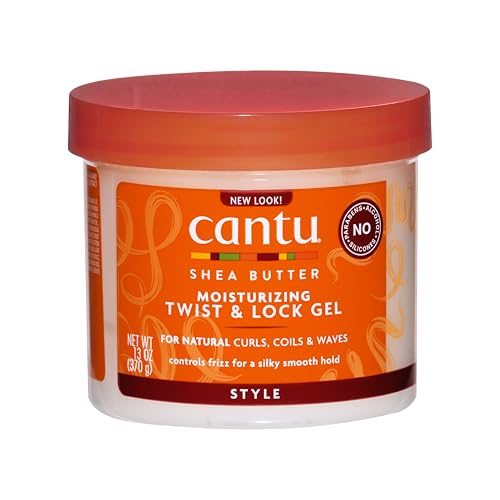
This is the curl-oriented alternative: the product is marketed for twists, braid-outs, and loc styles, with suitability for Type 3 curls and Type 4 coils. Its 13-ounce size is between the smaller edge-control jar and the larger firm-hold option. The creamy formula is made with shea butter, and the brand says it is free of several ingredients including sulfates, parabens, and silicones. It is a less direct fit for shoppers whose deciding need is a firm-hold locking gel specifically marketed for retwists.
Bottom line: Choose this if you want a shea butter twist gel aimed at curls and coils.
Pure O Hair Solution Lock & Twist Gel

Pure O is a straightforward lock-and-twist gel option, with an 8-ounce jar size that sits between the smaller and larger choices here. Its product name identifies the intended styling category, but no additional formulation or hold characteristics are available to distinguish it from the other gels. That makes it a reasonable consideration if the basic lock-and-twist format is what you need and you do not require a specific hold level or ingredient focus. Buyers choosing by hold strength or hair-type guidance should favor an option with those characteristics clearly stated.
Bottom line: Consider this if you want a mid-size jar and do not need a specific formula focus.
How to choose locking gel for twists
Choose a twist gel by matching hold, styling purpose, and jar size rather than relying on the word “locking” alone. Twist creams and gels are often used to define sections and reduce flyaways; a firmer gel is more useful when you need a retwist to stay neat, while a softer or creamy formula can suit twist-outs. Jar size helps estimate how often you restock: 5 ounces is a smaller option, while 13 to 16 ounces suits more frequent styling. If you retwist weekly, prioritize the hold description and intended use; if you mainly style loose curls, look for explicit curl or twist-out guidance.
How much gel should you use on each twist
Use a thin, even coating on a clean, damp section rather than saturating the hair; excess gel can leave residue or lengthen drying time. Start with a small amount and add only enough to smooth the section as you twist, especially near the roots where product can accumulate. Section size also changes the amount needed: larger sections take more product, while fine or short hair generally needs less. Let twists dry fully before separating or covering them, since damp, tightly styled hair can remain wet inside. Avoid combining several heavy stylers at the roots, a common cause of buildup.
Twist gel versus loc retwisting gel
Twist gels and retwisting gels overlap, but the intended finish differs: twist styling may emphasize curl definition, while retwisting products are commonly marketed around firm root control. The table separates the use cases in these picks; it does not establish a universal hold scale.
| Need | Stated focus | Relevant pick |
|---|---|---|
| Firm retwist control | Locs, twists, braids, and retwists | Jamaican Mango & Lime Start-A-Loc Gel |
| Edges with twists | Twist and retwist styling plus edge control | AllDay Locks Lock N Twist Supreme Hold |
| Curls and coils | Twists, braid-outs, and loc styles | Cantu Moisturizing Twist & Lock Gel |
Use a gel for its styling purpose, and choose by the hairstyle you plan to wear rather than assuming every locking gel behaves the same way.
How to avoid flakes and buildup
Keep product close to the amount needed to define each section, because repeated layers can build up at the roots and along the twist. Apply gel to clean hair and avoid mixing it with incompatible creams or oils; some combinations can pill or leave visible residue. Although some formulas are marketed as no-flake, results can still depend on application amount and what is already on the hair. If a product leaves residue, reduce the amount next time and cleanse the scalp and hair before reapplying. Stop using a formula if it irritates your scalp.
Frequently Asked Questions
How often should I retwist my locs?
Many people space retwists about 4 to 6 weeks apart to limit repeated tension at the roots. Hair growth, style preference, and scalp comfort can change that interval, so avoid retwisting tightly or too frequently.
Should I apply locking gel to wet or dry twists?
Apply gel to clean, damp hair for easier distribution and neater sectioning. Use a light amount, since soaking a twist with product can slow drying and encourage residue.
Can locking gel be used for two-strand twists?
Yes, a gel marketed for twists can help smooth and define two-strand sections. Smaller sections need less product than larger ones, so start sparingly and add only if the strands do not stay together.
How can I reduce flakes from twist gel?
Use a thin layer on clean hair and avoid layering multiple stylers at the roots. If residue appears, reduce the amount and wash out buildup before the next application.
Can I use twist gel on my edges?
Some locking gels are also marketed for edge control, but not all are. Use a product explicitly intended for edges and apply a small amount to avoid a stiff or coated finish.