
Best Mice Poison Pellets: 3 Baits Compared

For most people seeking mice poison pellets, Kaput Combo Bait Pellets, 32 Packs is the clearest fit because it targets house mice and comes in 32 ready-to-place 2-ounce packs. Choose Tomcat Rat and Mouse Bait Pellet, 10 lb only for agricultural or rural settings, or Just One Bite II Pellet Packs, 86 Count if you want 1.5-ounce packs; rodenticide bait requires careful placement away from children, pets and wildlife.
We earn a commission if you buy through links on this page. As an Amazon Associate I earn from qualifying purchases. Products are compared on manufacturer specifications, not hands-on testing.
- Best overall: Kaput Combo Bait Pellets, 32 Packs – Targets house mice and comes in 32 individual 2-ounce packs for use in bait stations.
- Best for rural use: Tomcat Rat and Mouse Bait Pellet, 10 lb – Its use is agricultural or rural settings, and the bait is mold- and moisture-resistant.
- Best for single-feed baiting: Just One Bite II Pellet Packs, 86 Count – The maker says house mice may consume a lethal dose in a single night’s feeding.
| Product | Best for | Pack format | Active ingredient | Use setting | Shop |
|---|---|---|---|---|---|
| Kaput Combo Bait Pellets, 32 Packs | House mice control | 32 × 2 oz packs | Warfarin, imidacloprid | Bait stations | Check Price on Amazon |
| Tomcat Rat and Mouse Bait Pellet, 10 lb | Rural settings | 160 oz | — | Agricultural or rural | Check Price on Amazon |
| Just One Bite II Pellet Packs, 86 Count | Single-feed target | 86 × 1.5 oz packs | Bromadiolone | — | Check Price on Amazon |
Mice Poison Pellets
Compare each bait’s target rodents, packaging and use setting before choosing where to place it.
Kaput Combo Bait Pellets, 32 Packs

Kaput combines rodent bait with flea control, unlike the other pellet choices here. Each of the 32 packs contains 2 ounces, and the maker identifies Norway rats, roof rats, house mice and voles as targets. The active ingredients are warfarin at 0.025% and imidacloprid at 0.020%; the packs are intended for placement in bait stations, so handling loose pellets is not required. This suits buyers seeking portioned bait for multiple target species. The additional flea-control purpose may be unnecessary if your concern is mice alone.
Bottom line: Choose it when you want portioned bait for house mice and other rodents.
Tomcat Rat and Mouse Bait Pellet, 10 lb
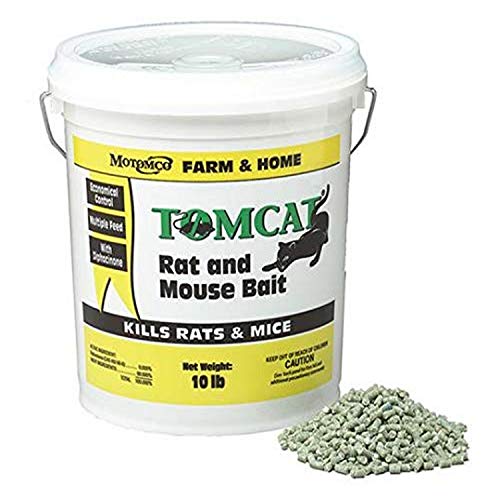
Tomcat is the only option here explicitly limited to agricultural or rural use, making that setting the deciding factor. The 10-pound product is a pellet bait, and the maker says it kills in 4 to 6 days and resists mold and moisture. It suits buyers who need a larger amount for a rural or agricultural setting and can follow the product label for placement and handling. The use restriction makes it a poor choice for typical indoor residential use; do not treat the large pack size as permission to use it outside its labeled setting.
Bottom line: Pick it for an agricultural or rural setting, not routine indoor residential use.
Just One Bite II Pellet Packs, 86 Count

Just One Bite II uses smaller 1.5-ounce packs, while the other exact-fit choices are sold in larger bulk or 2-ounce units. Its active ingredient is bromadiolone, and the maker says Norway rats, roof rats and house mice may consume a lethal dose in one night’s feeding; it also says the delayed effect is 4 to 5 days and that it kills warfarin-resistant Norway rats. The 86-count format suits buyers who want many separate portions. Its target list is narrower than a product that also names voles.
Bottom line: Choose it when smaller portions and the rat and mouse targets match your needs.
How to choose mice poison pellets
Start with the rodent species and where the bait may legally be used, then compare pack size and active ingredient. A bait’s target list matters: house mice, Norway rats, roof rats and voles are not interchangeable labels, so match the target named on the package. Product use can also be restricted by setting; an agricultural-use bait is not automatically suitable for a home. For products intended for bait stations, use a station compatible with the bait and keep it secured where children, pets and wildlife cannot reach it. Never scatter rodenticide pellets where non-target animals can eat them. Follow the product label for placement, replacement and disposal; do not transfer bait to food containers.
Pellet pack sizes and placement
Pack size determines how much bait is available per placement, not how many mice a package will control. A 1.5-ounce portion and a 2-ounce portion require different amounts of space in a bait station, so check station capacity before choosing a format. Place stations along walls or near signs of rodent activity rather than in open areas; mice commonly travel close to edges. Keep a station stable and inaccessible to children and non-target animals, and remove competing food and clutter when practical. Don’t break open pre-portioned packs unless the product label expressly permits it. Clear food sources and close entry gaps as well as baiting, or rodents may keep returning.
Rodenticide safety around pets and children
Rodenticide pellets can poison people, pets and wildlife if eaten, so placement and label compliance are essential. Use a locked, tamper-resistant bait station where children or pets could otherwise reach the bait, and do not place pellets near food, dishes or animal feed. Store unused bait in its original labeled container, away from food and out of reach. If a person or pet may have swallowed bait, contact Poison Control at 1-800-222-1222 or a veterinarian immediately; keep the product package available so the active ingredient can be identified. Do not wait for symptoms before seeking advice. Dispose of remaining bait and any dead rodents according to the product label and local rules.
Pellet bait versus prevention
Pellet bait can reduce rodent activity, but it does not close the entry route that allowed mice inside. Mice can squeeze through openings about 1/4 inch wide, so seal small gaps around pipes, doors and foundations with durable materials. Store pantry food and pet food in sealed, hard-sided containers, and clean crumbs that can compete with bait. These steps reduce access to food and entry points while bait addresses activity already present. Avoid leaving poison pellets exposed; non-target animals may eat either bait or poisoned rodents. If activity continues after sealing and sanitation improvements, reassess the entry route and whether the bait’s target species and placement match the problem.
Frequently Asked Questions
How long do mice poison pellets take to work?
The timing depends on the formulation. One pellet product here says it kills in 4 to 6 days, while another describes a delayed effect of 4 to 5 days; follow the exact product label.
Can mice poison pellets be left outside?
Only use a rodenticide outdoors when its label permits that setting. Outdoor bait needs protection from children, pets and wildlife, typically in a secured bait station.
What size hole can a mouse squeeze through?
A mouse can fit through an opening about 1/4 inch wide. Seal gaps around pipes and doors with durable materials to reduce access.
What should I do if my dog eats mouse bait?
Contact a veterinarian immediately and provide the bait package so the ingredient can be identified. Do not wait for symptoms or try home treatment.
Should I use poison pellets without a bait station?
Use a bait station when the product label calls for one, and secure it against access by children, pets and wildlife. Exposed pellets can be eaten by non-target animals.