
Best Mop for LVP Flooring: 3 Options Compared

For most LVP floors, the Bona Premium Spray Mop is the best fit because its fine mist and formula are made for LVP/LVT while limiting excess moisture. Choose a different mop if you want separate clean and dirty water tanks, hands-free wringing, or powered scrubbing instead.
Luxury vinyl plank (LVP) is a resilient floor with a wear layer over a printed design, so routine cleaning should remove grit without soaking seams or leaving residue.
We earn a commission if you buy through links on this page. As an Amazon Associate I earn from qualifying purchases. Products are compared on manufacturer specifications, not hands-on testing.
- Best overall: Bona Premium Spray Mop – Fine-mist spray and a cleaner formula identified for LVP/LVT make it the closest match.
- Best for fresh water: O-Cedar H2prO Flat Mop – Separate clean and dirty water tanks keep the water streams apart.
| Product | Best for | Water system | Pad design | Floor fit | Shop |
|---|---|---|---|---|---|
| Bona Premium Spray Mop | LVP-specific cleaning | Refillable spray cartridge | Washable microfiber pad | LVP/LVT, tile, stone | Check Price on Amazon |
| O-Cedar H2prO Flat Mop | Fresh-water mopping | Dual-tank; 650 sq ft/fill | Reusable microfiber pad | Hardwood, tile, vinyl | Check Price on Amazon |
| Refillable 800 ml Spray Mop | Large refillable tank | 800 ml bottle | 3 reusable microfiber pads | Hardwood, tile, vinyl | Check Price on Amazon |
Mops for LVP Flooring
Compare the cleaning method and moisture control to choose a mop that fits your LVP routine.
Bona Premium Spray Mop

The Bona Premium Spray Mop is the most directly matched option here: its formula is identified for LVP/LVT, and the fine-mist sprayer is designed to avoid over-saturating floors. The kit includes a reusable microfiber pad, cleaner cartridge, and concentrate pouch. It suits routine damp cleaning when you want controlled spray rather than a bucket. Its single pad may mean stopping to rinse or change it during a larger or dirtier cleanup, so buyers tackling heavy soil should consider a system that handles pad rinsing or powered scrubbing.
Bottom line: Choose this for measured spray and a formula identified for LVP/LVT.
O-Cedar H2prO Flat Mop

The H2prO stands apart with separate clean- and dirty-water tanks, a practical feature when you want to avoid spreading the same water across a room. Its built-in jets saturate the reusable microfiber pad, and one fill is designed to clean up to 650 square feet. That makes it a useful choice for frequent everyday cleaning and small spills. The clean-water capacity is finite, so a larger home or a heavily soiled floor may require refilling before the job is done.
Bottom line: Pick this when separating rinse water matters more than a targeted formula.
Refillable 800 ml Spray Mop
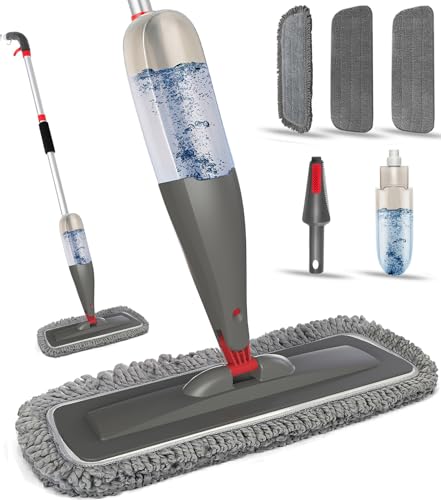
The 800 ml Spray Mop offers the largest reservoir among these options, with a refillable bottle and three reusable microfiber pads. Its hand-triggered mist avoids the bucket-and-wringer routine, while the swivel flat head can reach under furniture and along baseboards. It fits buyers who want a simple spray mop and spare washable pads for rotation. The floor fit is broad rather than specifically naming LVP, and its formula is user-mixed; use a cleaner intended for vinyl plank and avoid soaking joints.
Bottom line: Choose this for a larger refillable tank and spare pads.
How to choose a mop for LVP flooring
For routine LVP care, choose a flat microfiber pad and controlled water rather than a mop that leaves the surface wet. Vinyl plank is water-resistant, but water can work into seams, edges, or damaged areas; avoid puddles and dry visible moisture promptly. Fine-mist spray systems give more control than a bucket, while dual-tank systems help keep rinse water separate. A powered scrubber adds agitation for stuck-on soil, but only use a cleaner compatible with the floor finish. For most homes, a damp microfiber pass is enough; reserve stronger agitation for localized messes instead of scrubbing the whole floor each time.
| Need | Useful mop feature |
|---|---|
| Everyday dust and marks | Flat washable microfiber pad |
| Controlled damp cleaning | Fine-mist spray |
| Keep rinse water separate | Dual-tank system |
| Sticky, dried spots | Powered pads or focused hand scrubbing |
How much water to use on vinyl plank
Use the least moisture that lifts the soil: a lightly damp pad is generally preferable to a saturated mop on LVP. The floor’s wear layer and waterproof core do not make every installation waterproof at seams, transitions, or around damaged edges. Spray a small amount, work in sections, and wipe up any pooling rather than letting it sit. For homes with narrow joints, lifted edges, or older adhesive installations, be especially conservative and use a cleaner labeled for vinyl flooring. Avoid steam mops unless the flooring manufacturer explicitly permits them; heat and moisture can stress some plank constructions or adhesives.
Microfiber pads, cleaner, and routine care
Microfiber works by lifting and holding fine dust and grit, so shake or rinse a pad when it becomes visibly dirty instead of dragging grit across the wear layer. Wash reusable pads separately from lint-producing fabrics and skip fabric softener, which can reduce absorbency. For regular maintenance, dry dust or vacuum with a hard-floor setting before damp mopping; grit under a wet pad can act abrasively. Use a pH-neutral cleaner labeled for vinyl or LVP and follow its dilution directions. Avoid wax, polish, and abrasive scouring pads unless the flooring maker allows them, since residue and scratching can make the surface harder to maintain.
Common LVP mopping mistakes
The biggest avoidable mistake is treating a waterproof plank as permission to leave standing water; seams and perimeter edges are more vulnerable than the plank face. Do not use a dripping string mop, flood the floor, or leave wet patches around transitions. A second mistake is using a cleaner intended for wood, waxed floors, or abrasive scrubbing, which can leave buildup or damage the wear surface. Sweep or vacuum first so grit is not pushed around under the pad. For sticky spots, dampen a small area and wipe it rather than repeatedly soaking the whole floor.
Frequently Asked Questions
Can I use a steam mop on LVP flooring?
Avoid steam unless your flooring manufacturer explicitly approves it. Steam combines heat with moisture, which can stress plank layers, joints, or adhesives in some installations.
How often should I mop vinyl plank floors?
Damp mop when routine dusting or vacuuming no longer removes visible soil; busy entryways may need attention more often than bedrooms. Remove grit first so it is not dragged across the wear layer.
What cleaner is safe for luxury vinyl plank?
Use a pH-neutral cleaner labeled for vinyl or LVP, diluted as directed. Avoid wax, polish, and abrasive products unless the flooring maker permits them.
Can microfiber scratch luxury vinyl plank?
A clean microfiber pad is suitable for routine dirt pickup, but grit trapped in any pad can abrade a floor. Dry sweep or vacuum first, and rinse or replace a visibly dirty pad.