
Best Microfiber Towels for Ceramic Coating Compared

For most coating work, Quadrant Wipe Coating Leveling Towel is the best fit because its numbered quadrants help track which towel surfaces have been used while leveling. Choose CARPRO Suede Microfiber Cloth instead if you want a suede microfiber cloth explicitly designed for coating applications; general cleaning towels suit different tasks.
Coating leveling towels remove residue after application, while general-purpose microfiber cloths are made for broader cleaning and water pickup.
We earn a commission if you buy through links on this page. As an Amazon Associate I earn from qualifying purchases. Products are compared on manufacturer specifications, not hands-on testing.
- Best overall: Quadrant Wipe Coating Leveling Towel – Numbered quadrants help keep track of the wiping surface during coating leveling.
- Best for coating application: CARPRO Suede Microfiber Cloth – Suede microfiber is designed for coating applications and has low absorbency.
- Best for general cleanup: CERAKOTE 300 GSM Microfiber Towels – The 300 GSM cloths are machine washable and sized for compact cleanup tasks.
| Product | Best for | Intended use | Size | Pack count | Shop |
|---|---|---|---|---|---|
| Quadrant Wipe Coating Leveling Towel | Coating leveling | Coating leveling | 16 x 16 in | 10 | Check Price on Amazon |
| CARPRO Suede Microfiber Cloth | Suede coating work | Coating applications | 16 x 16 in | 10 | Check Price on Amazon |
| CERAKOTE 300 GSM Microfiber Towels | General cleanup | General cleaning | 12.5 x 12.5 in | 12 | Check Price on Amazon |
| USANOOKS Grip-Root Microfiber Cloths | Car wash cleanup | Car cleaning | — | 12 | Check Price on Amazon |
Microfiber Towels for Ceramic Coating
Match the towel’s intended task to coating leveling, coating application, or general vehicle cleaning.
Quadrant Wipe Coating Leveling Towel

The numbered quadrant layout sets this towel apart for coating leveling: its eight marked sections give you a way to track which surface you are wiping with. The 16-by-16-inch towel uses a 70/30 polyester-polyamide microfiber blend, and its firm base is designed to resist collapsing during leveling. Its ultrasonic-cut edge has no stitched or silk-polyester edging. Choose it when you want a defined surface-tracking system; buyers who prefer a smooth suede-style cloth should consider a different construction.
Bottom line: Pick this when quadrant tracking and a firm leveling towel are priorities.
CARPRO Suede Microfiber Cloth

The suede construction distinguishes this cloth from the quadrant-style leveling option. CARPRO says the low-absorbency microfiber is designed for CQUARTZ ceramic nano coating applications; it is also described for leveling coatings and polishing or cleaning vehicle surfaces. Each cloth is 16 by 16 inches, edgeless, tag-free, and sold in a 10-pack. This is a better match for shoppers seeking a smooth suede cloth than for those who want numbered wipe zones or a more absorbent general-purpose towel.
Bottom line: Choose this for low-absorbency suede cloths intended for coating work.
CERAKOTE 300 GSM Microfiber Towels

Unlike the coating-specific cloths, these 300 GSM towels are positioned for broad cleaning and moisture pickup. The 12-pack measures 12.5 by 12.5 inches per cloth, has reinforced edges, and is machine washable. CERAKOTE says the towels are lint-free and absorbent, with a soft surface intended for delicate finishes. They can suit cleanup around a detailing job, but the product is not specifically identified as a ceramic-coating leveling cloth, so choose a coating-focused towel when residue removal is the main task.
Bottom line: Pick these for washable general cleanup rather than dedicated coating leveling.
USANOOKS Grip-Root Microfiber Cloths
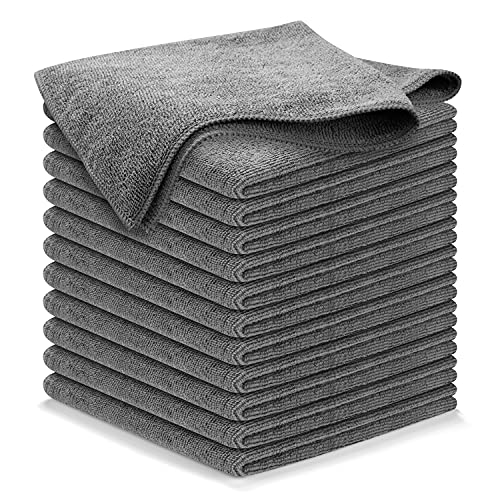
These cloths are aimed at car washing and grime pickup rather than coating leveling. USANOOKS says the Grip-Root weave traps liquid and particulates, and describes the 2.5 mm-thick towels as lint-, scratch-, pill-, swirl-, shed-, and bleed-resistant. The pack contains 12 gray cloths. That cleaning-oriented design may suit wash-stage jobs, but shoppers focused on ceramic coating should favor a product explicitly identified for coating application or leveling. Confirm the cloth dimensions before ordering because the size figures conflict.
Bottom line: Choose these for car-wash cleanup, after confirming the cloth size.
How to Choose Microfiber Towels for Ceramic Coating
Choose a towel by its task: leveling cloths are for wiping coating residue, while general microfiber towels are aimed at cleaning or drying. Suede cloths offer a smooth, low-absorbency surface; a quadrant design helps track which areas of a towel have been used. For a dedicated coating job, select a product that explicitly names coating application or leveling instead of assuming a car-wash towel will serve the same purpose. Separate towels by task and do not use a towel that has picked up grit on paint. Microfiber’s fine split fibers can hold debris, so a trapped particle can create scratches when dragged across a finish.
What Towel Size and Construction Mean
A 16-by-16-inch cloth gives a broad working face, while smaller cloths can be easier to handle around tight areas; choose based on the panel and the way you fold the towel. A folded towel presents several clean faces, but the usable face count depends on the fold and whether the cloth has a marked layout. A GSM figure measures fabric mass per square meter, not a guarantee that the towel is suitable for leveling coating. Smooth suede, plush pile, edge treatment, and stiffness affect how a cloth handles residue. Avoid treating absorbency as the deciding measure: leveling cloths may favor a low-absorbency surface over water pickup.
How to Keep Coating Towels Clean
Wash microfiber separately from lint-shedding cotton, and skip fabric softener and dryer sheets because residues can coat the fibers and impair their cleaning behavior. Use a detergent without softening additives and rinse thoroughly; wash soiled towels promptly rather than letting grit dry into the pile. Keep coating towels separate from wheel, glass, and interior cloths to reduce cross-contamination. A towel exposed to a partially cured coating can become stiff or rough, so do not return it to delicate paint work. Store clean, fully dry cloths in a closed container, and inspect the surface for embedded debris before each use.
Common Ceramic-Coating Towel Mistakes
The most common mistake is using a general wash or drying towel as though it were designed for leveling coating. Another is wiping with a dirty face: fold the cloth so a clean surface contacts the paint, then switch faces as needed rather than pushing residue or grit across the panel. Do not let a coating residue build up on the towel, since it can make later wiping harder and risk a roughened surface. Work in manageable sections and use the coating maker’s method for timing and residue removal, because flash time and wiping technique vary by coating formula and conditions. If a towel’s size is inconsistent across the product naming, confirm the dimensions before ordering.
Frequently Asked Questions
Can I use a regular microfiber towel to level ceramic coating?
A regular microfiber towel may clean a vehicle, but coating leveling is a distinct task. Choose a towel explicitly intended for coating applications or leveling, and use a clean face for each pass.
Why use a low-absorbency towel for coating work?
Low absorbency can suit wiping and leveling rather than soaking up liquid like a drying towel. Match the cloth to the coating maker’s specified application and removal process.
How many microfiber towels should I use for a coating job?
Use more than one clean towel so you can switch away from a saturated or contaminated surface. The needed number depends on vehicle size, coating procedure, and how often you change cloth faces.
Can microfiber towels scratch car paint?
Clean microfiber is intended for delicate surfaces, but embedded grit can scratch paint when dragged across it. Inspect the cloth and use a clean face before wiping.
How should I wash microfiber towels after detailing?
Wash microfiber separately from lint-producing fabrics and avoid fabric softener or dryer sheets. Rinse well and dry the cloth fully before storing it away from dust and debris.