
Best Mouthguards for Football: 3 Fits Compared

Battle Oxygen Lip Protector suits most football players because its no-boil design is described as working with or without braces. Players who want a tether that stays attached or a changeable strap should choose a different style.
Football mouthguards cover the teeth and help reduce mouth injuries; fit and consistent wear matter more than an oversized breathing opening.
We earn a commission if you buy through links on this page. As an Amazon Associate I earn from qualifying purchases. Products are compared on manufacturer specifications, not hands-on testing.
- Best overall: Battle Oxygen Lip Protector – No-boil fit is specified for players with or without braces.
- Best for fixed tether: Nxtrnd Two Pro – Its built-in permanent strap avoids a removable strap connection.
- Best for strap options: Nxtrnd One Pro – The reinforced attachment accepts interchangeable strap colors.
| Product | Best for | Fit | Strap | Shop |
|---|---|---|---|---|
| Battle Oxygen Lip Protector | Brace compatibility | One size | Connected strap | Check Price on Amazon |
| Nxtrnd Two Pro | Permanent tether | Adult and youth | Permanent strap | Check Price on Amazon |
| Nxtrnd One Pro | Changeable strap | Adult and youth | Interchangeable strap | Check Price on Amazon |
Football Mouthguards Compared
Choose among these football mouthguards by fit needs and how you want the strap to attach.
Battle Oxygen Lip Protector
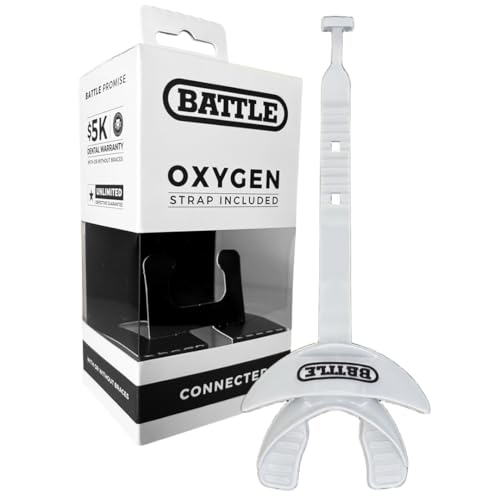
Battle Oxygen Lip Protector is the only option here specifically described as requiring no boiling, making it the clearest choice when quick setup matters. It is one size and has a connected strap; the maker says it fits with or without braces. The maker also claims a large breathing opening and includes unlimited defective coverage. The limitation is that there is no sizing choice, so players who need a tailored fit should confirm that this one-size design is acceptable before choosing it.
Bottom line: Choose it when no-boil setup and brace compatibility are priorities.
Nxtrnd Two Pro

Nxtrnd Two Pro stands apart with its permanent built-in tether, which suits players who want the strap connection to remain attached. The maker says cushioned bite pads absorb impact and that the oversized opening supports airflow; the model is described for adult and youth players, with or without braces. Its blue color is the only color identified for this model. Unlike a mouthguard with a removable or interchangeable strap, the tether is not a way to change strap colors, so choose another option if gear coordination is important.
Bottom line: Pick it for a built-in strap and stated adult-and-youth compatibility.
Nxtrnd One Pro

Nxtrnd One Pro is the strap-flexibility choice: its attachment is reinforced and the strap colors are interchangeable. The maker describes an ergonomic flexible design for adult and youth players, with or without braces, and cushioned bite pads intended to reduce impact and bite pressure. An oversized opening is also part of its airflow design. The tradeoff is that selecting this model for color changes does not make it a different size; players needing a fit beyond the adult-and-youth range should verify fit before play.
Bottom line: Choose it when interchangeable strap colors matter.
How to choose a football mouthguard
Start with fit and retention, then compare the strap style. A mouthguard should stay seated over the upper teeth without needing constant biting; a loose guard can shift during contact. Many football guards use boil-and-bite thermoplastic that softens in hot water and molds around teeth, while no-boil styles avoid that molding step. For a player with braces, select a model explicitly made for braces and get orthodontist guidance, since tooth movement can change clearance during a season. Do not trim or remold a guard in a way that exposes bracket edges.
A large breathing port is a design feature, not proof of greater stamina or protection. Choose the shape that remains comfortable while speaking and breathing, and replace a guard that is torn, split, or no longer fits securely.
Strap styles and fit needs
Strap style matters most when a guard is removed between plays or practice reps. A permanent tether remains attached, while an interchangeable strap design allows color changes; a connected strap offers a simple attached setup. Strap choice does not substitute for fit: a guard must cover the teeth and remain stable when the player opens the mouth. Adult-and-youth labeling is a broad fit claim, not an individual measurement, so a child whose guard shifts or feels oversized should not rely on age wording alone.
The table maps each design to a practical selection condition.
| Need | Design to favor |
|---|---|
| No boiling step | No-boil, ready-fit design |
| Tether stays attached | Permanent strap |
| Change strap color | Interchangeable strap |
| Braces | Explicit braces-compatible guard |
Football mouthguard care and replacement
Rinse a mouthguard with cool water after use and clean it with a toothbrush and mild soap; hot water can distort many thermoplastic guards. Let the guard air-dry fully before storing it in a ventilated case, because a damp sealed container encourages microbial growth. Keep the guard away from direct heat and do not share it. Inspect it before each practice for cracks, chewed areas, or a weakened strap.
Replace a guard when it loses its fit, develops damage, or becomes too small as a young player grows. A dental check is useful when braces, dental work, or a changing bite affects how the guard seats.
Frequently Asked Questions
How often should a football mouthguard be replaced?
Replace a football mouthguard when it cracks, tears, or no longer stays seated securely. Growing players should check fit regularly because a guard that once fit can become too small.
Can you wear a football mouthguard with braces?
Yes, but use a guard specifically identified as compatible with braces and ask the orthodontist to confirm fit. Brackets and tooth movement can change the clearance needed during the season.
Should a football mouthguard cover the lower teeth?
Most football mouthguards cover the upper teeth, with the lower teeth meeting the guard during a bite. A dentist or orthodontist can advise on unusual bite or dental needs.
How do you clean a football mouthguard after practice?
Rinse it with cool water and brush gently with mild soap after practice, then air-dry it in a ventilated case. Avoid hot water, which can deform many molded guards.
Does a larger mouthguard breathing hole improve performance?
A larger opening is an airflow design feature, but it does not establish improved performance or protection. Prioritize a stable fit that lets the player breathe and speak comfortably.