
Best Natural Makeup Brushes: 4 Sets Compared

For a full set of natural-hair brushes, ENZO KEN MONI Goat Hair Set stands out for its goat-hair bristles and walnut handle. Choose ENZO KEN Sable Hair Set if you prefer sable hair and a bamboo handle; the synthetic sets are alternatives for shoppers seeking vegan bristles or tools for liquid and cream makeup.
We earn a commission if you buy through links on this page. As an Amazon Associate I earn from qualifying purchases. Products are compared on manufacturer specifications, not hands-on testing.
- Best overall: ENZO KEN MONI Goat Hair Set – Its natural goat-hair bristles and walnut handle make it a clear full-set option.
- Best for sable hair: ENZO KEN Sable Hair Set – This full set pairs natural sable hair with a bamboo handle and case.
- Best for mixed formulas: EcoTools Start The Day Beautifully Set – The five synthetic brushes are described for liquids, creams and powders.
- Best for vegan bristles: LAURA GELLER 05 Full Face Brush Set – The five-piece set uses synthetic vegan brushes and includes a retractable kabuki.
| Product | Best for | Bristle type | Handle | Weight | Shop |
|---|---|---|---|---|---|
| ENZO KEN MONI Goat Hair Set | Fluffy powder blending | Natural goat hair | Walnut | 0.33 lb | Check Price on Amazon |
| ENZO KEN Sable Hair Set | Sable hair fans | Natural sable hair | Bamboo | 0.31 lb | Check Price on Amazon |
| EcoTools Start The Day Beautifully Set | Liquid makeup | Synthetic | Bamboo | 0.38 lb | Check Price on Amazon |
| LAURA GELLER 05 Full Face Brush Set | Vegan brush set | Synthetic vegan | — | 0.35 lb | Check Price on Amazon |
Best natural makeup brushes
Compare the natural-hair sets with synthetic alternatives by bristle type, handle and intended use.
ENZO KEN MONI Goat Hair Set

Natural goat hair and a walnut handle distinguish this full brush set from the sable hair option. The kit includes a case and is described for face and eye makeup, including contour, nose, eyebrow, eyeliner and lip application. ENZO KEN says the hair is soft and easy to maintain. The broad face-and-eye focus may suit someone building a versatile routine, while shoppers who specifically want sable hair should choose a different set. The maker also describes the ferrule as shiny aluminum.
Bottom line: Choose this set if you want natural goat hair with a walnut handle.
ENZO KEN Sable Hair Set

Natural sable hair and a bamboo handle set this full brush set apart from the goat-hair kit. It comes with a case and is presented for cheek, eye, eyebrow and lip makeup. ENZO KEN describes the hair as soft and easy to maintain, and says the matte aluminum ferrule resists shedding. The set may suit shoppers who prefer sable and want a portable case; buyers looking for synthetic or vegan bristles should consider another option. The dimensions are approximately 8 inches long, 4.33 inches wide and 1.06 inches high.
Bottom line: Pick it if sable hair and a bamboo handle are your priorities.
EcoTools Start The Day Beautifully Set

Five synthetic face and eye brushes make this set a practical alternative for routines that include liquid, cream or powder makeup. The kit includes an angled liner, defined crease, full blush, blurring concealer and angled foundation brush, plus a storage tin. Its bamboo handles and aluminum ferrules differ from the two natural-hair sets. EcoTools says the bristles hold product rather than absorbing it, a feature aimed at buildable coverage. This is not a natural-hair set, so it will not fit a strict natural-bristle preference.
Bottom line: Choose it if you want synthetic brushes for multiple makeup formulas.
LAURA GELLER 05 Full Face Brush Set
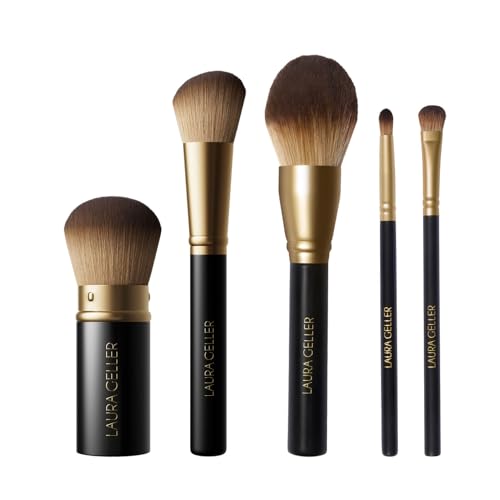
A synthetic vegan five-piece assortment separates this kit from the natural-hair sets. It includes an angled blush brush, bronzer brush, airbrush kabuki and two eyeshadow brushes for a full eye look. The included kabuki is retractable, which gives this set a specific travel-friendly feature. LAURA GELLER says the bristles are ultra-soft and resist shedding and fallout. Shoppers seeking animal hair should choose a different set, and the maker gives no handle material to compare against the bamboo and walnut options.
Bottom line: Pick it if vegan synthetic bristles and a retractable kabuki suit your routine.
How to choose natural makeup brushes
Start with the makeup formulas you use most: natural animal hair is commonly chosen for powder products, while synthetic fibers are often preferred for liquids and creams. Natural hair has a cuticle-like surface that can pick up and release powder; synthetic fibers are generally less porous and easier to clean after cream products. A mixed routine can work with either, but dedicate separate brushes to oily creams and loose powder to reduce residue transfer. Choose face and eye tools based on the tasks you do—foundation, blush, crease blending or liner—rather than the number of pieces alone. If animal-derived bristles are not acceptable, choose a clearly labeled synthetic or vegan set instead of a natural-hair set.
Natural hair and synthetic bristles compared
Natural and synthetic bristles differ most in their typical formula fit and animal origin. Natural hair is often selected for powder pickup and soft blending; synthetic bristles are commonly used with creams and liquids and avoid animal hair. Neither category alone guarantees a better result: bristle shape, density and brush size affect placement and finish. This guide can help match the type to a routine.
| Need | Brush type to consider | Reason |
|---|---|---|
| Powder blush or eyeshadow | Natural hair | Often chosen for powder pickup and blending |
| Liquid or cream products | Synthetic | Often less porous and simpler to clean |
| No animal-derived bristles | Synthetic or vegan | Check the bristle material label |
Brush care and eye-area hygiene
Clean makeup brushes regularly, especially tools used around the eyes or with liquid products; residue and moisture can support microbial growth. A practical routine is to wash frequently used brushes about once a week, using lukewarm water and mild soap, then rinse until clear. Keep water away from the ferrule—the metal sleeve—because moisture can loosen adhesive and contribute to shedding. Reshape the bristles and dry brushes flat or with the head angled downward so water does not pool at the handle. Do not share eye brushes, particularly during an eye infection, and replace tools with damaged or persistently dirty bristles. Natural hair may need gentler handling than synthetic fibers during washing.
Match the brush set to your routine
Choose a set by matching its included shapes to the steps you perform most often. Someone who mainly applies blush and foundation gains more from those face brushes than from extra eye tools; a detailed eye routine benefits from crease and liner shapes. For a compact travel setup, prioritize a case or retractable head and count only the brushes you will use. For powder-heavy makeup, natural hair is a reasonable starting point; for frequent cream or liquid use, synthetic bristles can simplify cleanup. If a kit does not identify a handle material or a needed brush shape, confirm that feature before ordering rather than assuming it from the set name.
Frequently Asked Questions
Are natural makeup brushes better for powder?
Natural-hair brushes are commonly chosen for powder because their surface can pick up and blend dry product. Bristle shape and density also affect the result, so match the brush head to the area and finish you want.
Can I use natural brushes with liquid foundation?
You can use a natural-hair brush with liquid foundation, but synthetic fibers are often easier to clean after cream and liquid products. Wash the brush promptly after use so product does not build up in the bristles.
How often should I clean makeup brushes?
Wash frequently used brushes about once a week, especially those used with liquid makeup or near the eyes. Rinse thoroughly and dry them flat or with the bristles angled down to keep water out of the ferrule.
Can makeup brushes spread eye infections?
Yes, shared or unclean eye brushes can transfer germs between people or eyes. Do not share eye tools, and avoid using them during an eye infection.
How should makeup brushes dry after washing?
Reshape the bristles and dry brushes flat or with the head tilted downward. Keeping water out of the ferrule helps protect the adhesive that holds the bristles in place.