
Best Window Privacy Film That Lets in Light Compared

rabbitgoo Pure Frosted Static Cling suits most people who want privacy and daylight because its frosted finish blurs views while allowing soft light through. Choose Coavas Black One-Way Static Cling or Coavas Black Reflective Self-Adhesive Film instead for a daytime outdoor view, or rabbitgoo Rainbow Decorative Static Cling for a decorative rainbow effect; reflective privacy weakens after dark.
We earn a commission if you buy through links on this page. As an Amazon Associate I earn from qualifying purchases. Products are compared on manufacturer specifications, not hands-on testing.
- Best overall: rabbitgoo Pure Frosted Static Cling – Frosted film blurs views while allowing soft, natural light through.
- Best for daytime views: Coavas Black One-Way Static Cling – The reflective finish is designed to preserve outdoor views during brighter daylight.
- Best for decorative color: rabbitgoo Rainbow Decorative Static Cling – Its 3D pattern creates rainbow effects when sunlight hits the film.
| Product | Best for | Finish | Adhesion | Shop |
|---|---|---|---|---|
| rabbitgoo Pure Frosted Static Cling | Soft daylight privacy | Frosted white | Static cling | Check Price on Amazon |
| Coavas Black One-Way Static Cling | Daytime outdoor views | Black reflective | Static cling | Check Price on Amazon |
| rabbitgoo Frosted Static Cling with Tools | Two-way obscuring | Frosted white | Static cling | Check Price on Amazon |
| Coavas Black Reflective Self-Adhesive Film | Reflective light control | Black reflective | Self-adhesive | Check Price on Amazon |
| rabbitgoo Rainbow Decorative Static Cling | Decorative light effects | Clear patterned | Static cling | Check Price on Amazon |
Window Privacy Film That Lets in Light
Match the finish to whether you want blurred views, daytime mirror privacy, or a decorative light effect.
rabbitgoo Pure Frosted Static Cling

rabbitgoo Pure Frosted Static Cling gives the most straightforward balance of daylight and obscured views: its frosted finish diffuses the view from either side rather than relying on outdoor brightness. The 17.5-by-78.7-inch roll is suited to narrow panes and can be trimmed for a closer fit. The maker says the static cling film blocks 99% of UV rays and applies without glue using water. Its limitation is the blurred view; choose a reflective finish if seeing outdoors clearly matters more than consistent privacy.
Bottom line: Choose it for softly lit rooms where obscuring views matters more than a clear outdoor view.
Coavas Black One-Way Static Cling

Coavas Black One-Way Static Cling differs from frosted options by aiming to preserve a clear outward view while reflecting daylight toward the outside. The maker says it blocks 92% of UV rays and rejects 95% of sun heat. Its 17.5-by-78.7-inch roll uses static cling rather than glue. The trade-off is that the mirror effect depends on brighter outdoor light: when the room is brighter at night, outside viewers may see in. Pair it with curtains or blinds whenever indoor lights are on and privacy is needed.
Bottom line: Pick it for daytime views when you can cover the glass after dark.
rabbitgoo Frosted Static Cling with Tools

rabbitgoo Frosted Static Cling with Tools stands out for including an installation toolkit with a squeegee, cutter, and grid-lined backing. The frosted finish is intended to obscure views in both directions, so it suits spaces where nighttime privacy matters as well as daytime privacy. The 17.5-by-78.7-inch roll can be cut to fit the glass. This is not the right choice when a clear view outdoors is essential: the same obscuring finish that provides privacy also blurs the view through the pane.
Bottom line: Choose it when two-way privacy and the included trimming tools are priorities.
Coavas Black Reflective Self-Adhesive Film

Coavas Black Reflective Self-Adhesive Film is the self-adhesive reflective option, unlike the static cling alternatives. The maker says it blocks 99% of UV rays and reflects up to 95% of infrared heat, while reducing glare. Its mirror privacy works when outdoor light is brighter than indoor light, so it is a daytime solution rather than dependable nighttime privacy. The roll is 17.5 by 78.7 inches. Buyers who want residue-free removal or easy repositioning during application should favor a static cling film instead.
Bottom line: Pick it for reflective daytime privacy and heat control if adhesive installation suits your window.
rabbitgoo Rainbow Decorative Static Cling
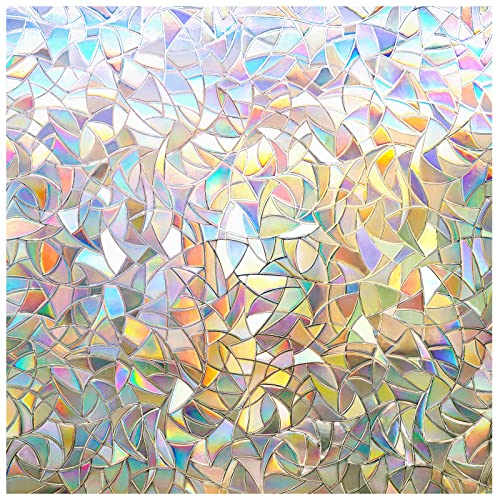
rabbitgoo Rainbow Decorative Static Cling adds a patterned, rainbow-like effect rather than a plain frosted or mirror finish. The maker says the film itself has no inherent color; colorful effects appear when sunlight hits its 3D laser design. It is a non-adhesive static cling roll measuring 17.5 by 78.7 inches, and the maker says it reduces sunlight and rejects UV. This decorative treatment is a weaker fit if the main goal is dependable view blocking, since the product features do not describe it as a full-privacy finish.
Bottom line: Choose it for a decorative sunlight effect rather than assured privacy.
How to Choose Window Privacy Film That Lets in Light
Choose the finish by deciding whether you need a blurred view, a clear daytime view, or a decorative effect. Frosted film diffuses the view in both directions; reflective film depends on outdoor light being brighter than indoor light; patterned film changes the light effect without the plain look of frost. A practical rule is to use frosted film wherever privacy must work after dark, and reserve mirror film for windows you can cover at night. Film also changes the amount and quality of visible light entering a room: a brighter-looking translucent finish can still soften the view rather than leave it clear.
Measure the visible glass, not the frame, and allow enough material to trim each pane. These rolls are 17.5 inches wide, so a wider pane may need multiple strips; align the pattern or seam before cutting.
Frosted and Reflective Film Privacy Differences
Frosted film and reflective film solve different privacy problems. Frosted finishes blur the view regardless of which side is brighter, making them more consistent for bathrooms and bedrooms. Reflective finishes create a one-way mirror effect only while the exterior is brighter; at night, indoor lights can reverse that brightness advantage. A useful decision rule is simple: if you need privacy at night without closing a blind, choose a frosted finish rather than a daytime mirror film.
The following comparison shows how the main film types behave. Privacy outcome also depends on whether the room is lit and the relative brightness outside.
| Film type | View through glass | Night privacy |
|---|---|---|
| Frosted | Diffused or obscured | Consistent obscuring |
| Reflective | Clear outward view by day | Needs curtains or blinds |
| Decorative pattern | Light effect varies by design | Depends on pattern opacity |
Measure and Install Privacy Film Carefully
Measure each pane separately and check whether its width exceeds the 17.5-inch roll width before planning seams. Window film installation commonly uses a wet application: clean glass, wet the surface, position the film, then press water and air outward with a squeegee. Dust or lint trapped beneath the film can remain visible, so clean the glass and work area before applying it. Trim with a sharp blade and a straight edge, keeping fingers clear of the cutting path.
Before ordering reflective film for an insulated or specialty window, confirm compatibility with the window manufacturer; some films can increase heat absorption and thermal stress. Follow the film maker’s cleaning guidance after installation, and avoid abrasive tools that could scratch the surface.
Keep Privacy Film Effective After Dark
Daytime mirror film is not a substitute for nighttime window covering. When a room is brighter than the outdoors, reflective film may no longer conceal the interior, so close curtains or blinds after sunset or whenever lights are on. Frosted film is the simpler choice for consistent obscuring, but it also removes a clear view through the treated glass.
For any film, keep edges pressed down and avoid pulling at the surface during routine window cleaning. A loose edge can collect dust and lift farther; clean gently with a soft cloth rather than a scraper. If a room needs both a clear daytime view and privacy at night, use an adjustable covering along with the film rather than expecting one finish to do both jobs.
Frequently Asked Questions
Does frosted window film still let sunlight through?
Yes, frosted film can admit daylight while diffusing the view through the glass. The light looks softer and less direct than an unobstructed pane.
Can people see through reflective film at night?
They may, especially when indoor lights make the room brighter than outside. Close curtains or blinds after dark when privacy matters.
How wide is a 17.5-inch film roll?
The roll is 17.5 inches wide, so a single strip cannot cover a wider pane without a seam. Measure the glass separately from the frame before planning the cut.
Can static cling window film be repositioned?
Static cling film uses water rather than adhesive, and the maker says the frosted versions can be repositioned during application. Work on one clean pane at a time to reduce dust trapped beneath the film.
Should I use reflective film on double-pane windows?
Confirm compatibility with the window manufacturer before applying reflective film to insulated or specialty glass. Increased heat absorption can create thermal stress in some glazing.