
Best Net to Stop Balls Going Over a Fence: 3 Picks

Football Ball Stop Net, 236 × 118 in suits most yards because its 236-by-118-inch net is adjustable and designed to contain multiple common ball types. Choose MR Ball Stop Net System, 30 × 12 ft instead if you need a larger 30-by-12-foot system that can switch between socketed and freestanding setups.
These ball stop nets form a barrier that can keep practice balls from reaching a fence or leaving a yard; measure the area and plan secure anchoring before choosing.
We earn a commission if you buy through links on this page. As an Amazon Associate I earn from qualifying purchases. Products are compared on manufacturer specifications, not hands-on testing.
- Best overall: Football Ball Stop Net, 236 × 118 in – Its 236-by-118-inch net is adjustable and intended for multiple common ball types.
- Best for larger coverage: MR Ball Stop Net System, 30 × 12 ft – The 30-by-12-foot system provides a larger stated span and two setup modes.
- Best for simple outdoor use: Football Garden Net, 236 × 118 in – The black chemical-fiber net is lightweight and has adjustable setup options.
| Product | Best for | Size | Material | Setup | Shop |
|---|---|---|---|---|---|
| Football Ball Stop Net, 236 × 118 in | Everyday yard practice | 236 × 118 in | Chemical fiber | Adjustable | Check Price on Amazon |
| MR Ball Stop Net System, 30 × 12 ft | Large practice zones | 30 × 12 ft | — | Freestanding or socketed | Check Price on Amazon |
| Football Garden Net, 236 × 118 in | Lightweight yard use | 236 × 118 in | Chemical fiber | Adjustable | Check Price on Amazon |
Best nets to stop balls going over a fence
Match the net’s coverage and setup style to the space where balls need to stay contained.
Football Ball Stop Net, 236 × 118 in
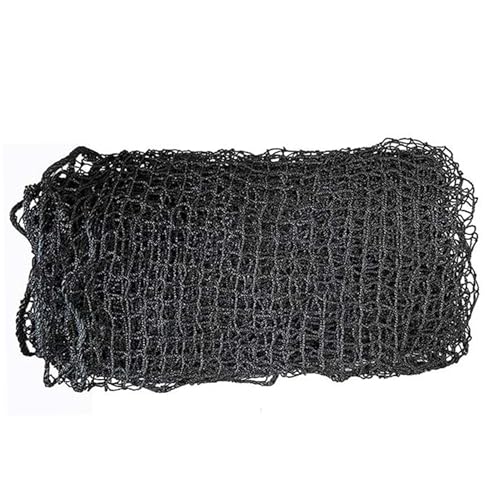
For a straightforward yard barrier, this black net measures 236 by 118 inches and is described for use with multiple common ball types. Its chemical-fiber construction is lightweight, and the setup is adjustable, which can help when adapting it to a household outdoor space. The maker says the material is designed to resist wear from regular outdoor activity. This option suits buyers who want a flexible net rather than a complete frame system; plan a secure installation and keep the mesh clear of snagging objects.
Bottom line: Choose this for adjustable coverage around a household practice area.
MR Ball Stop Net System, 30 × 12 ft

Unlike the standalone netting, this 30-by-12-foot system offers a portable freestanding setup or a socketed setup, with a quick-switch design the maker says takes less than five minutes to adjust. The maker describes it for multiple sports and flat indoor or outdoor surfaces. Its larger stated span suits a broad practice zone or buyers who want the net to move between locations. The specifications do not identify its net material, so prioritize the coverage and setup options when comparing it with standalone netting.
Bottom line: Pick this when a larger span and changeable setup matter most.
Football Garden Net, 236 × 118 in

This black chemical-fiber net is a lightweight option for outdoor garden, yard, lawn, or court use, with adjustable setup options and a 236-by-118-inch size in its name. The maker says the material is designed to resist wear from regular outdoor activity. The product is best suited to buyers who want netting to position around a practice space without selecting a separate multi-mode system. It calls for secure installation, and the mesh should be kept away from objects that could snag or tear it.
Bottom line: Choose this for lightweight, adjustable netting in an outdoor practice space.
How to choose a ball stop net for a fence
Start with the opening you need to cover, then compare net dimensions with the available mounting space. Measure the width and height of the ball path, including the area above the fence where a high kick or shot may travel. A net should extend beyond the likely path rather than end exactly at the fence line; side gaps can let balls escape. For orientation, 236 by 118 inches is about 19.7 by 9.8 feet, while 30 by 12 feet gives a wider span. A 30-foot setup makes more sense for a broad practice area; the smaller dimensions suit a more contained yard zone. Decide where poles, anchors, or sockets can go before selecting a setup style.
Anchoring and placement around a yard
Secure anchoring matters more than a tight-looking mesh: wind can load a large net like a sail, and an inadequately supported structure can tip or pull loose. Keep the net away from tree branches, sharp fence edges, and other snag points that can tear mesh under tension. Leave enough space behind the net for its supports and any movement required by a freestanding frame. Avoid placing stakes where underground utilities may run; call 811 before digging in the United States. Never let a net obstruct a driveway, walkway, gate, or emergency exit. If the installation sits near a property boundary, confirm that its supports remain on your side and do not damage the fence.
Netting versus a framed ball stop system
Standalone netting is primarily a barrier; a framed system adds a supporting structure and may offer more than one setup mode. The frame and anchoring method affect footprint, mobility, and where the unit can be used. The following comparison separates the options so the intended scale and setup are easy to assess.
| Need | Choose | Reason |
|---|---|---|
| Compact yard barrier | 236 × 118 in net | Specified net dimensions fit a smaller span than the 30-foot system. |
| Broader practice span | 30 × 12 ft system | Its width is 30 feet, with freestanding or socketed setup. |
Net dimensions describe the coverage, not necessarily the footprint after supports, ropes, or stakes are installed. Leave room for those components, and do not assume a net will stay upright without proper anchoring. For a freestanding structure, check the available surface and clearance before setting it up.
Safe use and seasonal care
Inspect the mesh, seams, poles, and attachment points before each practice session; a tear or loose anchor can turn a barrier into an unreliable one. Stop using a net with damaged mesh or unstable supports until repaired. Remove or secure outdoor netting during strong wind and severe weather, especially where the structure is not permanently anchored. After rain, allow netting to dry before storage to reduce mildew risk, and store it away from sharp tools or edges. Keep children from climbing or swinging on the net, since sports netting is not a play structure. When moving a frame, lower or disassemble it as intended rather than dragging a tensioned structure across hard surfaces.
Frequently Asked Questions
How do I measure the space for a ball stop net?
Measure the width and height of the path where balls pass over the fence, then allow extra coverage at the sides and above that path. Include room for anchors, poles, and any support ropes beyond the net dimensions.
Can a ball stop net stay outside year-round?
Outdoor netting can be exposed to sun, rain, and wind, but severe weather can stress both mesh and supports. Inspect attachment points regularly and take down or secure a movable setup before strong winds.
How do I keep a yard net from tipping in wind?
Use the intended anchors or sockets and secure every support point; a large net catches wind like a sail. Do not use a freestanding system if its supports cannot sit securely on the available surface.
What should I do if the net develops a tear?
Stop using a torn net until the damage is repaired or the net is replaced, because balls can pass through the opening and tension may worsen the tear. Check seams and attachment points along with the mesh.
How much space should be behind a ball stop net?
Leave enough room for the supports, anchors, and ropes to fit without blocking a walkway, gate, driveway, or emergency exit. The needed clearance depends on the setup footprint, so measure the support area before installation.