
Best Non-Slip Rugs for Dogs: 4 Types Compared

OLANLY Chenille Dog Door Mat, 48 x 30 in. suits most dog owners who want an entry mat because its 48-by-30-inch chenille surface is the largest absorbent door mat here. Choose 12-ft Textured Non-Slip Runner for a long hallway, Smiry Chenille Dog Door Mat, 30 x 20 in. for a compact doorway, or Ophanie Shaggy Rug, 2 x 3 ft. for a small soft area rug; the right choice depends on where it must stay put and what kind of mess it needs to catch.
We earn a commission if you buy through links on this page. As an Amazon Associate I earn from qualifying purchases. Products are compared on manufacturer specifications, not hands-on testing.
- Best overall: OLANLY Chenille Dog Door Mat, 48 x 30 in. – Its 48-by-30-inch chenille mat offers a larger paw-cleaning area than the other entry mats.
- Best for hallways: 12-ft Textured Non-Slip Runner – The runner measures 31.2 by 144 inches and has silicone backing.
- Best for a bedside spot: Ophanie Shaggy Rug, 2 x 3 ft. – The 2-by-3-foot rug has a shaggy surface and anti-slip dots underneath.
| Product | Best for | Size | Surface | Grip | Shop |
|---|---|---|---|---|---|
| OLANLY Chenille Dog Door Mat, 48 x 30 in. | Large entryways | 48 x 30 in. | Chenille | Non-slip | Check Price on Amazon |
| Smiry Chenille Dog Door Mat, 30 x 20 in. | Small doorways | 30 x 20 in. | Chenille | Non-slip | Check Price on Amazon |
| 12-ft Textured Non-Slip Runner | Long hallways | 31.2 x 144 in. | Woven polyester | Silicone backing | Check Price on Amazon |
| Ophanie Shaggy Rug, 2 x 3 ft. | Soft small spaces | 2 x 3 ft. | Polyester shag | Anti-slip dots | Check Price on Amazon |
Non-Slip Rugs for Dogs
Match the rug’s footprint and surface to the place your dog walks in most.
OLANLY Chenille Dog Door Mat, 48 x 30 in.

OLANLY Chenille Dog Door Mat, 48 x 30 in. is the largest entry mat in this group, with a 48-by-30-inch footprint for a wider landing area. The dense chenille surface is designed to absorb moisture and catch dirt, and the mat is machine washable. Its chenille is OEKO-TEX STANDARD 100 certified. This is a practical fit for an entry where wet paws and tracked-in grit are the main concern. The one-inch height may matter at a doorway with little floor clearance, so measure the gap before placing it there.
Bottom line: Choose it for a broad indoor entry where a larger absorbent mat matters.
Smiry Chenille Dog Door Mat, 30 x 20 in.

Smiry Chenille Dog Door Mat, 30 x 20 in. takes up less floor space than the larger chenille entry mat, measuring 30 by 20 inches. Its chenille surface is designed to absorb moisture and trap dirt, and the mat is washable and quick-drying. The smaller footprint suits a narrow doorway or a spot where a large mat would obstruct foot traffic. It has a one-inch height, so check that a low door clears it. Its compact coverage is the trade-off: dogs with muddy paws may step beyond its edges.
Bottom line: Pick it for a tight entry where compact coverage is more useful than a wide landing area.
12-ft Textured Non-Slip Runner
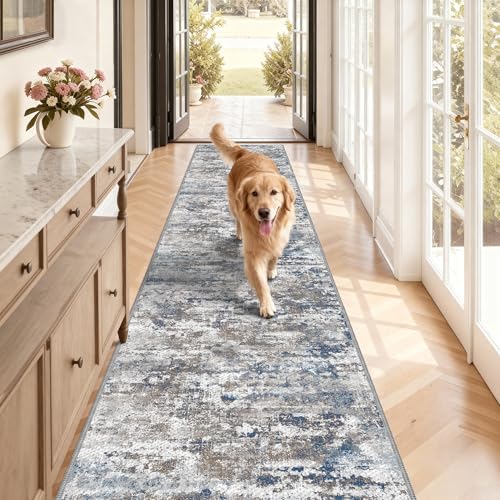
12-ft Textured Non-Slip Runner is the long-format choice, measuring 31.2 by 144 inches for a hallway or entry run. Its no-pile woven polyester construction is intended to make dirt easier to clear, while the silicone backing is designed to resist sliding. The low-profile surface can be easier to walk across than a shaggy rug, and the long shape covers more of a narrow path. The dimensions are notably different from the separate height figure, so verify the rug’s thickness before using it near a door.
Bottom line: Choose it when a long, narrow path needs coverage rather than a small paw mat.
Ophanie Shaggy Rug, 2 x 3 ft.

Ophanie Shaggy Rug, 2 x 3 ft. is a small area rug rather than a dedicated paw-trapping entry mat, with a 2-by-3-foot shaggy polyester surface and a sponge interlayer. Small anti-slip dots on the underside are intended to add friction on the floor. Its soft texture suits a bedside or cozy indoor spot where a dog may lie down. The shag is less suited to capturing muddy paws than the chenille door mats or the flat runner, so choose it for comfort and a small footprint rather than heavy entry mess.
Bottom line: Pick it for a small, soft resting spot where a shag surface is welcome.
How to choose a non-slip dog rug
Choose by the main job: a paw-catching entry mat needs absorbency, while a hallway rug needs enough length and stable backing. Measure the clear floor area, including the space a door needs to swing; leave the door’s full path unobstructed. For a long route, a runner about 2.5 feet wide can cover a narrow passage, while a small doorway may suit a 30-by-20-inch mat. Low or no-pile surfaces are generally easier to clear of grit than shag, while deeper fibers feel softer but can hold debris. On smooth flooring, press down the rug and check that its corners stay flat before letting a dog run across it.
Which rug surface works for muddy paws
Chenille door mats are designed to absorb moisture and catch dirt at an entry, making them a sensible choice when wet paws are the recurring problem. A flat or no-pile runner is easier to sweep or vacuum when the main issue is grit along a hallway. Shag rugs emphasize a cushioned feel, but longer fibers can make loose dirt less visible and harder to remove. A useful decision rule is to choose a washable, absorbent mat where paws first enter, and reserve a softer small rug for a cleaner resting area. Damp rugs can become slick; let them dry fully before placing them back on smooth floors.
How to prevent slipping and tripping
A rug that shifts or curls can create a trip hazard for people and a slipping risk for dogs. Backing and rug size both matter: select a mat that lies flat on the actual floor surface, then check its edges after vacuuming or laundering. For a runner, avoid a length that bunches against a doorway or cabinet; trim the covered route by choosing a shorter rug if there is no clear run. Keep loose corners out of walking paths and reposition a mat that slides when pushed by hand. Even a rug sold as non-slip should be checked periodically, because dust beneath it can reduce friction.
How to clean and maintain dog rugs
Regularly shake or vacuum rugs to remove hair, grit and dry debris before it gets ground into the fibers. Washable entry mats are useful for recurring mud, but follow the care label and let the mat dry completely before returning it to the floor. A damp backing can lose grip on smooth surfaces, and moisture trapped beneath a rug can affect the floor. For a runner or shag rug, remove visible dirt promptly and check seams and corners for curling as the rug is cleaned. Keep a separate cleaning cloth nearby for fresh paw prints so you can deal with moisture before it spreads across the floor.
Frequently Asked Questions
What size rug should I get for a dog entryway?
A 30-by-20-inch mat fits a compact doorway, while a 48-by-30-inch mat covers a broader landing area. Measure the floor and door swing first so the mat does not obstruct the doorway.
Are chenille rugs good for muddy dog paws?
Chenille mats are designed to absorb moisture and trap dirt at an entry. For heavy mud, choose a washable mat and let it dry fully before putting it back on a smooth floor.
Is a shag rug safe for dogs to walk on?
A flat rug with stable backing is generally a better choice for a dog that runs or turns sharply indoors. Check the edges for curling and make sure the rug does not slide when pushed by hand.
How often should I clean a dog rug?
Remove loose hair and grit regularly, and clean the rug when visible dirt or moisture accumulates. Dry it completely before returning it to smooth flooring, since a damp underside may slip.
Do non-slip rugs need extra backing?
A rug’s built-in backing may not grip every floor surface equally well. Test it on the intended floor and use a properly sized rug pad if it shifts, ensuring the pad does not extend past the rug edges.