
Best Toothpaste for Reversing Cavities: 3 Compared

For adults considering a fluoride-free hydroxyapatite toothpaste, CAREDO Cavity Reversal Toothpaste is the clearest match because its maker targets early-to-moderate cavities and weakened enamel. Toothpaste may help remineralize early enamel changes, but it cannot close a hole; anyone with pain, a visible cavity or persistent sensitivity should see a dentist rather than rely on a reversal claim.
Choose a fluoride toothpaste if your priority is the established cavity-prevention approach: these three formulas are fluoride-free.
We earn a commission if you buy through links on this page. As an Amazon Associate I earn from qualifying purchases. Products are compared on manufacturer specifications, not hands-on testing.
- Best overall: CAREDO Cavity Reversal Toothpaste – Its maker specifically targets adults with early-to-moderate cavities and weakened enamel.
- Best for sensitivity claims: Dr. Glow Adult Cavity Repair – The maker pairs hydroxyapatite with a sensitivity-reduction claim.
- Best for a larger stated tube size: CAREDO Cavity Repair, New Flavor – The product states a 100 g tube size and recommends use for three months or longer.
| Product | Best for | Tube size | Shop |
|---|---|---|---|
| CAREDO Cavity Reversal Toothpaste | Early enamel concerns | 3.5 oz | Check Price on Amazon |
| Dr. Glow Adult Cavity Repair | Sensitivity concerns | 3.52 oz | Check Price on Amazon |
| CAREDO Cavity Repair, New Flavor | Long-term routine | 3.52 oz (100 g) | Check Price on Amazon |
Toothpaste for Reversing Cavities
These three adult toothpastes use hydroxyapatite and are fluoride-free; compare their focus and size before choosing.
CAREDO Cavity Reversal Toothpaste

CAREDO Cavity Reversal Toothpaste is the most specifically aimed at adults with early-to-moderate cavities, recurring decay, weakened enamel and cavity-related sensitivity. Its formula uses hydroxyapatite, and the tube is 3.5 ounces. The maker says continued daily use helps restore minerals and strengthen enamel; that is a product claim, not a guarantee that a cavity will disappear. This may suit an adult who wants a fluoride-free option for early enamel concerns. Its main limitation is that fluoride-free toothpaste does not provide fluoride, so it is not the match for someone seeking a fluoride formula or treatment for a formed cavity.
Bottom line: Choose this if you want a fluoride-free hydroxyapatite toothpaste aimed at early enamel concerns.
Dr. Glow Adult Cavity Repair

Dr. Glow Adult Cavity Repair stands out for explicitly pairing its hydroxyapatite formula with a sensitivity-reduction claim. The adult toothpaste comes in a 3.52-ounce tube and is fluoride-free. Its maker says it is intended to support remineralization and recommends three to ten consecutive months for its cavity-reversal goal; those are maker claims, not evidence that a cavity can be filled by brushing. This option may interest adults whose main concern is sensitivity alongside early enamel changes. It is not a substitute for a dental exam, particularly when sensitivity is persistent, worsening or localized to one tooth.
Bottom line: Choose this if sensitivity is part of your concern and you want a fluoride-free hydroxyapatite formula.
CAREDO Cavity Repair, New Flavor
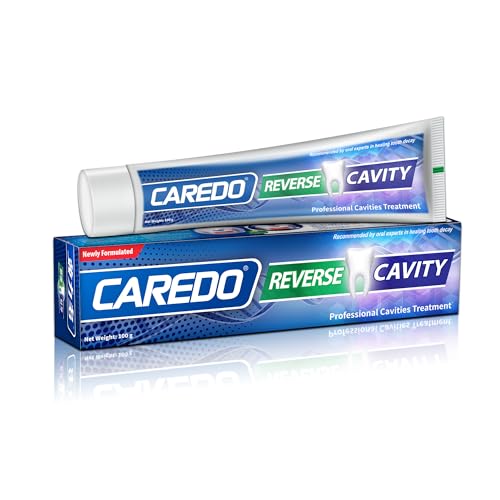
CAREDO Cavity Repair, New Flavor is the CAREDО option whose product name specifies a new flavor and a 100-gram tube, equivalent to about 3.52 ounces. Like the other two, it is fluoride-free and uses hydroxyapatite. The maker recommends regular use for three months or longer before visible improvement; that timeline is a product claim, not a reliable way to determine whether decay has stopped. It may suit an adult looking for a longer-term fluoride-free routine. The limitation matters if a cavity is already visible or painful: waiting for toothpaste results can delay needed dental care.
Bottom line: Choose this for the 100 g tube and a fluoride-free routine.
How to choose toothpaste for early cavities
For cavity prevention, choose a fluoride toothpaste rather than assuming a “cavity reversal” label means a hole can be repaired. The ADA recommends brushing twice daily with fluoride toothpaste; fluoride supports remineralization of early enamel changes, while a formed cavity generally needs dental treatment. These three options are hydroxyapatite formulas and are fluoride-free, so they do not match that fluoride-based choice. A useful decision rule is simple: if you see a hole, have tooth pain, or have sensitivity that persists, arrange a dental exam instead of waiting months for a toothpaste result. Hydroxyapatite is a mineral used in enamel-focused products, but the product claims here do not establish that any formula reverses a cavity.
Early enamel changes versus a cavity
Early enamel demineralization can sometimes be remineralized, but a cavity that has broken through the enamel cannot be regrown by toothpaste. White or chalky spots may signal early changes, yet appearance alone cannot reliably tell how deep decay has progressed. A dentist can assess the tooth and decide whether monitoring, fluoride treatment, or a filling is appropriate. For adults, twice-daily brushing and daily cleaning between teeth help reduce plaque exposure; sugary snacks and frequent sipping increase the number of acid attacks teeth face. Do not treat the makers’ suggested multi-month timelines as a reason to postpone care for a visible hole, worsening pain, swelling or sensitivity in one tooth.
Hydroxyapatite and fluoride compared
Fluoride toothpaste is the established everyday recommendation for cavity prevention, while hydroxyapatite toothpaste is a distinct fluoride-free approach found in the three products here. Both ingredient names refer to mineral-based approaches, but the evidence and accepted recommendations are not interchangeable. The table shows what these products offer at a glance; it does not imply any formula can repair a formed cavity.
| Need | Choice | Reason |
|---|---|---|
| Everyday cavity prevention | Fluoride toothpaste | ADA recommendation for twice-daily brushing |
| Fluoride-free hydroxyapatite option | One of these three | All are hydroxyapatite and fluoride-free |
| Visible hole or ongoing pain | Dental evaluation | Toothpaste cannot regrow a cavitated area |
Brushing habits that protect teeth
Brush for two minutes twice a day with a soft-bristled toothbrush, covering the outer, inner and chewing surfaces of every tooth. Use gentle pressure; hard scrubbing can irritate gums and wear tooth surfaces without improving cleaning. Clean between teeth once a day with floss or an interdental cleaner because a toothbrush does not reach tight spaces well. After brushing with fluoride toothpaste, spit rather than rinsing immediately so less fluoride is washed away. Keep regular dental visits because decay between teeth or under an existing filling may not be visible at home. Tooth sensitivity that lasts more than a few days, or pain on biting, warrants a dental check rather than a change in toothpaste alone.
Frequently Asked Questions
Can toothpaste reverse a hole in a tooth?
No toothpaste can regrow tooth structure after decay forms a hole. Early enamel demineralization may be remineralized, but a dentist must assess a visible cavity and determine treatment.
Does hydroxyapatite toothpaste contain fluoride?
Hydroxyapatite and fluoride are different ingredients, and the three formulas here are fluoride-free. If you want fluoride for cavity prevention, choose a toothpaste that lists fluoride as an active ingredient.
How often should adults brush to prevent cavities?
Adults should brush twice daily for two minutes with fluoride toothpaste for routine cavity prevention. Cleaning between teeth once a day helps reach areas a toothbrush misses.
When should tooth sensitivity be checked by a dentist?
Arrange a dental check if sensitivity persists, worsens, affects one tooth or comes with pain on biting. A persistent symptom can have causes toothpaste alone cannot address.
Are white spots on teeth always cavities?
No; a white or chalky spot can reflect an early enamel change, but appearance at home cannot show how far decay has progressed. A dentist can examine the area and advise whether treatment or monitoring is appropriate.