
Best Nose Contour Brush: 5 Styles Compared

2-in-1 U-Shaped Nose Contour Brush Set suits most people because its U-shaped end is made for drawing nose contour lines and its fluffy end is intended for blending. Choose another brush if you want a single, small angled head for more targeted control; nose contour brushes are compact tools for placing and softening shading around the bridge and tip.
We earn a commission if you buy through links on this page. As an Amazon Associate I earn from qualifying purchases. Products are compared on manufacturer specifications, not hands-on testing.
- Best overall: 2-in-1 U-Shaped Nose Contour Brush Set – Combines a U-shaped contour end with a fluffy blending end and an additional angled brush.
- Best for angled detail: Albeaut 190 Angled Shader Brush – Its firm angled head is intended for straight bridge lines and blending.
- Best for dense buffing: ENERGY 270 Mini Angled Flat-Top Kabuki – The small angled head is described as a dense kabuki-style brush for pressing and blending.
- Best for powder shading: Piccasso 201 Nose Shading Brush – Its small angled shape and squirrel-hair bristles are described for soft powder blending.
| Product | Best for | Head style | Bristle material | Shop |
|---|---|---|---|---|
| 2-in-1 U-Shaped Nose Contour Brush Set | Lines and blending | U-shaped, fluffy, angled | Nylon | Check Price on Amazon |
| Albeaut 190 Angled Shader Brush | Angled precision | Angled shader | — | Check Price on Amazon |
| ENERGY 270 Mini Angled Flat-Top Kabuki | Dense blending | Mini angled flat-top | — | Check Price on Amazon |
| Piccasso 201 Nose Shading Brush | Soft powder shading | Small angled | Gray squirrel hair | Check Price on Amazon |
| TEOYALL 370S Small Angled Brush | Synthetic fibers | Mini tilted | Synthetic fibers | Check Price on Amazon |
Nose Contour Brushes Compared
Compare the head shapes and materials to find a brush suited to your contour placement and blending style.
2-in-1 U-Shaped Nose Contour Brush Set

Unlike the single-head brushes here, this set pairs a U-shaped contour end with a fluffy blending end and an angled flat brush. The maker says the nylon bristles are soft and smooth, and that the angled brush works with cream, liquid and powder formulas. The combination suits someone who wants separate tools for shaping and softening. The U-shaped head may feel less adaptable than a conventional angled brush if you prefer to control each side of the nose independently.
Bottom line: Choose this set if you want dedicated heads for contour placement and blending.
Albeaut 190 Angled Shader Brush

This brush stands out for its firm angled head, intended to lay down straight lines along the nose bridge before blending. The maker also describes it as a tool for small-area powder application and brow-bone highlighting. Its 6.1-inch length and narrow 0.4-inch width make it a compact single-brush option. The limitation is its powder-focused description, so choose another option if you want an explicitly multi-formula brush or a separate fluffy blending head.
Bottom line: Pick this brush for a single angled head focused on controlled powder placement.
ENERGY 270 Mini Angled Flat-Top Kabuki
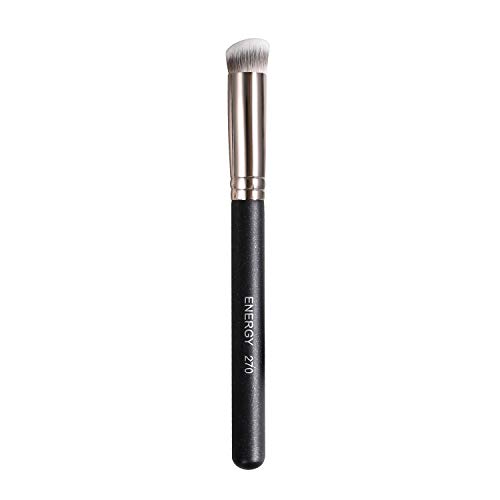
The ENERGY 270 is distinguished by its dense, small angled kabuki-style head, rather than a slim, soft-shading shape. The maker describes it for pressing setting powder and blending liquid or cream foundation, concealer and base makeup around small areas. That broad complexion use may suit someone who wants a nose brush that can also buff nearby makeup. Its wider concealer and foundation focus makes it less specialized for drawing a very narrow contour line.
Bottom line: Choose it if dense pressing and blending matter more than a fine contour edge.
Piccasso 201 Nose Shading Brush
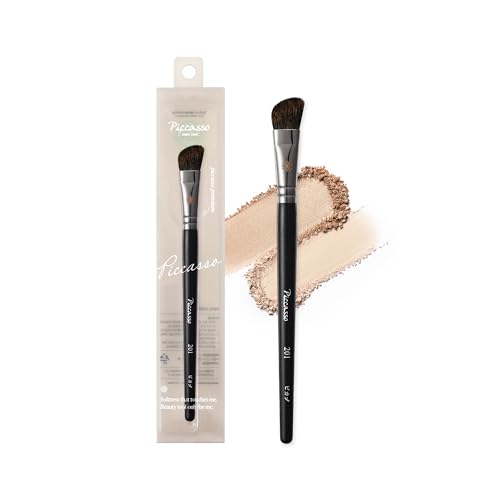
Unlike the synthetic-fiber and multi-purpose options, the Piccasso 201 uses gray squirrel hair and is framed as a powder shading brush. Its small angled head is intended for narrow areas such as the nose bridge, tip and sides, with soft blending for less pronounced edges. It suits powder contour and detailed shading. This is not the clearest choice for cream or liquid products, since its use centers on powder pickup and blending.
Bottom line: Pick this brush for a small angled head geared toward soft powder shading.
TEOYALL 370S Small Angled Brush

The TEOYALL 370S differs from the powder-focused natural-hair option by using synthetic fibers and a mini tilted head. The maker describes it for nose and brow-bone contouring, and says the fibers are soft and cruelty-free. Its wooden handle has a black finish, and the maker says the brush can be cleaned regularly without losing its shape. The brush is also positioned for under-eye concealer, so it is a multitask choice rather than a nose-only tool.
Bottom line: Choose it if you prefer synthetic fibers in a small multitasking brush.
How to Choose a Nose Contour Brush
Choose by the balance you want between line control and blending: a narrow angled head gives more placement control, while a fuller or denser head softens edges more readily. A two-ended set can separate those jobs; a single angled brush keeps the tool simple. Powder brushes with natural hair are commonly chosen for diffused powder pickup, while synthetic fibers are often selected for cream and liquid products. Match the tool to the formula you actually use rather than assuming every brush works equally well with every texture. For a very narrow bridge, start with the smallest angled head you can control, then blend with light strokes; if the head spans the bridge, use less product to avoid broad stripes.
How to Apply Nose Contour Without Harsh Lines
Keep the contour close to the sides of the bridge and build it with thin, light passes rather than one dark stripe. A common makeup guideline is to use a matte contour shade about one or two shades deeper than the surrounding skin; undertone and lighting affect how strong that contrast appears. Place a small amount on the brush first, then blend the outer edge while keeping the center of the bridge clean if you want it to appear brighter. Avoid dragging product across the entire nose tip unless that is the shape you intend to create. Makeup brushes used around the eyes and nose should not be shared, and should be cleaned regularly to limit product and oil buildup.
Nose Brush Shapes and Their Best Uses
Brush shapes change how much area a single stroke covers: narrow angled heads target a side line, fluffy heads diffuse color, and dense flat tops press and buff product. U-shaped heads are designed to guide application along both sides at once, but they may offer less independent control than two separate strokes. Use this quick guide to match the shape to the job; it describes general brush functions, not guaranteed results.
| Brush shape | Useful for | Tradeoff |
|---|---|---|
| Small angled | Controlled side shading | Needs separate blending |
| Fluffy | Softening edges | Less precise placement |
| Dense flat-top | Pressing and buffing | May cover too broad an area for a fine line |
| U-shaped | Guided paired lines | Less independent side-to-side control |
Cleaning and Caring for a Nose Contour Brush
Clean a brush used daily about once a week, and clean it sooner if product buildup makes the bristles clump or feel stiff. Use lukewarm water and a mild brush cleanser or soap, keeping water away from the ferrule where the bristles join the handle. Rinse until the water runs clear, reshape the head, and dry the brush flat with the bristles extending beyond a counter edge; standing a wet brush upright can let water loosen the handle joint. Natural-hair bristles can be more delicate than synthetic fibers, so avoid twisting or pulling them during washing. A brush that sheds heavily or has a damaged head is harder to use precisely and should be replaced.
Frequently Asked Questions
How small should a nose contour brush be?
A small head is easier to control along a narrow bridge than a broad face brush. Choose a head narrow enough to place shading without covering the center of the nose, and use light passes if the brush still spans the area.
Can I use one brush for cream and powder contour?
Synthetic brushes are commonly used with cream and liquid products, while natural-hair brushes are often chosen for powder. If you use one brush across formulas, remove residue before switching so leftover cream does not disturb powder.
How often should I wash a nose makeup brush?
Wash a brush used daily about once a week, or sooner when residue builds up between bristles. Dry it flat after rinsing so water does not collect near the handle joint.
Should nose contour be matte or shimmery?
Matte contour is the usual choice for creating a shaded appearance because shimmer reflects light rather than mimicking shadow. Reserve shine for areas you intend to highlight, such as the center of the bridge.
How do I avoid stripe marks from nose contour?
Apply a small amount in light strokes and blend the outer edges before adding more. A shade around one or two steps deeper than the surrounding skin is a common starting point, but undertone and lighting change the visible contrast.