
Best Organic Celtic Sea Salt: 4 Options Compared

Le Marinier Organic Fine Celtic Salt is the best fit for most cooks seeking organic Celtic sea salt because it is labeled organic, finely ground, and sized at 18 ounces. Choose Sante Naturelle Organic Fine Celtic Salt if you prefer its alternative French-harvested fine salt; choose a non-organic-labeled option if coarse crystals or a 1-pound package matters more.
Sea salt is made by evaporating seawater; its grain size affects how quickly it dissolves and how easily you measure it.
We earn a commission if you buy through links on this page. As an Amazon Associate I earn from qualifying purchases. Products are compared on manufacturer specifications, not hands-on testing.
- Best overall: Le Marinier Organic Fine Celtic Salt – Its organic label, fine grind, and 18-ounce size suit everyday cooking and baking.
- Best alternative fine salt: Sante Naturelle Organic Fine Celtic Salt – It is another fine-ground French sea salt labeled organic and comes in an 18-ounce package.
- Best for coarse crystals: Celtic Sea Salt Light Grey Coarse – Its light-grey coarse crystals suit cooks who want a larger grain for finishing.
| Product | Best for | Grind | Package size | Harvest origin | Shop |
|---|---|---|---|---|---|
| Le Marinier Organic Fine Celtic Salt | Everyday cooking | Fine | 18 oz | French ocean marshes | Check Price on Amazon |
| Sante Naturelle Organic Fine Celtic Salt | French sea salt | Fine | 18 oz | French ocean marshes | Check Price on Amazon |
| Celtic Sea Salt Light Grey Coarse | Coarse finishing | Coarse | 16 oz | — | Check Price on Amazon |
| Celtic Sea Salt Fine Ground | Daily fine seasoning | Fine | 16 oz | — | Check Price on Amazon |
Organic Celtic Sea Salt Compared
Compare the grind, package size, and sourcing claims to find a salt that suits your cooking habits.
Le Marinier Organic Fine Celtic Salt
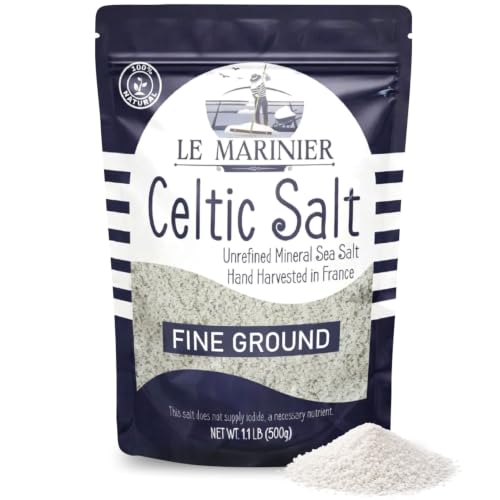
For a fine-ground option labeled organic, Le Marinier Organic Fine Celtic Salt pairs a French ocean-marsh harvest claim with an 18-ounce package. The maker describes it as unrefined and additive-free, and says the crystals form as sun and wind evaporate seawater. Fine grains disperse readily through batters, sauces, and seasonings, making this a practical choice for everyday recipes. The organic wording is part of the product name, but the fields do not establish a certification; check the package for the certification or labeling you require. This is not the pick for cooks seeking coarse crystals.
Bottom line: Choose it for fine grains and an organic label for everyday cooking.
Sante Naturelle Organic Fine Celtic Salt

Sante Naturelle Organic Fine Celtic Salt is another fine-ground, French-harvested salt labeled organic, with an 18-ounce package and a naturally slightly moist texture. Its maker says it is unrefined and hand-harvested using a traditional method. The fine grind works well when a recipe calls for salt distributed evenly rather than crystals sprinkled on top. The product name uses organic wording, but the fields do not establish a certification, so verify the package if a specific organic standard matters to you. Its fine texture makes it less suited to a coarse-grain finishing role.
Bottom line: Pick it if you want a fine French sea salt with an organic label.
Celtic Sea Salt Light Grey Coarse

Unlike the fine-ground organic-labeled choices, Celtic Sea Salt Light Grey Coarse is a light-grey coarse salt in a 1-pound package. The product name describes whole crystals as hand-harvested and unrefined, while the features mention coarse ground salt. Larger grains are useful when you want a distinct crystal texture on food, but they are less convenient for recipes that need salt to dissolve or distribute evenly. This option is not labeled organic in the specifications, so it is a partial fit for an organic-specific search. Choose it for grain size, not an organic label.
Bottom line: Choose it for coarse crystals when organic labeling is not your priority.
Celtic Sea Salt Fine Ground
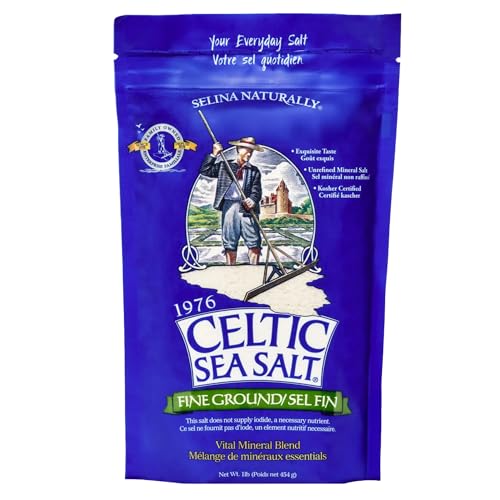
Celtic Sea Salt Fine Ground offers a fine grind for cooking, baking, and seasoning in a 1-pound package, but its product name does not label it organic. The maker describes the salt as hand-harvested, unrefined, and free from additives, and says it is lab tested. Fine grains spread more evenly through doughs and sauces than coarse crystals, making this a straightforward kitchen option if organic labeling is not essential. For a shopper who specifically wants organic Celtic sea salt, the missing organic claim is the key limitation; compare the package label before treating it as a match.
Bottom line: Pick it for fine everyday seasoning if organic wording is not required.
How to choose organic Celtic sea salt
Start with the grain size and the label claim: fine salt suits recipes, while coarse salt adds a more noticeable crystal texture. Salt is sodium chloride regardless of whether it is sea salt or mined salt, and trace minerals in sea salt do not make it a reliable mineral supplement. If “organic” is essential, inspect the package for the exact certification or labeling standard you expect rather than relying on a product name alone. For everyday recipe measuring, choose fine grains; for a finishing pinch, choose coarse grains. Also check whether the recipe specifies kosher salt, because crystal size and packing can change how much salt fits in a teaspoon.
Fine versus coarse Celtic sea salt
Fine salt disperses more evenly in doughs, sauces, and seasoning blends, while coarse crystals remain distinct on the surface of food. Volume measurements are not interchangeable across grain sizes: a teaspoon of fine salt generally contains more salt by weight than a teaspoon of large crystals. For repeatable baking, use a scale and weigh the salt in grams rather than swapping spoon measures between grinds. This comparison includes three fine options and one coarse option, so choose based on how the salt will be used rather than the mineral wording on the package.
The table gives a quick use-based choice.
| Need | Grain to choose | Why |
|---|---|---|
| Baking or mixing into sauces | Fine | Disperses readily |
| Visible finishing crystals | Coarse | Leaves a distinct texture |
| Consistent baking measures | Either, weighed | Weight avoids grain-size volume differences |
What organic wording on sea salt means
Read the complete package label when organic status is a requirement: product names alone do not show which certification or standard applies. Check for a certification mark and the wording that accompanies it, and confirm that the salt itself—not just an ingredient or brand—is covered. A sea salt’s harvesting method, unrefined status, and lack of additives are separate claims; none alone establishes organic certification. If the label does not meet your requirement, choose another product rather than assuming that French origin or hand harvesting guarantees a standard.
Salt use and sodium portions
Salt contributes sodium, so portion size matters even when the salt is unrefined or marketed for its minerals. The FDA’s Daily Value for sodium is less than 2,300 mg per day for adults and children ages 14 and older; individual needs can differ, especially when a clinician has set a target. Use a measuring spoon or kitchen scale instead of salting by eye when a recipe needs consistency. Sea salt should not be treated as an electrolyte supplement: the product claims about trace minerals do not replace a balanced diet or medical guidance. Keep salt dry and sealed to limit clumping, particularly with naturally moist crystals.
Frequently Asked Questions
Is Celtic sea salt the same as table salt?
Both are primarily sodium chloride, but their processing, crystal size, and added ingredients can differ. Many table salts are iodized, so check the package if dietary iodine is a consideration.
Does sea salt contain enough minerals to replace supplements?
No; trace minerals in sea salt do not make it a dependable mineral supplement. Choose foods or supplements for a specific nutrient need with guidance from a qualified health professional.
Can fine sea salt replace coarse salt in baking?
Yes, but do not swap equal spoonfuls blindly because fine grains pack more densely. Weigh the salt in grams when adapting a recipe for consistent results.
How should I measure coarse salt in a recipe?
Use the recipe’s specified weight when available, since a teaspoon of coarse crystals can contain less salt than a teaspoon of fine grains. If only a volume measure is given, use the specified grain size or adjust cautiously to taste.
Does organic sea salt have less sodium?
Organic wording does not indicate lower sodium; sea salt remains primarily sodium chloride. Compare serving sizes and sodium amounts on the package if tracking sodium intake.