
Best Outrigger Clips for Fishing: 5 Models Compared

For most trolling setups, the AFTCO FL1B is the strongest fit because its roller and micro-tension adjustment address line movement and release control. Choose a different clip if you need a pair, a wide tension range, or a mirrored port-and-starboard setup.
Outrigger clips hold the fishing line out in a trolling spread and release it when a fish strikes.
We earn a commission if you buy through links on this page. As an Amazon Associate I earn from qualifying purchases. Products are compared on manufacturer specifications, not hands-on testing.
- Best overall: AFTCO FL1B Flatline Clip – The stainless steel roller and micro-tension adjustment combine line guidance with fine release tuning.
- Best for mirrored riggers: R&R Tackle R2 Outrigger Clips – The set includes mirrored port and starboard clips and a synthetic tension screw.
- Best for broad tension adjustment: BLUEWING Zirconia Outrigger Clips – Its adjustable release range is given as 1–60 lb.
| Product | Best for | Tension adjustment | Construction / guide | Shop |
|---|---|---|---|---|
| AFTCO FL1B Flatline Clip | Fine adjustment | Micro-tension | Stainless steel roller | Check Price on Amazon |
| R&R Tackle R2 Outrigger Clips | Mirrored riggers | Fine-thread adjustment; 25 lb+ retention | Polymer; stainless arm | Check Price on Amazon |
| BLUEWING Zirconia Outrigger Clips | Wide tension range | Adjustable, 1–60 lb | Zirconia ceramic; POM | Check Price on Amazon |
| Rupp Nok-Outs Release Clips | One-hand operation | — | Roller guide | Check Price on Amazon |
| Adjustable Flat Line Release Clips, 2-Pack | Multi-purpose use | Adjustable | Nylon | Check Price on Amazon |
Outrigger Clips for Fishing
Compare how each clip handles line guidance, release adjustment and rigging needs.
AFTCO FL1B Flatline Clip
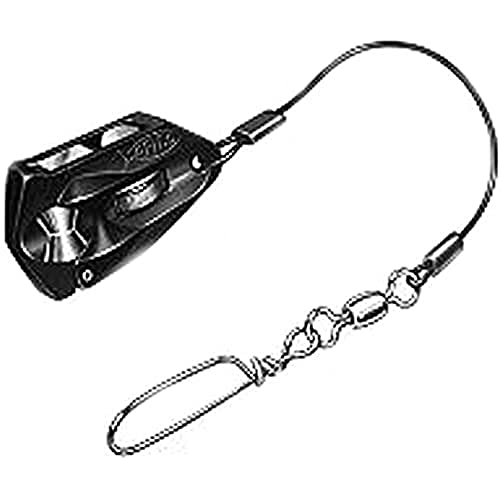
The FL1B pairs a stainless steel roller with micro-tension adjustment, making it a fit for anglers who want to tune release pressure while guiding line over the clip. It also has a heavy-duty snap swivel and an Aflon-treated bearing. At 4 inches in size, it is a compact choice among these options. Its maker gives no numeric release range, so choose it for fine adjustment rather than when a specific pound setting is essential.
Bottom line: Choose this clip if roller guidance and fine tension adjustment matter more than a numeric range.
R&R Tackle R2 Outrigger Clips

The R2 is the option here designed as a mirrored port-and-starboard pair, useful when you want clips oriented for each side of the boat. The set uses a synthetic tension screw with fine threads, a polymer body and a 316 stainless arm; the maker gives retention strength as 25 lb or more. It can also serve for kite or downrigger fishing. That retention figure is not a release-tension adjustment range, so anglers seeking a specific release setting should distinguish the two before choosing.
Bottom line: Choose this pair for mirrored rigger orientation and the 25 lb-or-more retention strength.
BLUEWING Zirconia Outrigger Clips

The BLUEWING pair stands out for its 1–60 lb adjustable tension range, giving anglers a numeric span to work with when setting release pressure. Each clip combines a zirconia ceramic clip and release bead with a UV-resistant reinforced POM housing; the maker also identifies the bead material as silicon nitride ceramic. The broad adjustment range is the key reason to consider it. The product name also calls these downrigger clips, so confirm that their mounting and line path suit your outrigger setup before buying.
Bottom line: Choose this pair when a 1–60 lb adjustment range is the deciding feature.
Rupp Nok-Outs Release Clips

The Rupp Nok-Outs emphasize one-hand operation, which can be useful when handling a trolling spread while managing other gear. A roller guide helps keep the line from chafing at the clip, and the product comes as a pair. The set is made in the United States. Unlike the clips with fine adjustment or a numeric range, the product facts do not give a tension specification, so this is a less suitable pick when you need to match a particular release pressure.
Bottom line: Choose this pair if one-hand operation and a roller guide are priorities.
Adjustable Flat Line Release Clips, 2-Pack

These clips are presented for several release applications—outriggers, fishing kites and downriggers—rather than just one rigging role. The pair uses nylon construction and adjustable tension, with a ball-bearing swivel included in the name. Saltwater and freshwater use are both claimed by the maker.
Bottom line: Choose this pair for adjustable clips intended for multiple fishing applications.
How to Choose Outrigger Clips for Fishing
Match the clip to the release control and line path your trolling spread needs. Outrigger clips hold a line away from the boat until a strike pulls it free; adjustment determines how much pull releases the line. If you need a known setting from 1 to 60 lb, choose a clip that gives that range, and remember that the figure is not automatically the ideal setting for every line or lure. Roller guides can reduce rubbing where line passes through a clip, while fine-thread adjusters allow smaller changes than a simple coarse setting. Start with the lightest tension that keeps your line in position during normal trolling, then increase only if the line releases prematurely.
Outrigger Clip Setup and Line Path
Route each fishing line through its intended clip so the line can release cleanly without wrapping around the outrigger or neighboring lines. A trolling spread commonly uses one release point for each line being held out; paired clips can serve opposite sides, while mirrored clips are specifically oriented for port and starboard. Keep the clip and line path clear of knots, swivels or hardware that could catch during release. Before deploying multiple lines, check the path with the boat stationary and confirm each line can pull free. A rough sea or abrupt boat movement can load a line unexpectedly, so keep people clear of tensioned line and hardware.
Release Tension and Trolling Conditions
Set release tension to hold the line during steady trolling but release under a strike, and treat rod, line, lure or bait, and sea conditions as parts of that balance. Light tackle or small offerings generally call for less holding force than a heavier setup; rough water can also cause premature releases if the clip is set too lightly. Make a small adjustment after a release caused by boat motion rather than jumping immediately to maximum tension. A clip’s retention rating describes how securely the clip stays attached, not necessarily its adjustable release force. For that reason, distinguish retention strength from the tension range before comparing numbers.
Common Outrigger Clip Mistakes
Using a clip outside its intended line path can create tangles or prevent a clean release, even when its tension setting seems appropriate. Avoid routing line over sharp edges, and make sure a roller or guide turns freely before fishing. Saltwater use exposes metal parts to corrosion; rinse salt and debris from clips after a trip and inspect swivels, bearings and adjustment threads before the next outing. Replace a clip if a damaged guide, housing or attachment point compromises secure rigging. Never stand in the path of a loaded fishing line or snap-back hardware, and keep hands clear while tensioning the spread.
Frequently Asked Questions
How does an outrigger clip release a fishing line?
An outrigger clip holds the trolling line at a set point until a fish strike pulls it free. The rod then takes the fish, while the outrigger line remains out of the way; a clear path through the clip helps avoid snags.
How much tension should an outrigger clip use?
Use enough tension to hold the line during steady trolling without preventing a strike from releasing it. Light tackle generally needs less holding force than heavy tackle, and rough conditions may require a small increase if boat motion causes premature releases.
How many outrigger clips do I need for fishing?
Use one clip for each fishing line you intend to hold out on the riggers. A pair supports one line on each side, while larger spreads need additional release points and careful separation to limit crossings.
Can I use downrigger clips on outriggers?
Some clips are marketed for both uses, but the mounting and line path must suit the outrigger rig. A ball-bearing swivel or adjustable tension alone does not establish compatibility; verify the clip can attach securely and release cleanly in that setup.
How should I care for outrigger clips after saltwater use?
Rinse salt and debris off clips with fresh water after fishing, then check moving parts and attachment hardware for corrosion or binding. Pay particular attention to rollers, swivels and tension threads, since restricted movement can interfere with clean line release.