
Best Pen for Signature: 5 Options by Tip and Ink

uniball Zento Signature 0.7 mm Gel Pen suits most people signing everyday documents because its 0.7 mm medium point and black gel ink make a clear, bold line. Choose Kuretake Zig Photo Signature 0.7 mm Set instead for signing photos or transparencies, where permanent, waterproof ink is the deciding feature.
A signature pen is a writing instrument selected for a legible, consistent mark; paper type and line width matter as much as ink feel.
We earn a commission if you buy through links on this page. As an Amazon Associate I earn from qualifying purchases. Products are compared on manufacturer specifications, not hands-on testing.
- Best overall: uniball Zento Signature 0.7 mm Gel Pen – A 0.7 mm medium point and black liquid gel ink suit bold signatures on everyday paper.
- Best for photos: Kuretake Zig Photo Signature 0.7 mm Set – Its 0.7 mm alcohol-based ink is waterproof, permanent and photo-safe.
- Best for fine lines: ZENTO Silver 0.38 mm Ballpoint Pen – The 0.38 mm black-ink tip makes a narrower signature line.
| Product | Best for | Tip width | Ink type | Special use | Shop |
|---|---|---|---|---|---|
| uniball Zento Signature 0.7 mm Gel Pen | Everyday signing | 0.7 mm | Liquid gel | Everyday paper | Check Price on Amazon |
| ZENTO Silver 0.38 mm Ballpoint Pen | Fine signatures | 0.38 mm | Water-based ink | Narrow spaces | Check Price on Amazon |
| ZENTO Metallic Black 0.5 mm Ballpoint Pen | Balanced lines | 0.5 mm | Water-based ink | Everyday paper | Check Price on Amazon |
| Kuretake Zig Photo Signature 0.7 mm Set | Photo signing | 0.7 mm | Alcohol-based dye | Photos, transparencies | Check Price on Amazon |
Pens for Signature Writing
Match the tip width and ink behavior to the paper and signature style you need.
uniball Zento Signature 0.7 mm Gel Pen

uniball Zento Signature 0.7 mm Gel Pen stands out for its medium 0.7 mm point and wide ergonomic grip, a combination suited to a bold, controlled signature on everyday paper. Its black proprietary liquid gel ink is described by the maker as smooth-flowing, and the champagne metallic body has a magnetic cap and clip. The single pen is a straightforward choice for people who want an expressive line rather than a fine, compact mark. A broader point takes up more room than a fine tip, so choose another option if your signature must fit a narrow field.
Bottom line: Choose this for a confident, medium-width signature on ordinary documents.
ZENTO Silver 0.38 mm Ballpoint Pen

ZENTO Silver 0.38 mm Ballpoint Pen is the fine-line choice, with a 0.38 mm black-ink tip that can keep a signature compact in a restricted space. The maker says its water-based ink is designed to dry quickly and resist bleed-through, and the silver model has a magnetic cap. It also comes with an original stylus ballpoint touch pen, adding a touch-screen tool to the set. The narrow tip produces less visual weight than a medium point, so it may not suit someone who wants a large, prominent signature.
Bottom line: Pick this when a narrower signature line matters more than a bold stroke.
ZENTO Metallic Black 0.5 mm Ballpoint Pen
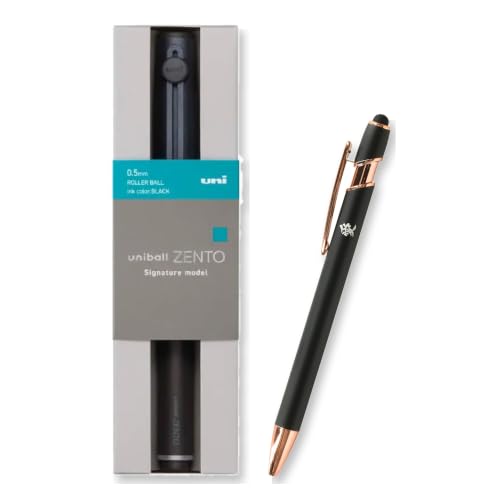
ZENTO Metallic Black 0.5 mm Ballpoint Pen offers a middle-width 0.5 mm black tip, sitting between the 0.38 mm and 0.7 mm options for signature size. The maker says its water-based ink is intended to dry quickly and resist bleeding, while the magnetic cap closes securely. The metallic black body gives this model a darker finish than the silver or champagne options. Its medium-fine line is a compromise: choose a 0.38 mm point for a very compact signature or 0.7 mm when a heavier stroke is preferred.
Bottom line: Choose this for a measured, medium-fine line on routine forms.
Kuretake Zig Photo Signature 0.7 mm Set

Kuretake Zig Photo Signature 0.7 mm Set is the specialized choice for photographs and transparencies: its 0.7 mm photo signature marker uses alcohol-based dye ink. The maker identifies the ink as quick-drying, waterproof, permanent, photo-safe, acid-free and lightfast; the set contains three black pens. It is also xylene-free and described as conforming to ASTM D 4236, with an ACMI AP mark. This permanent marker is less versatile for ordinary reversible note-taking, so it is best reserved for signatures where lasting marks on compatible surfaces are wanted.
Bottom line: Choose this for permanent signatures on photos or transparencies.
How to Choose a Signature Pen
Choose a signature pen by matching line width and ink behavior to the document. A 0.38 mm point creates a finer mark than a 0.5 mm point, while 0.7 mm gives a broader line; for a signature field under about 2 inches wide, a fine or medium-fine point leaves more room for long names. Gel and water-based inks emphasize smooth writing, while permanent marker ink is better suited to surfaces such as photos. Paper absorbency also matters: coated or glossy surfaces can slow drying, so a fast-drying ink is useful when smudging is a concern.
The practical decision is whether legibility, compactness or permanence comes first. For most ordinary forms, start with a medium point; move finer for cramped boxes and use a photo marker only on compatible media.
Tip Width and Signature Size
Tip width changes how much space a signature occupies and how strongly it reads. A 0.38 mm point is the narrowest option in this group, 0.5 mm is intermediate, and 0.7 mm makes the broadest line. As a rule, choose a 0.38 mm or 0.5 mm pen when the signature box is shorter than 2 inches or the name includes many characters; use 0.7 mm where there is room for a larger mark.
Actual line appearance also changes with writing pressure, paper texture and how quickly the writer moves. Keep pressure light and make a short test mark on a matching scrap before signing an important document; extra pressure can make a fine-point line look wider.
Gel, Water-Based Ink and Photo Markers
Gel and water-based pens are general writing tools, while photo markers are made for more specialized surfaces. Water-based ink can suit routine writing and the ZENTO models here use magnetic caps; gel ink is another everyday option. Alcohol-based dye marker ink, such as the photo signature type here, is identified as permanent and waterproof, which makes it a poor substitute when a mark needs to remain erasable or easy to correct.
Use this guide to match the medium to the job:
| Need | Ink or point choice | Reason |
|---|---|---|
| Compact signature | 0.38 mm | Narrowest line in this group |
| Everyday bold mark | 0.7 mm gel or water-based | Broader writing line |
| Photo or transparency | Permanent photo marker | Photo-safe, waterproof ink |
Always confirm that permanent ink is appropriate for the document before marking an original.
Preventing Smears on Signed Documents
Give fresh ink a moment to dry before stacking or folding a signed sheet. Quick-drying claims can help, but drying time still depends on paper coating, humidity and ink amount; glossy paper generally holds ink on the surface longer than absorbent copy paper. Let the mark sit for several seconds before touching it, then check the edge lightly on a separate practice sheet instead of rubbing the signature itself.
Pressure and paper placement are common sources of poor results. Rest the page on a firm, flat surface and use a light, continuous stroke to avoid scratchy lines or blots. Keep permanent markers away from surfaces where a lasting mark is not acceptable, and store capped pens so the tip does not dry out between uses.
Frequently Asked Questions
What tip width works for signing a narrow form?
A 0.38 mm tip is the narrowest option here and can keep a signature compact. For a box under about 2 inches wide, choose 0.38 mm or 0.5 mm rather than a broader point.
Does gel ink smear on paper after signing?
Gel ink can smear if touched before it dries, especially on coated paper. Leave the signature undisturbed for several seconds, since paper finish and ink amount affect drying.
Can I use a photo marker on a legal form?
Use a photo marker on a legal form only if permanent marker ink is acceptable for that document. Alcohol-based permanent ink is designed to leave a lasting mark, unlike ordinary writing ink.
How do I make a signature look more legible?
Use a consistent, light stroke and choose a point width that fits the signature field. A medium 0.5 mm point is a useful compromise between the 0.38 mm fine option and a 0.7 mm broader line.
Is a waterproof pen necessary for signing photos?
A waterproof, photo-safe marker is useful when the signature must remain on a photo. Confirm the marker is intended for the specific surface and test it on a similar scrap before signing an original.